How veterinarians define long-term success when curing the disease is not an option
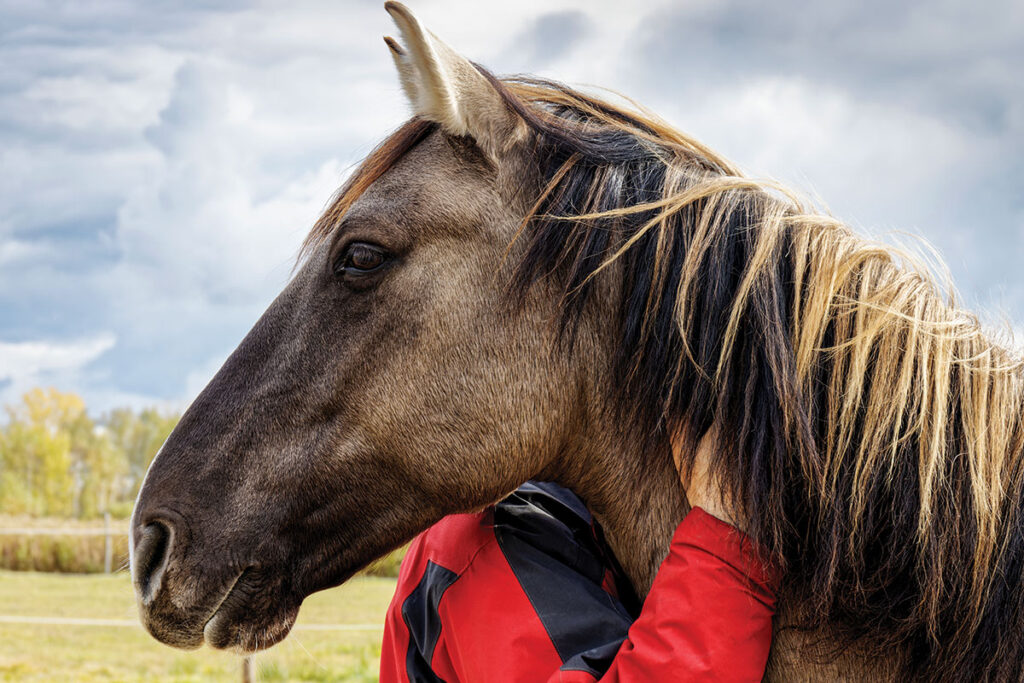
Advances in medicine, nutrition, and care have lengthened the lifespans of our equine companions. Thirty is the new 20. As our horses live longer, more productive lives than their ancestors, age-related chronic health conditions become inevitable. For a horse, living longer can mean losing teeth, muscle, and the lubricating synovial fluid in his joints, to name a few. Musculoskeletal, metabolic, endocrine, and neurological systems—common culprits in chronic conditions—need ongoing management.
To help horse owners navigate diagnoses of conditions such as osteoarthritis (OA), pituitary pars intermedia dysfunction (PPID, formerly known as equine Cushing’s disease), or residual equine protozoal myeloencephalitis (EPM) deficits, we’ve spoken with three veterinarians with focus areas in equine lameness and internal medicine.
Chronic Musculoskeletal Conditions of Horses
Lameness leads to premature retirement in countless sport and pleasure horses, and OA is a leading cause of career-ending lameness.1 While OA, in which inflammation within the joint leads to cartilage breakdown, has no cure, it can be managed, and the effects on horses’ careers can range from minimal to career-ending.
“Radiographic abnormalities consistent with osteoarthritis are not always clinically significant, nor are they necessarily progressive,” says Sue Dyson, MA, VetMB, PhD, a world-renowned scientist who worked as a veterinarian in clinical orthopedics in the Centre for Equine Studies of the Animal Health Trust, in Newmarket, England, for 37 years. “Even if radiographic changes are determined to cause pain or dysfunction, that does not mean they always will. That depends on treatment and management, muscle development, rider skill, tack fit, and athletic demands.”
Many horses with varying degrees of OA, as well as other chronic musculoskeletal conditions such as podotrochlosis (disease of the podotrochlear apparatus, aka navicular syndrome) or overriding dorsal spinous processes (kissing spines), can continue to have productive athletic careers with strategic management. Sometimes this includes medication—commonly firocoxib, a non-steroidal anti-inflammatory drug (NSAID), which produces fewer gastric side effects and long-term risks than the NSAID phenylbutazone (Bute).2 In a group of 390 horses with lameness due to chronic OA, daily administration of firocoxib (0.1 milligram/kilogram) resulted in lameness improvement in 78.7% of horses after 14 days of treatment.3
When it comes to performance-limiting arthritis, horse owners and trainers often think of various joints in the limb, such as the coffin joints, hocks, and stifles, as culprits. But thanks to advancements in diagnostic imaging, veterinarians better understand the role of the axial skeleton (including the neck, back, and pelvis) in chronic joint pain and lameness.4,5
“Long-term management of a horse with axial skeleton dysfunction requires a multidisciplinary approach involving a skilled veterinarian, a physiotherapist, a tack fitter, a farrier, and a suitable rider and trainer,” Dyson says. A horse showing abnormal behavior when being groomed, tacked up, mounted, or ridden indicates pain is not being managed adequately. A Ridden Horse Pain Ethogram—specifically the Ridden Horse Performance Checklist—score of at least 8 out of 24 indicates discomfort.6
Endocrine Conditions
Most horses diagnosed with PPID are over the age of 15, with the prevalence of the condition increasing with age.7 A benign tumor of the pituitary gland at the base of the brain causes this common endocrine disease. The condition typically manifests as hirsutism (a shaggy coat that doesn’t shed normally), repeated infections and delayed healing, polydipsia (excessive drinking) and polyuria (excessive urination), muscle atrophy, and abnormal body fat distribution. Pituitary pars intermedia dysfunction can sometimes be accompanied by the debilitating hoof disease laminitis
This story requires a subscription to The Horse magazine.
Current magazine subscribers can click here to and continue reading.
Subscribe now and gain unlimited access to premium content.
Subscribe NowWe at The Horse work to provide you with the latest and most reliable news and information on equine health, care, management, and welfare through our magazine and TheHorse.com. Our explanatory journalism provides an understandable resource on important and sometimes complex health issues. Your subscription will help The Horse continue to offer this vital resource to horse owners of all breeds, disciplines, and experience levels.