With the return of New World screwworm (NWS) to the U.S., horse owners play an important role in control and prevention. Kyle C. Johnson, DVM, MPH, Dipl. ACVPM, ABVP, clinical assistant professor at Texas A&M University, in College Station, described the current incursion and what owners can do to reduce their horses’ risk during a recent episode of the Stable Management Podcast, produced by TheHorse.com’s sister publication, Stable Management.
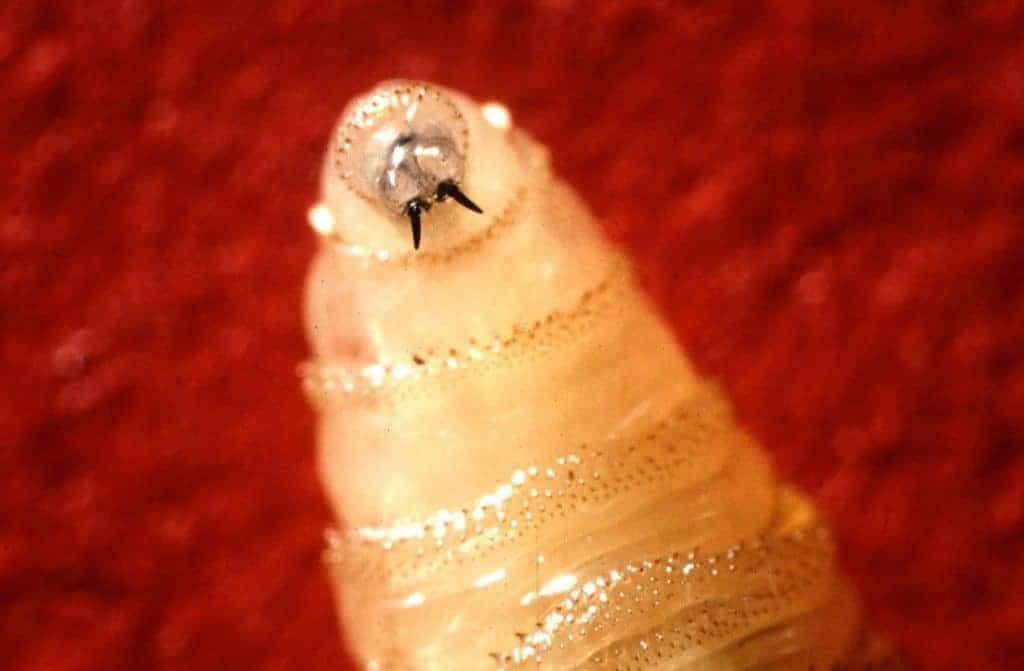
New World screwworm, or Cochliomyia hominivorax, is a type of blowfly whose larvae feed on living tissue. Unlike typical fly larvae (maggots) commonly found in wounds, which feed on dead tissue, screwworm larvae consume live tissue, causing significant damage.
Officials reported the first case (a calf) in Texas in early June. Johnson said at the time of the podcast recording there had been 50 cases in the U.S., including two horses. “While all mammals are susceptible, even birds are susceptible to New World screwworm,” he said. “Horse owners are doing a good job keeping an eye on their horses here in Texas and New Mexico.”
Horse owners need to watch for wounds, catching them early, because female C. hominivorax blowflies can detect wounds as small as a tick bite and lay eggs that hatch within 12 to 24 hours. Infected horses become depressed, standing apart from their friends, or go off feed, he said. Wounds can have a bloody or orange discharge and a foul odor. Affected horses might develop fever or lameness.
If a horse owner finds larvae in a wound, Johnson emphasized keeping the horse on the farm. Transporting an infected horse could allow larvae to fall from the wound and potentially spread the infestation. Instead, owners should contact their veterinarian and have the veterinarian come to the horse.
Preventing wounds and controlling insects can help reduce the risk of infestation. Johnson recommended inspecting pastures for hazards, managing brush, practicing fly and tick control, and keeping facilities in good repair. Quarantine any new horses and examine them closely for injuries.
Take-Home Message
The return of NWS makes routine checks for wounds especially important for horse owners in affected areas. Minimize horses’ risk by preventing wounds, controlling flies and ticks, and monitoring new horses closely. If you find larvae in a wound, do not transport the horse, and contact your veterinarian immediately. Listen to the full podcast episode here or watch it below.