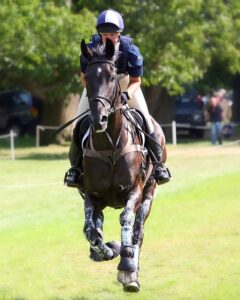
Subtle neurologic signs in horses can be extremely challenging to recognize
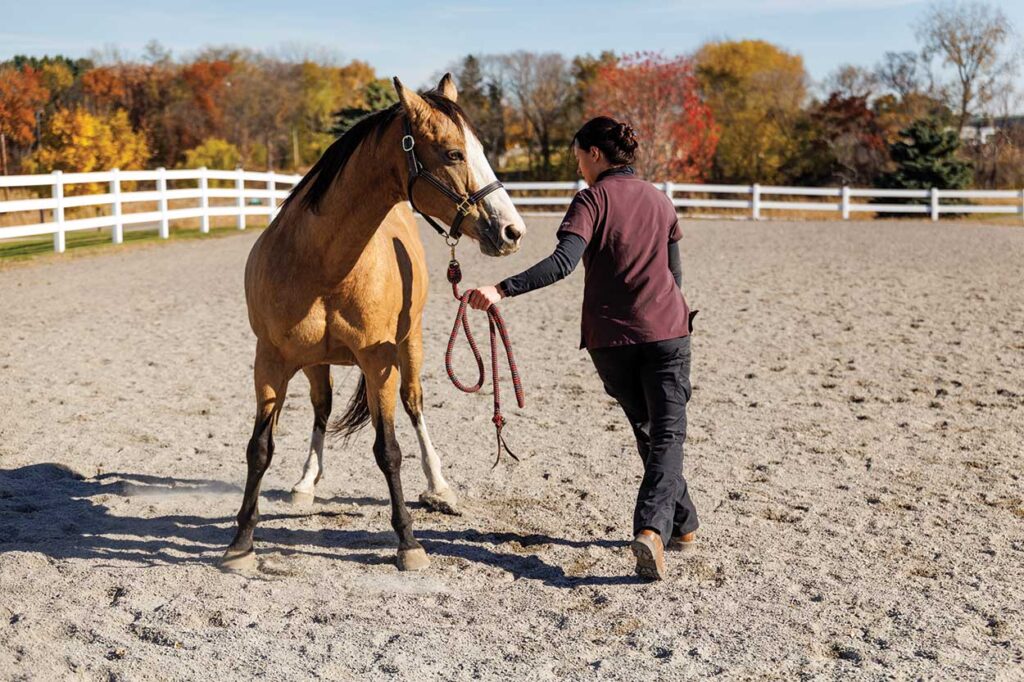
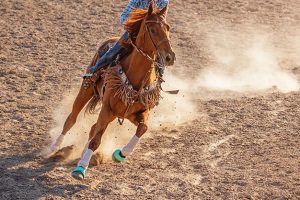
If your horse feels a little uneven, starts offering to buck, or refuses to bend under saddle, but your trusted barn mates aren’t seeing it, you might begin to wonder if you’re imagining things.
Trust me, you’re not. Recognizing and identifying causes of poor performance in horses can be extremely challenging, especially when the source does not appear to be associated with musculoskeletal pain. However, a wide variety of other conditions can cause these signs, and growing recognition of neurologic disease has expanded the list of possible causes.
Neurologic horses don’t all present with staggering or circling, weakness, head-pressing, or dull mentation as can be seen with the viral encephalitides (Eastern, Western, and Venezuelan encephalomyelitis, and West Nile virus) or even rabies and equine herpesvirus myeloencephalopathy (EHM). Instead, neurologic disease in horses can be incredibly difficult to recognize, especially when it’s early in the course of disease or in performance horses that continue to perform but just seem “off.”
The Diagnostic Challenge
Neurologic signs challenge even experts.
Preeminent equine veterinarians Steve Reed, DVM, Dipl. ACVIM, a shareholder at Rood & Riddle Equine Hospital in Lexington, the late William Saville, DVM, PhD, Dipl. ACVIM, and co-authors described the subjective nature of neurologic exams in a 2017 study (Workman et al.). “Despite the reasonable level of agreement seen in this study, these results show that there can be considerable interobserver variability in the recognition of clinical signs of neurologic disease in the horse,” they wrote.
In that study 97 horses presenting to The Ohio State University Veterinary Teaching Hospital, in Columbus, underwent a complete neurologic examination. One board-certified veterinarian conducted an initial neurologic exam knowing the horse’s health history, and a second board-certified internist conducted a second neurologic exam on the same horse and on the same day but without knowledge of the history. Both clinicians used the same standardized neurologic exam protocol. In total, four board-certified internists participated in the study.
The researchers found higher agreement between observers evaluating moderately to severely affected horses, and they saw variability was higher when examining horses with only mild signs. The authors also pointed out that the board-certified examiners included in this study each had 18 to 26 years of experience. Even with that level of experience, using a standardized clinical exam and a standardized reporting form for clinical observations, interobserver agreement was still only considered “good.”
Breaking the data down, authors noted “good” or “excellent” interobserver agreement for 80% of horses when rating the presence or absence of neurologic abnormalities, lameness, or ataxia (incoordination). They saw complete agreement between observers on cranial nerve signs and involuntary movement. However, the interobserver agreement was only “good” or “excellent” for 60% of horses when evaluating truncal sway. They found the lowest agreement when veterinarians evaluated deficit asymmetry, muscle atrophy, and hypermetria (exaggerated gait), as well as the overall severity of neurologic abnormalities. In these latter cases agreement was only “good” to “excellent” in 20% to 40% of horses
This story requires a subscription to The Horse magazine.
Current magazine subscribers can click here to and continue reading.
Subscribe now and gain unlimited access to premium content.
Subscribe NowWe at The Horse work to provide you with the latest and most reliable news and information on equine health, care, management, and welfare through our magazine and TheHorse.com. Our explanatory journalism provides an understandable resource on important and sometimes complex health issues. Your subscription will help The Horse continue to offer this vital resource to horse owners of all breeds, disciplines, and experience levels.