A horse’s mouth is sensitive, and damage can be obvious or much more subtle. Learn what to do to help your horse heal.
Half a decade later, Kate Mason still has no idea how Theo did it. The Thoroughbred emerged from his pasture with a huge puncture wound on the left side of his jaw. It appeared as if he’d slammed his head down on a steel T-post, only there weren’t any T-posts in the field.
Mason, a U.S. Pony Club H-A graduate (the highest horse management certification), runs Darkhorse Eventing, in Virginia Beach, Virginia, and is also a firefighter. Using her varied skill set, she got to work flushing the site with sterile saline. There wasn’t much blood, but she did see bone fragments. Mason packed the wound and put Theo in a stall to wait for the vet.
Do You Suspect an Oral Injury?
Signs of oral injuries can include bleeding; excessive saliva or drooling; facial swelling or other changes in the shape of the face or jaw; draining tracts (wounds with pus leading to an underlying tooth or bone infection); dysmastication (unusual chewing) or quidding (dropping wads of unchewed hay); fever; and a bad odor coming from the mouth.
That foul odor occurs when food gets stuck in the mouth and ferments, explains Robert Baratt, DVM, Dipl. AVDC, AVDC (Equine), a partnership owner of Salem Valley Veterinary Clinic, in Connecticut.
Although horses might be reluctant to eat with an oral injury, “they are prey animals, and they tend to eat in spite of having quite a lot of damage in their mouth at times,” says Jack Easley, DVM, MS, Dipl. ABVP (Equine), AVDC (Equine), owner emeritus of Kentucky Equine Veterinary Dental Specialists, in Versailles.
If you suspect an oral injury, as Mason did with Theo, put your horse in a safe place, such as a stall, and call the vet. In the meantime, you could rinse the wound and remove debris, says Kristen Clapp, DVM, owner and operator of Upper Valley Equine Services LLC, in Chester, Vermont.
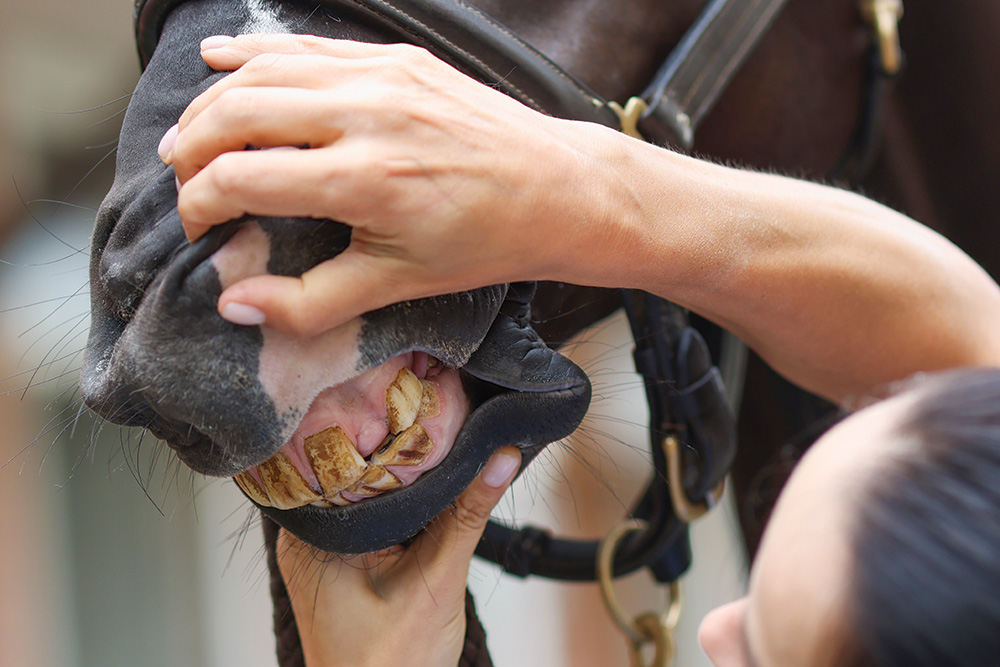
Of course nobody expects horse owners to be able to perform a full oral exam.
“Most people can’t examine the mouth past the commissures (corners of the mouth), the lips, and the interdental space (bars),” Easley says
This story requires a subscription to The Horse magazine.
Current magazine subscribers can click here to and continue reading.
Subscribe now and gain unlimited access to premium content.
Subscribe NowWe at The Horse work to provide you with the latest and most reliable news and information on equine health, care, management, and welfare through our magazine and TheHorse.com. Our explanatory journalism provides an understandable resource on important and sometimes complex health issues. Your subscription will help The Horse continue to offer this vital resource to horse owners of all breeds, disciplines, and experience levels.