The nutritional value of harvested forage can vary considerably, even when it comes from the same supplier. Forage analysis can help horse owners select feed that meets their horses’ needs without oversupplying nutrients. In a recent study Cecilia E. Müller, PhD, associate professor at the Swedish University of Agricultural Sciences, in Uppsala, and fellow researchers examined the challenges and opportunities associated with horse owners obtaining a forage analysis and using that to guide feeding decisions.
Values to Consider in a Forage Sample
Energy (calorie) value and crude protein concentration are two of the most important values to consider in your forage analysis. Ideally, match forage quality to each horse’s nutritional requirements. “This means that a horse with lower energy and crude protein requirements ideally should be fed a forage with comparably low energy value and crude protein concentration, while a horse with higher requirements benefits from being fed a forage with higher energy value and crude protein concentration,” said Müller.
Dry matter (DM) concentration is another important consideration, particularly when feeding silage or haylage. These forages contain more water and less dry matter than hay, but their nutrients and energy come from the dry matter portion. Owners should account for DM concentration when calculating how much to feed.
For horses with insulin dysregulation (ID) or polysaccharide storage myopathy (PSSM), nonstructural carbohydrate (NSC) concentration, which includes sugar and starch, also matters. However, Müller cautioned against focusing on NSC concentration without considering overall energy and protein content. Many horses with ID also need to lose weight, making energy intake an important part of dietary management. “The energy value in a forage depends largely on fiber digestibility for a horse and not on NSC concentration, so NSC cannot really tell the energy value,” she said.
Getting a Representative Forage Sample
Forage analysis only provides useful information if the sample accurately represents the entire batch. Sampling methods differ for pasture and baled forage, but both involve collecting multiple small samples rather than relying on material from a single location, said Müller.
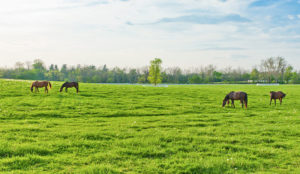
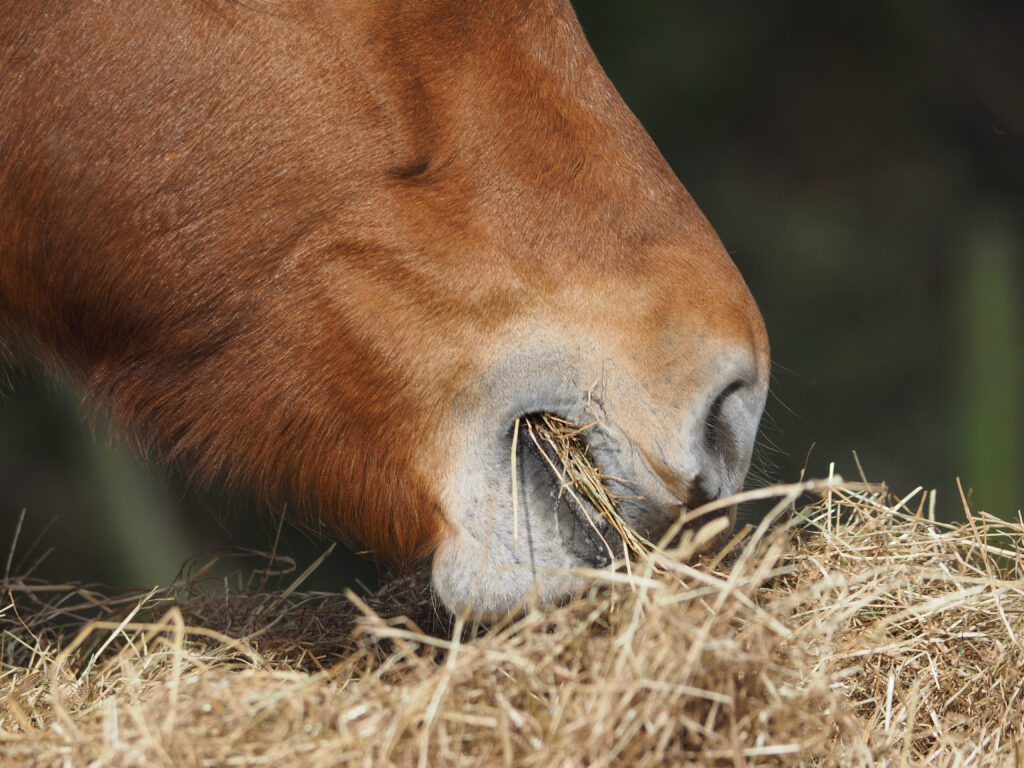
For pasture sampling, walk a W or Z pattern across the field, collecting small samples along the way. For baled forage, use a core sampler to collect samples from multiple bales. Another option involves collecting small amounts from different parts of at least three bales as you open them for feeding, said Müller. Combine them in a clean plastic bag and freeze them until you’re ready to send them to a laboratory for analysis. This approach accounts for changes that occur in storage.
Avoiding Common Forage Analysis Mistakes
Müller identified several common mistakes horse owners make when interpreting forage analysis results. In addition to overlooking energy and crude protein while focusing on NSC, owners sometimes fail to account for differences in DM concentration or use incorrect units when calculating rations.
When comparing different forages, owners should use nutrient values expressed on a dry matter basis, which excludes water and allows for a more accurate comparison. When determining how much forage to feed, however, they must account for moisture content to calculate how much energy and nutrients the horse will consume. Owners should also not assume forage from the same field has consistent nutritional value each year or harvest, she said. Weather and growing conditions influence energy, protein, and NSC concentrations, sometimes substantially.
“Variation in energy, crude protein, and NSC can be very large in forages, and this is important to understand to be able to use the forage correctly in the equine diet,” Müller said. Regular forage analysis helps owners account for those differences and make more informed feeding decisions.
Take-Home Message
Routine forage analysis helps horse owners account for nutritional differences between harvests and select forage that meets each horse’s needs. Considering energy value, crude protein, and dry matter, along with NSC for horses with ID or PSSM can help owners build balanced forage-based diets and avoid unnecessary supplementation.