Article

Subcategories:
None

Official: Uniform Drug Policy Three to Five Years Away

Uniformity in medication and drug testing could be years away, a member of the Racing Medication and Testing Consortium said April 1 during a California Horse Racing Board (CHRB)Medication Committee meeting.

Dr. Rick Arthur, a vice president and director of the Oak Tree Racing Association and a member of the Racing Medication and Testing Consortium, said a standardized medication and

Read More

California Panel Calls for Ban on Use of Venom in Horses

California has taken the first step to ban the backstretch use of snake venom, which officials believe can be used as a nerve- or joint-numbing agent in sore or injured horses.

If approved by California Horse Racing Board (CHRB), the action by its medication committee April 1 would add snake and snail venom to the list of prohibited substances banned at any facility under the CHRB’s

Read More

White Named Interim Director at Scott Equine Medical Center

Nathaniel White, DVM, Dipl. ACVIM, has been named Interim Director of the Marion duPont Scott Equine Medical Center (EMC) in Leesburg, Va. White, who assumed leadership responsibilities for the equine clinical and research center on April 1, succeeds G. Frederick Fregin, DVM, the center’s founding director.

White joined the center as Assistant Director in 1985 and was appointed the

Read More

EEE and WNV Hit Florida

Ten cases of Eastern equine encephalitis (EEE) and one case of West Nile virus (WNV) have been confirmed by serological testing as of April 3 in eight Florida counties, according to Leroy Coffman, DVM, Florida’s state veterinarian and director of the Division of Animal Industry. This is the first reported case of WNV in Florida this year, and possibly the first in the United States this

Read More

Keeneland Requiring Health Certificate for Horses

Keeneland, which opens for its spring meet April 4, is requiring all horses that enter the grounds to have a health certificate written within 72 hours of arrival.

River Downs in Ohio implemented a similar policy in the wake of the detection of equineherpes virus at Turfway Park in mid-March. The virus was contained through quarantine procedures, and horses in the affected barn are

Read More

African Horse Sickness Outbreak Kills 300 Horses in South Africa

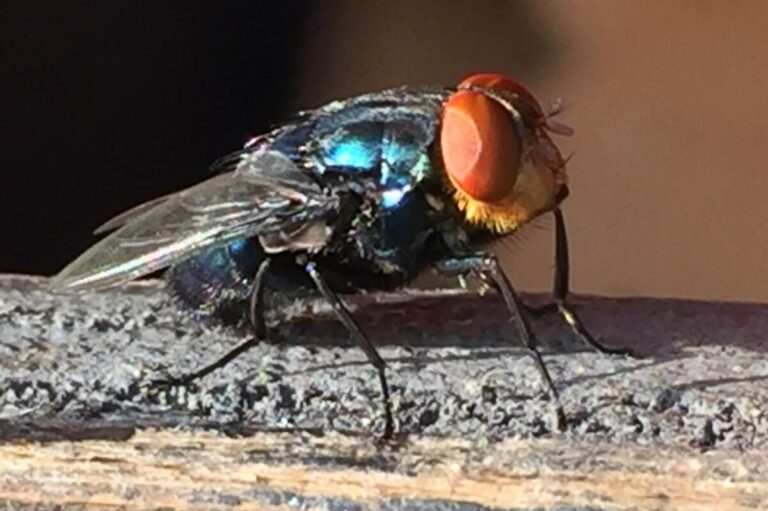
An outbreak of African horse sickness detected last week in South Africa has killed 300 horses, according to a Pro-Med report. African horse sickness is a lethal virus spread by the Culicoides bolitinos midge, a species of small fly. Although African horse sickness is endemic to all parts of Africa, except the Western Cape, rain in the region has increased the midge population.

Read More

Next Steps Toward Solving MRLS Involve Think Tank

Veterinarians and researchers trying to pinpoint the cause of mare reproductive loss syndrome (MRLS) have joined together to create an MRLS “think tank,” the progress and goals of which were discussed April 1 at a joint meeting of the Kentucky Thoroughbred Farm Managers’ Club and the Kentucky Association of Equine Practitioners (KAEP) in Lexington.

The veterinarians returned ofte

Read More

Flea Control Product for Fungal Endometritis in Mares

Lufenuron is a once-a-month flea control product for dogs and cats. The active ingredient inhibits chitin production; chitin is a component of the outer surface of many insects. Fungal organisms also contain chitin in their cell walls, making them susceptible to lufenuron. Researchers at the Virginia-Maryland Regional College of Veterinary Medicine recently published a series of cases where

Read More

Conservative Therapy for Crooked Foals

The most common angular limb deformity in foals is carpus valgus (sometimes called toeing out) in which affected foals have limbs that flare outward below the carpus (knee). This deformity can be corrected surgically with hemi-circumferential periosteal transection and elevation (HCPTE). The procedure involves lifting the fibrous layer, called the periosteum, off of the outside of the carpal

Read More

Intravenous Nutrition for Colicky Horses

Horses which survive an episode of severe colic can be temporarily unable to eat. Anorexia, nasal regurgitation, and ileus (lack of bowel movement) prevent oral feeding. After several days of malnutrition, the horse’s ability to heal is impaired. Humans who are unable to eat normally are fed intravenously; this method is known as parenteral nutrition (PN). While PN has been used in horses, it

Read More

Cremello Gene Found

The researchers developed a molecular test to detect the cream gene in DNA found in the blood or hair. Guerin says the test will help owners identify heterozygous carriers of the gene (those able to pass on the cremello gene to offspring).

Read More

Navicular Syndrome/Heel Pain

In most cases of navicular disease, the condition affects both front feet with lameness as described previously. Horses most at risk are those with certain heritable conformation features such as upright pasterns and small foot size relative to body mass.

Read More

TRF to Create Secretariat Center at Kentucky Horse Park

Two of Kentucky’s most famous industries, bourbon and horse racing, have united to raise money for a new 25-acre center at the Kentucky Horse Park to facilitate adoption of former racehorses. Since 1996, Maker’s Mark and Keeneland have produced a limited edition Maker’s Mark bottle to benefit a good cause. This year’s beneficiary is the Thoroughbred Retirement Foundation, which hopes to put

Read More

When to Feed Your Athlete

What is the best feeding practice for horses before competition exercise or a hard training session? There is no real consensus on this issue and, similar to the field of human performance nutrition, there are many opinions on what is best. Some trainers will withhold all feed, some will decrease the amount of hay fed, and others will increase the amount of grain or other high-energy feed

Read More

Kentucky Ag Commissioner Issues Agro-Terrorism Statement

As the United States fights a war in Iraq and a larger war against terrorism, Kentucky Agriculture Commissioner Billy Ray Smith has called upon farmers and farm businesses to do their part to secure the nation’s food supply.
“Since Sept. 11, 2001, agro-terrorism–malicious and intentional acts intended to disrupt our food supply–has become a new word in our vocabularies, and bio-security

Read More

More From The Horse

Farrier-Foal-AE
rucio horse
horse nose
Prevalence of Horse Behavior Problems Under Saddle Evaluated

Stay on top of the most recent Horse Health news with

FREE weekly newsletters from TheHorse.com

Weekly Poll

sponsored by:

What’s your biggest challenge when trying to improve barn air quality?
69 votes · 69 answers

Create a free account with TheHorse.com!

The Horse
Privacy Overview

This website uses cookies so that we can provide you with the best user experience possible. Cookie information is stored in your browser and performs functions such as recognising you when you return to our website and helping our team to understand which sections of the website you find most interesting and useful.