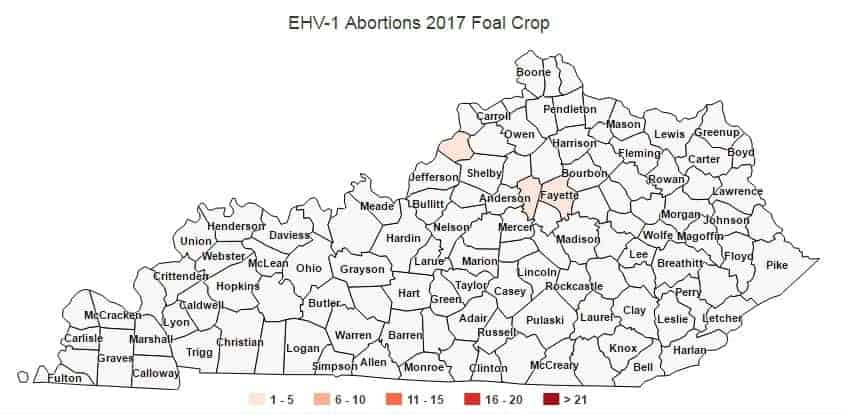
UKVDL Map of the Month: EHV-1 Abortions
Cases of EHV-related abortions from the 2017 foal crop have been confirmed in three Kentucky counties.

Cases of EHV-related abortions from the 2017 foal crop have been confirmed in three Kentucky counties.

Dr. David Horohov, UK Gluck Equine Research Center director, gives a overview of vaccines and explains their importance.

The mainstays of biosecurity still center around good hygiene, diagnostics, quarantine, isolation, and traffic control.

One veterinarian describes how to use endometrial culture, cytology, and biopsy to evaluate subbertile mares.
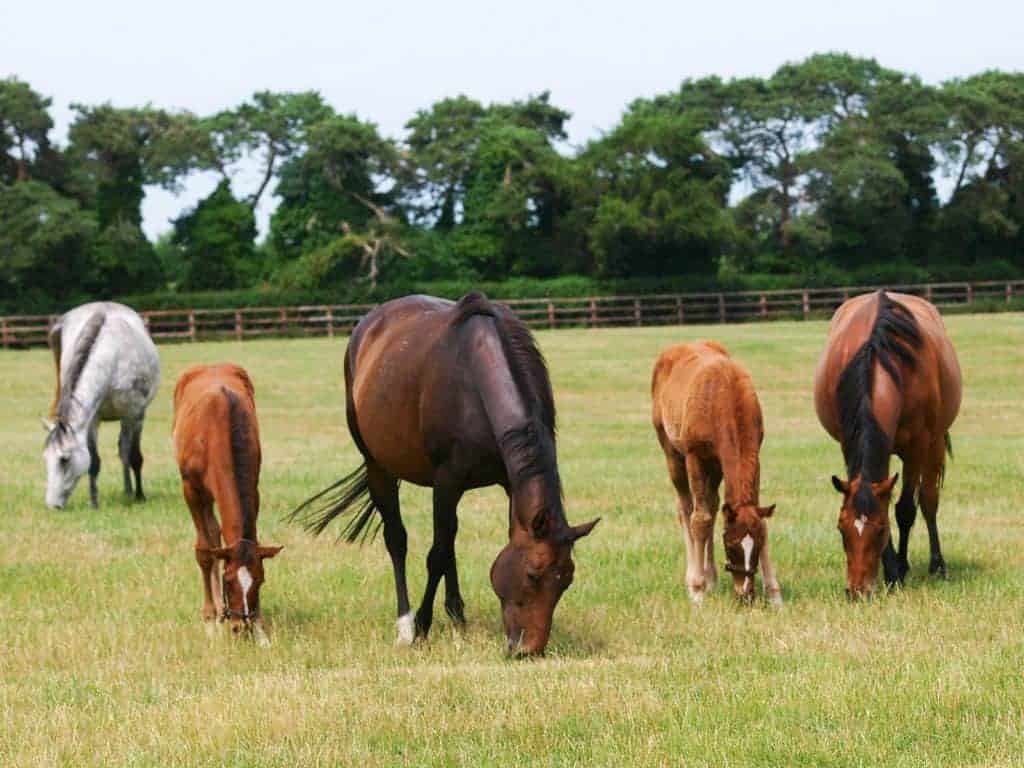
Overweight mares often produce heavier foals, which studies have shown are at-risk for musculoskeletal disorders.

Researchers discuss equine rotavirus infection in foals, bacterial upper airway infections, and more.

Persistent uterine lining inflammation in horses can lead to lower pregnancy rates and increased early embryonic losses.
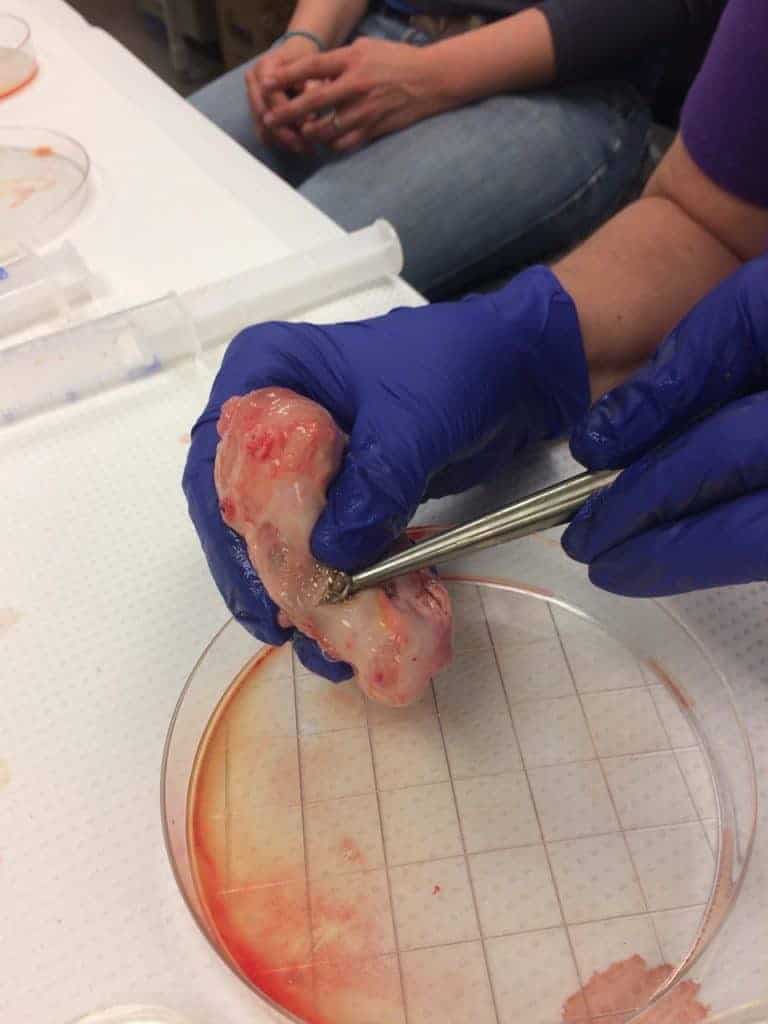
Traditionally when a mare died, her gene pool often went with her. This isn’t always the case these days, however.

Prefoaling secretions have a pH of 8.0 to 8.5 which decreases to 6.5 or lower as foaling approaches, researchers found.

Learn whether your horse is at risk and if you should be vaccinating for this “new” disease.
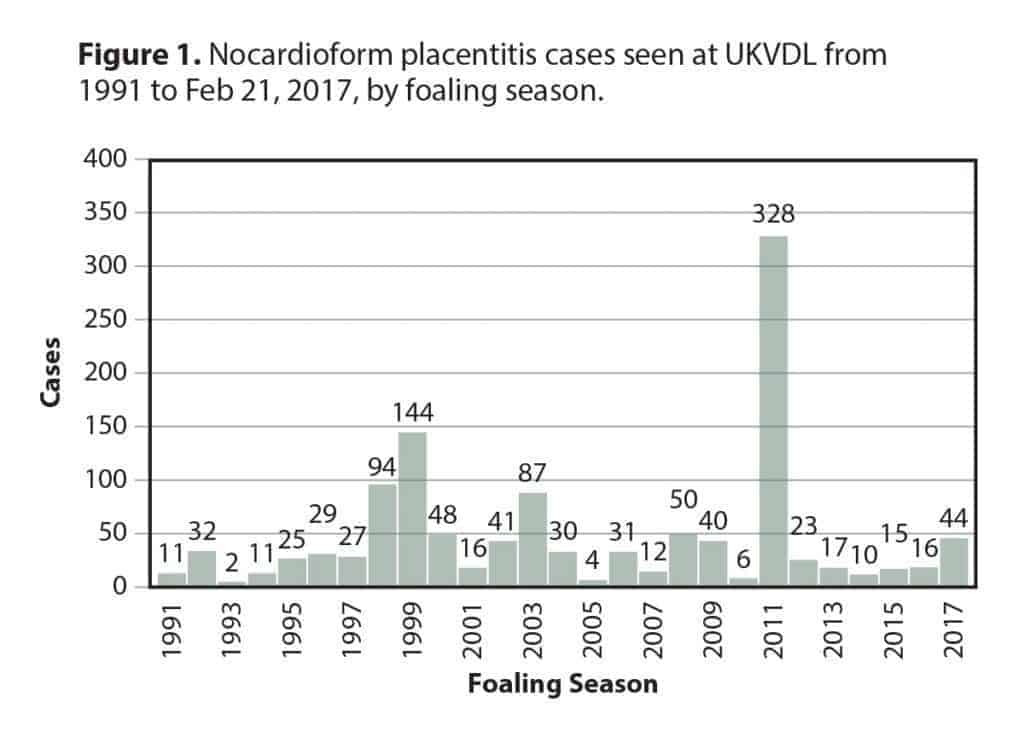
Through the third week of February, 44 cases of nocardioform placentitis were confirmed in the 2017 Kentucky foal crop.

There have been no new EHV cases reported since April 4, when one Anne Arundel County horse tested positive.

Digestive system and cardiovascular system problems were the most common causes of death in the study population.
Confirmed diseases include equine herpesvirus, West Nile virus, African horse sickness, strangles, influenza, and more.

The index farm and veterinary clinic at which the horse was treated are currently under quarantine.

The horse was euthanized at the Marion DuPont Scott Equine Health Center in Leesburg, Virginia, shortly after arrival.