R. Equi: The Hunt for New Antibiotics Continues (AAEP 2010)
It isn’t for lack of effort that the equine industry still doesn’t have new options for treating Rhodococcus equi pneumonia in foals.

It isn’t for lack of effort that the equine industry still doesn’t have new options for treating Rhodococcus equi pneumonia in foals.
Transrectal ultrasounds can be up to 100% accurate in determining fetal sex at a determined gestational age.
Although about 30% of foals that develop Rhodococcus equi foal pneumonia do not survive, the majority of foals can be treated successfully and proceed with a normal life. But why is it that only foals are affected by this respiratory disease?

Carbohydrates are important energy sources for horses, and they are required for digestive health.

The University of Kentucky Maxwell H. Gluck Equine Research Center and Veterinary Diagnostic Laboratory is reporting an increase in the number of cases of fetuses and placentas submitted to the laboratory and diagnosed with nocardioform placentitis.
The Morris Animal Foundation (MAF) announced Feb. 2 that it would fund $10,800 for researchers at the University of Kentucky’s Gluck Equine Research Center to conduct a genome-wide association study of horses for susceptibility to equine arteritis virus (EAV). EAV is the causative agent of equine viral arteritis (EVA), which is characterized by upper respiratory tract disease in adult horses,
One of the major foal diseases in the United States is Rhodococcus equi foal pneumonia. Responsible for the deaths of up to 30% of infected foals, it is a serious problem at many large breeding farms.
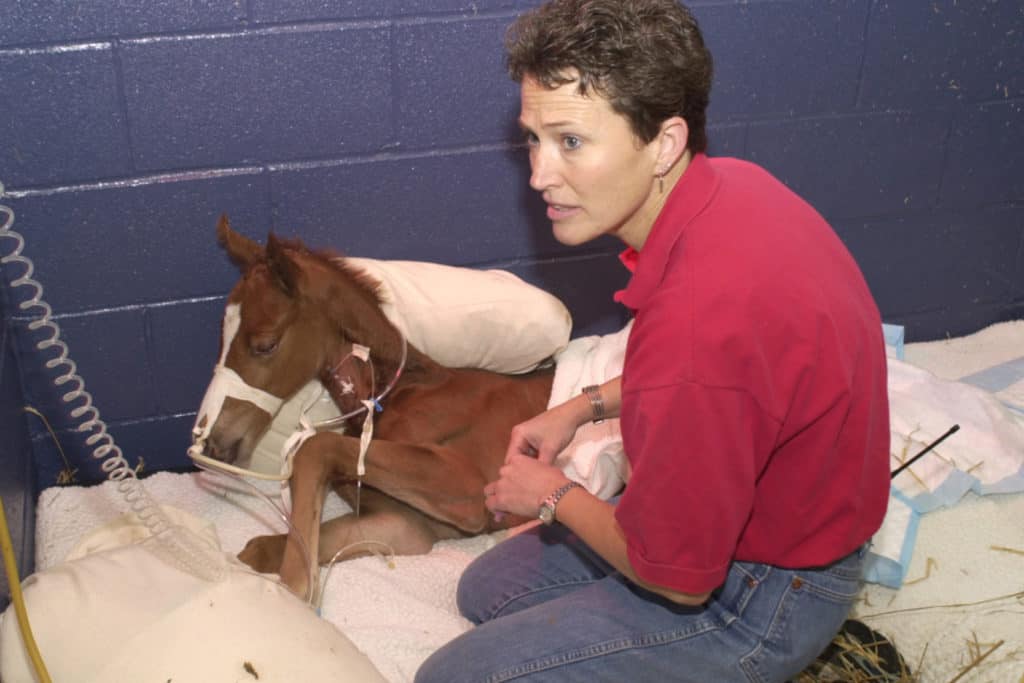
Update on Rhodococcus equi pneumonia in foals by Drs. Noah Cohen of Texas A&M University, Steeve Giguere of the University of Georgia, and M. Julia B. Felippe of Cornell University. (Presented at the 2010 AAEP convention)
This year the University of Kentucky’s Animal Genetics Testing & Research Laboratory (AGTRL) will celebrate 25 years of offering a variety of genetic testing services to horse owners and breed registries. Established in 1986 and formerly known as the Parentage Testing Laboratory, the AGTRL is located in the Gluck Equine Research Center after being housed in the Dimmock Animal Pathology building at
The University of Kentucky College of Agriculture partnered with the University of Minnesota to present the 2nd Annual Kentucky Breeders’ Short Course held Jan. 21 and 22 in Lexington. The first day of the course was designed for veterinarians, and the second day was for horse owners. Both included a half-day session on equine metabolic syndrome (EMS) as part of a research project between the two
For years foal owners have struggled with controlling the bacterium Rhodococcus equi and the infections it causes—some farms manage cases annually, despite following strict farm management strategies to reduce risk of infection.

Dr. Juan Samper discusses twin reduction, the determination of fetal gender, the veterinarian’s role in breeding sheds, mare behavior, embryo recovery, and more topics from the theriogenology/reproduction session at the 2010 AAEP Convention.
Colonization of the foal’s GI tract by pathogenic organisms can lead to diarrhea. Research has focused on identifying organisms responsible for the diarrhea, but less research has looked at what allows the pathogenic organisms to become established.
Determining the cause of early fetal loss is very difficult, and in many instances the aborted fetus is reabsorbed or lost.
One of the popular Table Topics sessions held at the 2010 American Association of Equine Practitioners Annual Meeting, held Dec. 4-8 in Baltimore, Md., revolved around equine embryo transfer.