Breeding and Reproduction

Horse breeding from planning through foal care

Spotlight Equine: UK Animal Genetic Testing and Research Laboratory Offers Tests to Public

Genetics is one of the many research focus areas at the University of Kentucky’s Gluck Equine Research Center. A subset of this emphasis area is the Animal Genetic Testing and Research Laboratory (AGTRL), which allows horse owners to investigate their horses’ DNA and offers a range of tests to the public, including those for genetic disorders and coat color patterns.
Read More

Thoroughbreds: Freshman Sire Stud Fees

The University of Kentucky College of Agriculture’s agricultural economics program is helping provide state-of-the-art financial tools to the Thoroughbred industry.

Read More

Feeding Broodmares in Fall and Winter

For many years horse owners and veterinarians thought the nutrient needs of pregnant mares increased only at the end of gestation. But new research shows that pregnant mares’ nutrient needs increase as early as the fifth month of gestation.

Read More

Diagnosing Disorders of Sexual Development in Horses: Male or Female?

Fertility issues in the horse can stem from multiple causes. One cause in mares is due to a disorder of sexual development (DSD) whereby the sex chromosome complement (genotype, or genetic code) is abnormal and does not agree with the external appearance of the horse (phenotype, or observable characteristics).

Read More

Visiting Scientists Target Endometritis

Mette Christoffersen, DVM, and Morten Petersen, PhD, DVM, Dipl. ACT, both from the University of Copenhagen, and Pauline Peugent, a French student working on her master’s degree, have spent several months in Lexington researching equine reproduction.

Read More

Foal ‘Stealing’

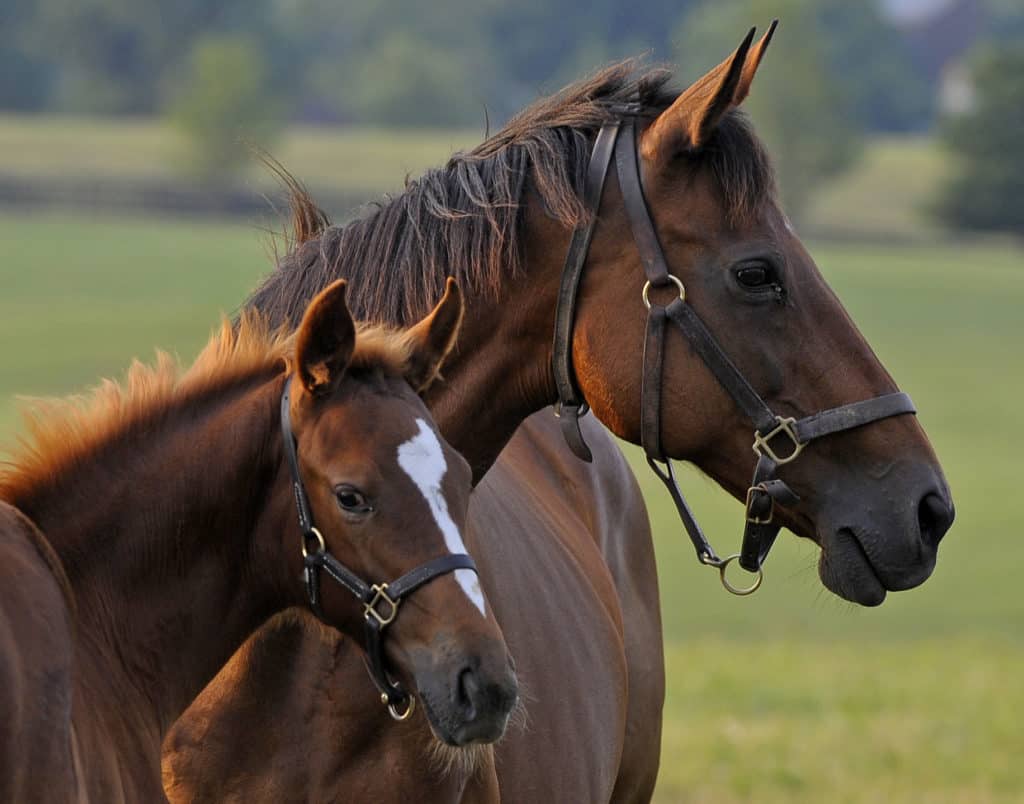
Our pregnant mare thinks another mare’s colt is hers. Is it common for pregnant mares to adopt others’ foals?

Read More

Lawsonia intracellularis

Lawsonia intracellularis bacteria can cause intestinal disease in horses, pigs, and other species worldwide. The syndrome in horses is often called equine proliferative enteropathy, or EPE.

Read More

Weaning Horses

Weaning can be quite stressful for foals, mares, and their owners.

Read More

Foaling

Foaling, also referred to as parturition, is the process of a mare giving birth to a foal. Foaling occurs approximately 338 to 345 days from the last breeding date; however, this time period can range from 320 to 365 days or more.

Read More

Deworming

Deworming is an essential part of managing your horse’s overall health. This free fact sheet is a general guide to deworming your horse, including common parasites, dewormer options, parasite control via manure management, proper scheduling and more.

Read More

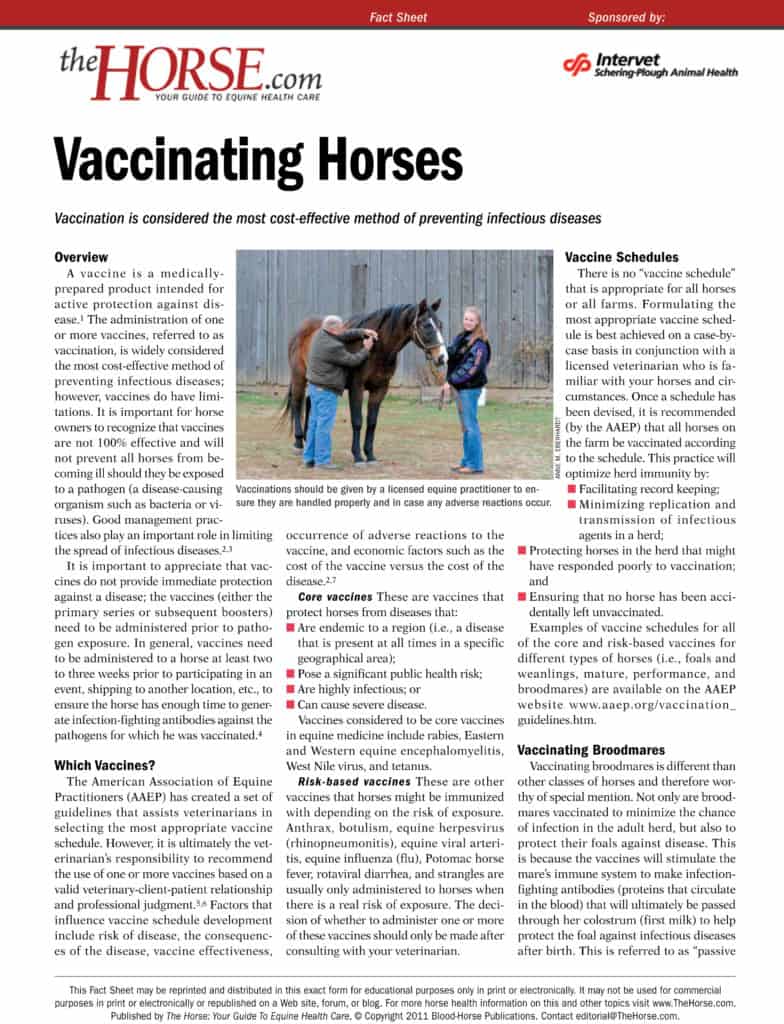
Vaccinating Horses

Vaccinating horses is generally considered to be the most cost-effective method of preventing infectious diseases; however, vaccines do have limitations.

Read More

More From The Horse

Screenshot 2026-11-09 160213
gray horse
helping old horses gain weight
pregnant chestnut mare standing in field

Stay on top of the most recent Horse Health news with

FREE weekly newsletters from TheHorse.com

Weekly Poll

sponsored by:

Create a free account with TheHorse.com!

The Horse
Privacy Overview

This website uses cookies so that we can provide you with the best user experience possible. Cookie information is stored in your browser and performs functions such as recognising you when you return to our website and helping our team to understand which sections of the website you find most interesting and useful.