Preventing EHV-1: What Can You Do?
With equine herpesvirus infections seemingly on the rise, here’s how to protect your horses this season.

With equine herpesvirus infections seemingly on the rise, here’s how to protect your horses this season.

Selective breeding has led to a Thoroughbred uniquely adapted to modern racing’s demands. But it’s also led to inbreeding, and with that has come some less favorable genetic issues.

Taylor Equine Hospital assistant Ali Harman’s dream job involves clinic cases, farm calls, and foal watch.

Dini hopes his current research projects will help improve the understanding of equine placental development.

A Kentucky Thoroughbred farm is reaping the benefits of healthier mares and foals after making horse pasture renovations over the past year with guidance from University of Kentucky personnel.
The symposium and dinner will take place Thursday, Sept. 20, from 4-7:30 p.m., at Malone’s Prime, in Lexington, Kentucky.

Routine horse vaccinations are one of the easiest and most efficient ways to protect equids’ health against potentially fatal infectious diseases.

Think botulism can’t happen to your horses? Think again. An owner describes her mare’s battle with the deadly disease.

Learn how to manage this incurable disease that causes debilitating lameness in horses.
Researchers found that 90% of stem-cell-cloned foals were “completely healthy and normal” at birth, whereas two-thirds of the skin-cell-cloned foals were not.

Researchers also developed a genetic test to check for the “MYH1 mutation,” which can now allow owners and veterinarians to identify susceptible horses and screen breeding stock.

Carossino’s main research interest was identifying host genetic factors associated with persistent equine arteritis virus infection in the stallion’s reproductive tract.
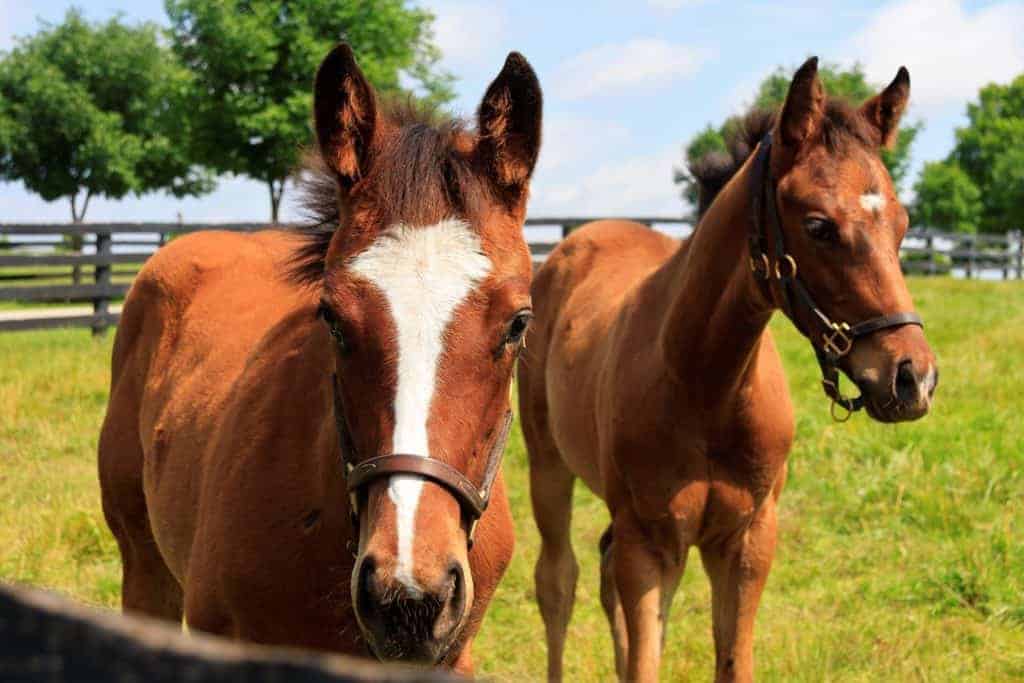
Researchers are working to develop a fertility predictor test for colts and fillies to help breeders and buyers make informed decisions and potentially even help improve evaluations during breed inspections.

Nutritionist Dr. Clair Thunes explains why ration-balancer protein contents might seem high but aren’t.

Mares receiving the synthetic hormone reFSH went from anestrus (not cycling) to ready to breed within about a week, researchers found in a recent study.

Learn more about these trace minerals that are vital to horse health.