5 Ways to Improve Your Horse’s Diet in the New Year
When it comes to feeding your horses, don’t make the same mistakes you’ve made in the past in the new year.

When it comes to feeding your horses, don’t make the same mistakes you’ve made in the past in the new year.

Listen to audio features on equine metabolic issues, colic, hoof abscesses, parasite control, navicular syndrome, and more.

Learn about colic, EPM, core vaccinations, biosecurity, donkeys, and more in our special features.
Being well-prepared for colic could mean the difference between life and death for your horse. Here’s what you need to know.

Dr. Amy Stieler Stewart is studying the potential therapeutic benefits of stem cells in colic cases.
Carolyn Arnold, DVM, Dipl. ACVS, of Texas A&M University offers a better understanding of the gut microbiome’s role in colic and colitis.
Learn how to avoid and address impaction colic, a common cause of cold-weather emergency farm calls.
While wire ingestion was once considered a death sentence, researchers recently found that surgery can save some affected horses, especially if the foreign body is identified and treated early.

Veterinary technicians make important contributions before, during, and after colic surgery. Here’s how they help veterinarians and surgeons during these potentially life-saving procedures.
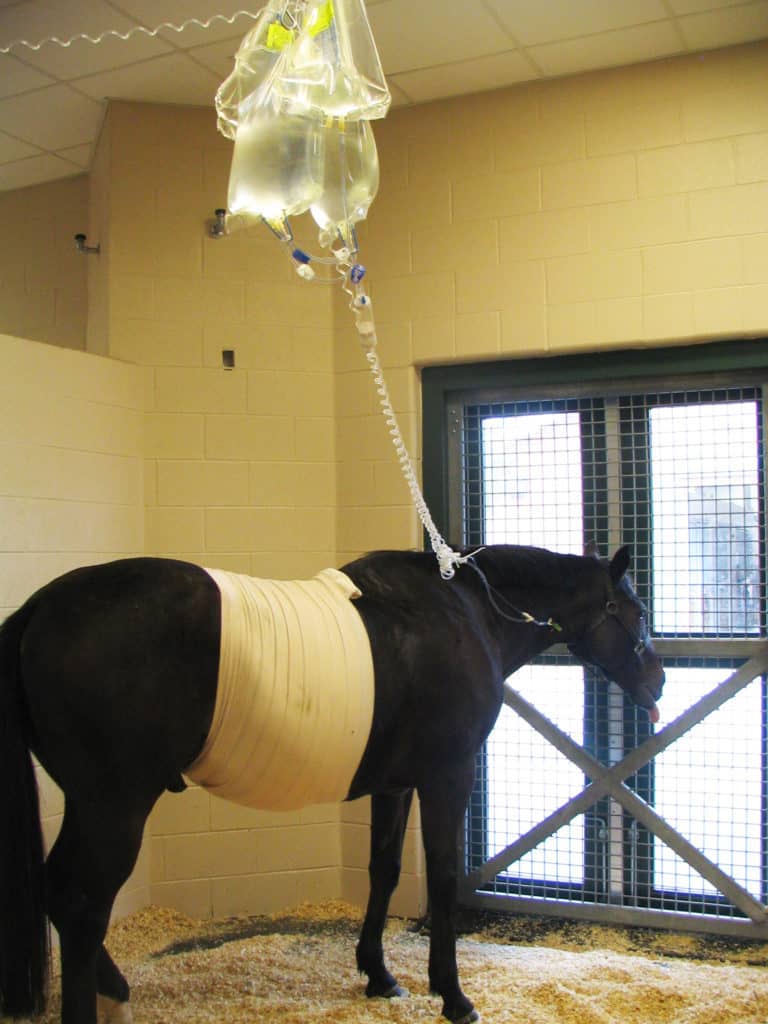
Researchers found that very ill horses with high glucose and insulin levels were more likely to survive, while those with high glucose but low insulin were more likely to die.

Researchers found that 58% of responding hospitals said they consult a nutritional adviser about feeding their patients and 21% reportedly feed all patients the same type of feed.

Surgical site infection risk had little to do with the amount or kind of bacteria present at the incision before, during, or after surgery, researchers found.

Taylor Equine Hospital assistant Ali Harman’s dream job involves clinic cases, farm calls, and foal watch.

Critical conditions such as colic, injuries, and dehydration can strike when you’re at a competition with your horse. Here’s how to handle them.

Learn about special characteristics of each part of the horse’s digestive tract and different medical conditions that can develop there.

While either the small or large intestines are usually the focus of colic discussions, the junction of the small intestine and cecum at the start of the large intestine—the ileocecal junction—also deserves mention.