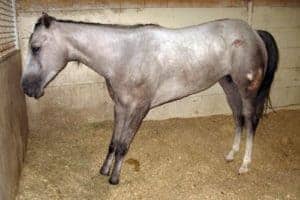
Ulcers

Subcategories:
None

Giving Omeprazole for Ulcers Intravenously

In the past few years, we’ve been hearing how many more horses have gastric ulcers than we used to think. We also know that oral omeprazole paste (GastroGard, manufactured by Merial Limited, Decatur, Ga.) effectively treats and prevents ulcers.

Read More

Scoping Events Show Prevalence of Equine Gastric Ulcers

Equine gastric ulcer syndrome (EGUS) can occur in horses anywhere. In 2007, Merial (the maker of Ulcergard and Gastrogard) illustrated the prevalence of EGUS by hosting gastroscopy events at two universities on opposite sides of the country.

Read More

Alfalfa Might Buffer Gastric Acid Production, Prevent Ulcers

Feeding grain, confinement, exercise, and overall environmental stress factors are thought to cause ulcers, he said. It’s commonly thought that horses turned out on pastures are better off than those that are confined. However, if grass hay is the on

Read More

Makers of Succeed Unveil New Web Site on Digestive Health

A new Web site from Freedom Health, LLC offers information on the prevalence of equine ulcers and helps owners and trainers manage their horses for optimal overall health. The new site features study results, diagnostic options, and educational

Read More

Health Problems of Young Horses in Training

Young horses in training are vulnerable to a wide variety of problems–everything from respiratory disease to training injuries. These horses are often taken off the farm where they grew up, transported to training facilities where they

Read More

Gastric Ulcers: Management Key to Prevention

The reality is that gastric ulcers are a man-made disease, and the majority of horses with gastric ulcers do not show outward symptoms. Oftentimes poor appetite, decreased performance, and a poor hair coat are subtle symptoms

Read More

Non-Steroidal Anti-Inflammatory Drugs (NSAIDs)

We keep them in our barns, give them to our animals, and take them ourselves. Non-steroidal anti-inflammatory drugs (NSAIDs) are common, but they aren’t benign. In this article we’ll investigate what NSAIDs are and aren’t, and what we should know

Read More

Reproduction Problems

Drug compounding, the ethics of treating cryptorchids, and sexually transmitted diseases were the hot topics discussed by equine practitioners at the Reproduction Forum.

Read More

Tips to Reduce Ulcer Risk and Improve Healing

It’s been well-documented that over 90% of race horses and over 60% of performance horses (hunter/jumpers, dressage, endurance and western) have ulcers. However, a new study shows that even small changes in the routine of a recreational horse can cau

Read More

Gastric Ulcer Research

Gastric ulcer disease is a serious health problem in horses resulting in colic, poor performance, and pain. The term equine gastric ulcer syndrome (EGUS) describes erosions and ulcerations occurring in the lower portion of the esophagus,

Read More

Another Route For Ulcer Treatment

Omeprazole paste is the gold standard when it comes to treating equine gastric ulcers syndrome. However, researchers at the University of Tennessee College of Veterinary Medicine said because of its potency and long-acting effect, an intravenous form

Read More

NSAIDs: Not All They’re ‘Stacked’ Up To Be

Bute and Banamine are two of the most common non-steroidal anti-inflammatory drugs (NSAIDs) on the market, and they easily accessible to nearly every horse owner. They can be the first line of defense in emergency cases such as colic, and

Read More

More From The Horse

be5fd57e-adca-4977-a36a-ca1475847ee1
horse nose snout nostril detail close animal equine pont
horse in arena with cones
pouring supplement into grain

Stay on top of the most recent Horse Health news with

FREE weekly newsletters from TheHorse.com

Weekly Poll

sponsored by:

Which best describes your horse’s behavior when you turn him out?
84 votes · 84 answers

Create a free account with TheHorse.com!

The Horse
Privacy Overview

This website uses cookies so that we can provide you with the best user experience possible. Cookie information is stored in your browser and performs functions such as recognising you when you return to our website and helping our team to understand which sections of the website you find most interesting and useful.