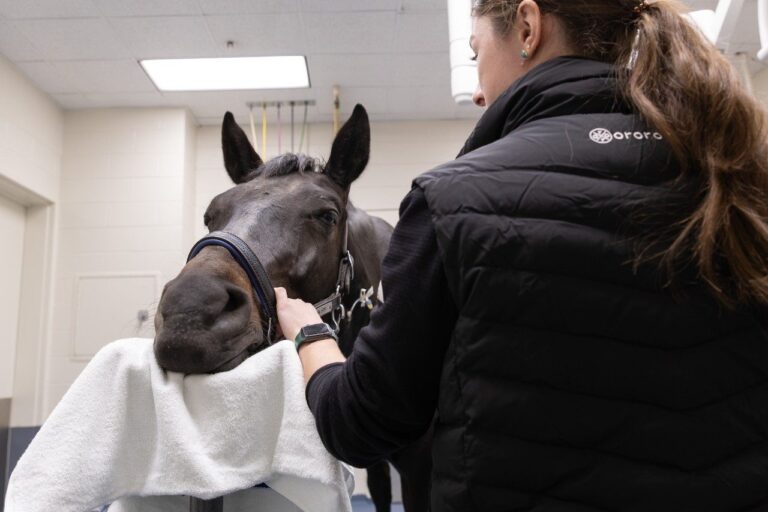
Diagnosing Respiratory Problems in Sport Horses
Veterinarians have tools at their disposal, ranging from imaging to sample analysis, that can help pinpoint the cause of respiratory problems in sport horses.

Veterinarians have tools at their disposal, ranging from imaging to sample analysis, that can help pinpoint the cause of respiratory problems in sport horses.

Veterinary treatments for horses can be costly, so researchers evaluated the value an owner places on a horse’s daily use and how much owners are willingness to pay for various therapeutics.

The new technique provides a stronger anchor point on the paralyzed laryngeal cartilage and performs better than current surgical practices for treating roaring in horses.

There’s been very little scientific study into sudden death in sport horses, but researchers recently reviewed a number of incidents with the ultimate goal of reducing the number of fatalities that occur.

Vaccinating mares against the polysaccharide poly-N-acetyl glucosamine appears to effectively protect foals against R. equi pneumonia, researchers found.
Officials confirmed cases of equine influenza, EHV, equine infectious anemia, and other equine infectious disease outbreaks.

Download this free fact sheet to learn how to protect your horse from influenza, a highly contagious respiratory disease.

Understanding how pulmonary disease impacts performance can help veterinarians diagnose and treat issues that could be impairing horses’ athleticism.

Researchers are working to find other potential race-day therapies that can be used to manage EIPH if proposed legislation banning race-day furosemide use in the U.S. is passed.

The ACVIM published a new consensus statement on treating, controlling, and preventing strangles in horses.

Use this four-step plan to keep equine infectious diseases in check.

A veterinarian can help determine risk factors in your area, the best time for vaccination, and what is right for each individual animal.

A good wipe-down with sanitizing agent might work well on wood, concrete, and plastic, but nylon equipment is harder to properly disinfect, researchers found.

The protein-based vaccine protected more than 80% of horses from contracting strangles in a recent study.

The collection includes research on controlling equine influenza, immunology in young horses, herd immunity, and more.

Weanlings turned out with shelter access had no more respiratory issues than those housed in warmer stables during a harsh Finnish winter.