Lab Cytology Tests

Cytology, the study of cells, involves the collection and examination of cells and fluid from organs, tissues, and body cavities. Cells naturally shed from the surfaces of mucous membranes, organs, and skin lesions, and they can be collected for

Read More

Skin Health

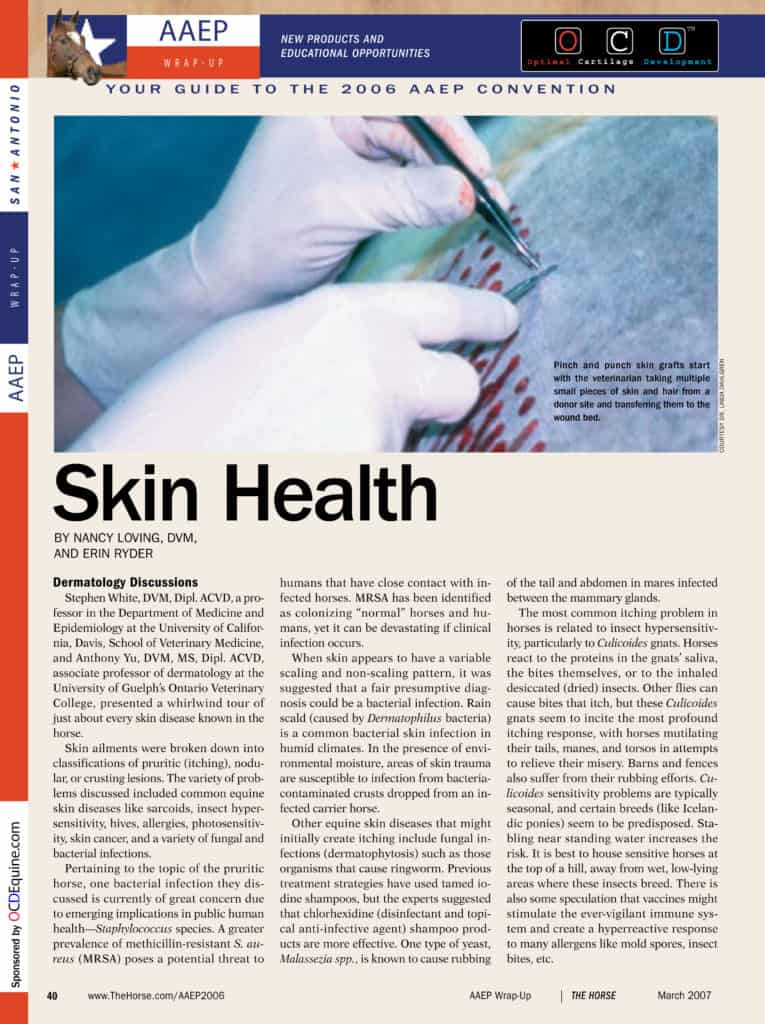
Experts at the 2006 American Association of Equine Practitioners Convention discussed just about every known equine skin disease, including pruritic (itching), nodular, and crusting ailments, as well as skin grafts and intratumoral chemotherapy for the treatment of recurring sarcoids.

Read More

Skin Disease and Dermatology

Skin ailments were broken down into classifications of pruritic (itching), nodular, or crusting lesions. The variety of problems discussed included common equine skin diseases like sarcoids, insect hypersensitivity, hives, allergies, photosensitivity

Read More

Internal Insights

Veterinary internal medicine is a growing specialty that boasts nearly 400 large animal internal medicine specialists, many of them focusing on horses. In a time when humans seek out experts in varying medical fields, it’s only logical that we seek

Read More

A New Sarcoid Treatment

A medication used to treat external tumors in humans has shown some promise of treating sarcoids in horses. In a University of Minnesota (UM) pilot study, researchers used imiquimod (Aldara) to treat horses with mixed, fibroblastic, flat,

Read More

Treatment For Leg Mange

Researchers at Tanat University in Kafr in El-Sheikh, Egypt, said in recent study that moxidectin oral gel is an “effective and good alternative for treating chorioptic mange (also know as leg mange) in horses.” The study, which included 117

Read More

COX-2 Expression in Equine Tumors (ACVIM 2006)

Therapies for equine cancer are few and far between, but a veterinary oncologist from Colorado State University (CSU) thinks equine tumors could be treated with non-steroidal anti-inflammatory drugs (NSAIDs).

Read More

Testing for Insect Hypersensitivity

Allergy testing is done in many species, including horses and humans. Unfortunately, testing to determine a horse is hypersensitive to insect bites is difficult. This disease (insect hypersensitivity) occurs seasonally, in horses of all ages and bree

Read More

Skin Hypersensitivity (ACVIM 2006)

There are three categories for hypersensitivity (non-insect-bite related) skin diseases. These include food allergies, atopic dermatitis (a predisposition to allergic disease in response to environmental allergens), and contact allergies caused by

Read More

Unexplained Swelling

I found my gelding lying down with swollen legs and a cut inside his nostril. Could this be a snakebite?

Read More

More Than Skin Deep?

It was two years ago–in April of 2004–that this magazine published the announcement that the Poco Bueno Quarter Horse sire line had been identified as carrying the recessive gene that causes hyperelastosis cutis (HC, also known as hereditary

Read More

Sun Protection: Does Your Horse Need Sunglasses?

While sunglasses and sun screen might be the obvious solutions for fair-skinned humans, they’re impractical for horses. Protection from sun glare, however, is as important for horses as it is for humans, because horses with little or no pigment in th

Read More

Skin Problems in Horses

There are many problems that can affect a horse’s skin–from insect allergies to fungal, viral, or bacterial infections. The skin is the body’s largest and most important organ; it protects the inner structures of the body from the outside

Read More

More From The Horse

Beautiful Arabian horse silhouette against morning sun shining through haze and trees
Preparing for Horse Care
scratches-2
Study Confirms Kicks From Shod Horses Can Damage Bone

Stay on top of the most recent Horse Health news with

FREE weekly newsletters from TheHorse.com

Weekly Poll

sponsored by:

Create a free account with TheHorse.com!

The Horse
Privacy Overview

This website uses cookies so that we can provide you with the best user experience possible. Cookie information is stored in your browser and performs functions such as recognising you when you return to our website and helping our team to understand which sections of the website you find most interesting and useful.