The Club Foot
My weanling’s foot seems a bit boxy. My veterinarian said it sounds like he has a club foot. What does this mean?

My weanling’s foot seems a bit boxy. My veterinarian said it sounds like he has a club foot. What does this mean?
Generally speaking, the average horse used for trail and pleasure riding should have its feet trimmed or reshod every six to eight weeks.
The barn manager said my horse was graveled and called the veterinarian. Could you please explain what that means?”he barn manager said my horse was graveled and called the veterinarian. Could “e barn manager said my horse was graveled a” barn manag
Club feet might be one of the most common growth problems in young horses. Affecting youngsters primarily between birth and 6 months of age, the club foot actually is a flexural deformity of the distal interphalangeal joint (coffin joint) caused
While many of our horses do some kind of work for a living, the work usually consists of a couple of hours a day, three to five days a week. Many of our horses are ridden far less than that, and we don’t really think of them as working for”P>While many

My horse has been diagnosed with a fractured coffin bone. What could have caused it, and what is the prognosis?
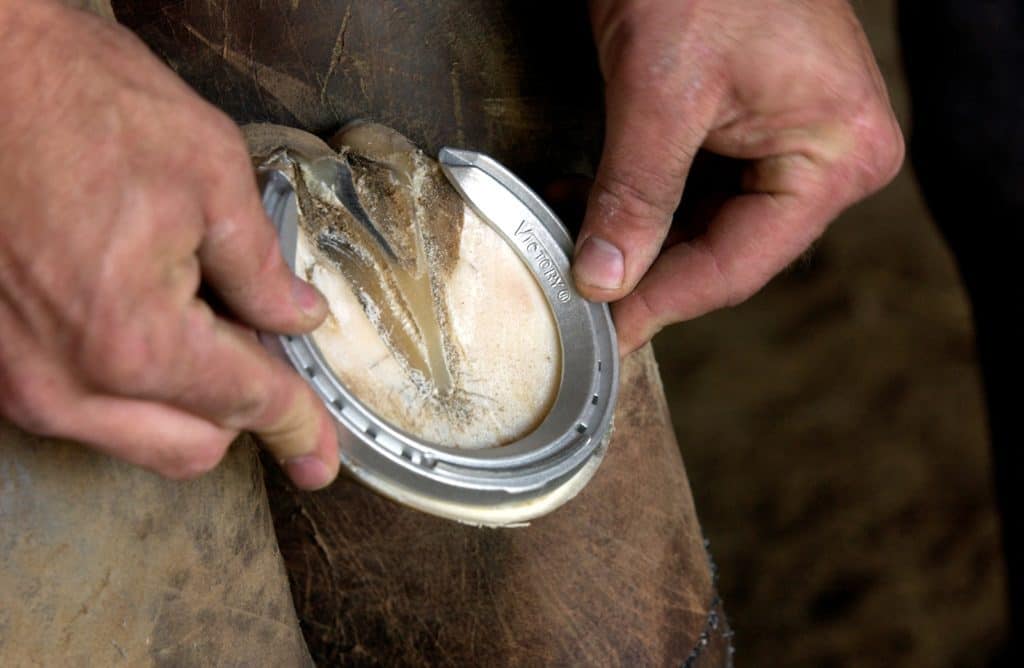
Understanding the various types of equine footwear can help owners decide which shoes suit their horses best.
Have you ever paid attention to the way people walk? Some are pigeon-toed, others are duck-footed. Some wear the insides of their shoe heels; others do just the opposite. Yet, most are perfectly sound and healthy.
The same principle”P>Have you ever paid attention to the way people walk? Some are pigeon-toed, others are duck-footed. Some wear the insides of their shoe heels; others do ju”>Have you ever paid attention to the way people walk? Some are pigeon
The American Farrier’s Association Convention held in Lexington, Ky., March 3-6, was planned with the professional farrier in mind. While the lion and the lamb vollied outdoors throughout the four-day event, inside the convention center farriers
Horses lose shoes for many reasons, and a lost shoe–or the cause of it–is the topic most likely to send a farrier’s blood pressure into orbit.
Does the sound of sleigh bells set your nerves on edge, anticipating a wreck on the icy patch down the road? Do you dream of the day next spring when you will be able to see your horse below his knees? Do you lie awake at night designing
Hard surfaces come in many forms. There’s that parking lot where you lunged your horse last weekend at the horse show. There’s that cracked-clay pasture where your horse was turned out all last summer. There’s that poor-excuse-for-an-arena down at th
An egg bar is simply an oval-shaped horseshoe. Where the heels would normally end, they keep going–but in a circular direction, creating an oval back to the shoe.
A foal born with club feet or a young, growing horse which develops the condition can be both a mystery and a problem for the owner and the veterinarian in charge of treatment. The condition can be mysterious because many factors might be
What can you do to prepare your horses’ feet for winter? Here are a few tips.