Uneven Feet in Sport Horses Related to Other Conformation Traits
Researchers examined the effects of uneven feet on equine performance and linked this to other faults.

Researchers examined the effects of uneven feet on equine performance and linked this to other faults.
Women aren’t the only ones suffering from decreased bone density and bone mass loss–horses in Central California have experienced a systemic osteoporotic disorder. Equine bone fragility syndrome, a systemic osteoporotic (characterized by a decrease
Comparisons of humans to horses logically can start with the anatomy. We stand upright; horses stand prone on their four limbs. What we call our knees are the stifles of horses, and our heels or ankles are horses’ hocks. Our foot is their cannon
Several years ago, Spencer Barber, DVM, Dipl. ACVS, of the Western College of Veterinary Medicine, achieved a first in equine surgery when he developed a successful arthrodesis (surgical fusion) technique for treating a debilitating arthritic
Veterinary researchers at the University of California, Davis, are working to classify a newly observed bone fragility disorder that might prove to be the culprit behind some cases of intermittent chronic lameness that have no other explanation.
Although the United States presidential election will get the biggest headlines as November approaches, horse industry representatives were told June 17 they should pay attention to–and get involved in–congressional races around the country.
Last year my 18-year-old Quarter Horse mare became very sensitive to touch on her back and hindquarters.
Elite athletes are always looking for an edge over their competitors, and many times they find that edge by applying the science o
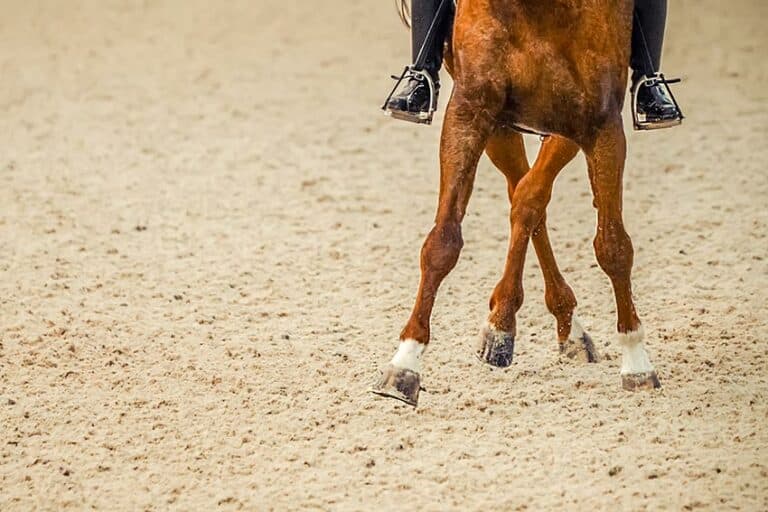
A large majority of horses, regardless of breed, have a high-low foot syndrome where one front foot has a higher angle and different shape than the other. A close look at the characteristics of the high foot qualifies it as a club foot.

There are 205 bones in the horse’s skeleton, and the spot where one or more bones join is the joint. This installment of the anatomy and physiology series focuses on these critical areas of movement.
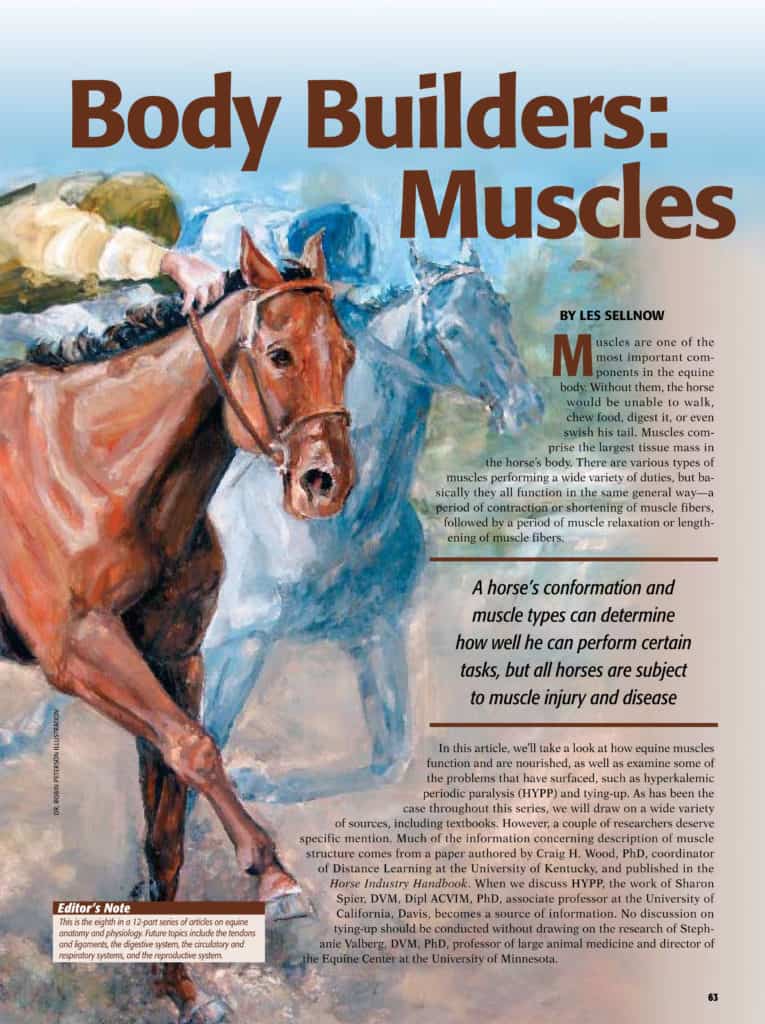
A horse’s conformation and muscle types can determine how well he can perform certain tasks, but all horses are subject to muscle injury and disease. In this article, we’ll take a look at how equine muscles function and are nourished.

Learn how your horse’s anatomy works with our complete anatomy and physiology guide, including basic terminology, skin, forelimbs, hindlimbs, feet/hooves, head and neck, tendons/ligaments, muscles, digestive, cardiovascular and reproductive systems.
My 4-year-old Quarter Horse gelding does not like to bend his knees and hocks. He feels like he’s walking on stilts.
A 10-year-old Icelandic gelding has a tendency to hold his head to the right while at a walk.
My Thoroughbred’s stifles have been making a popping noise for quite some time.