Diagnosing Muscle Soreness

Last year my 18-year-old Quarter Horse mare became very sensitive to touch on her back and hindquarters.

Read More

10 Principles of Exercise Physiology

Basic principles you can apply to your everyday training to boost your horse�s performance.

Elite athletes are always looking for an edge over their competitors, and many times they find that edge by applying the science o

Read More

The Airways and the Lungs

The harder a horse works, the more oxygen it needs and the more air it must move into and out of the lungs. Understanding how the horse’s respiratory system works can help horse owners recognize problems and/or manage horses to prevent them.

Read More

Inside the Club Foot

A large majority of horses, regardless of breed, have a high-low foot syndrome where one front foot has a higher angle and different shape than the other. A close look at the characteristics of the high foot qualifies it as a club foot.

Read More

Annual Dental Exams Important for Horse Health

Going to the dentist annually is not only necessary for humans; it is an important part of equine health. Annual dental exams are extremely important for horses young and old to help ensure the animals comfort and performance.

Cleet Griffin,

Read More

Risk Factors for Gastric Ulcers in Thoroughbreds

Up to 86% of Australian Thoroughbred racehorses have been reported to have gastric ulcers. Many factors can contribute to ulcers, and researchers at Murdoch University set out to determine which ones were the most significant for this population

Read More

Anatomy and Physiology

This first article of a 12-part series on equine anatomy and physiology discusses basic terminology, the horse’s largest organ (his skin), and how horses and humans are alike (and different).

Read More

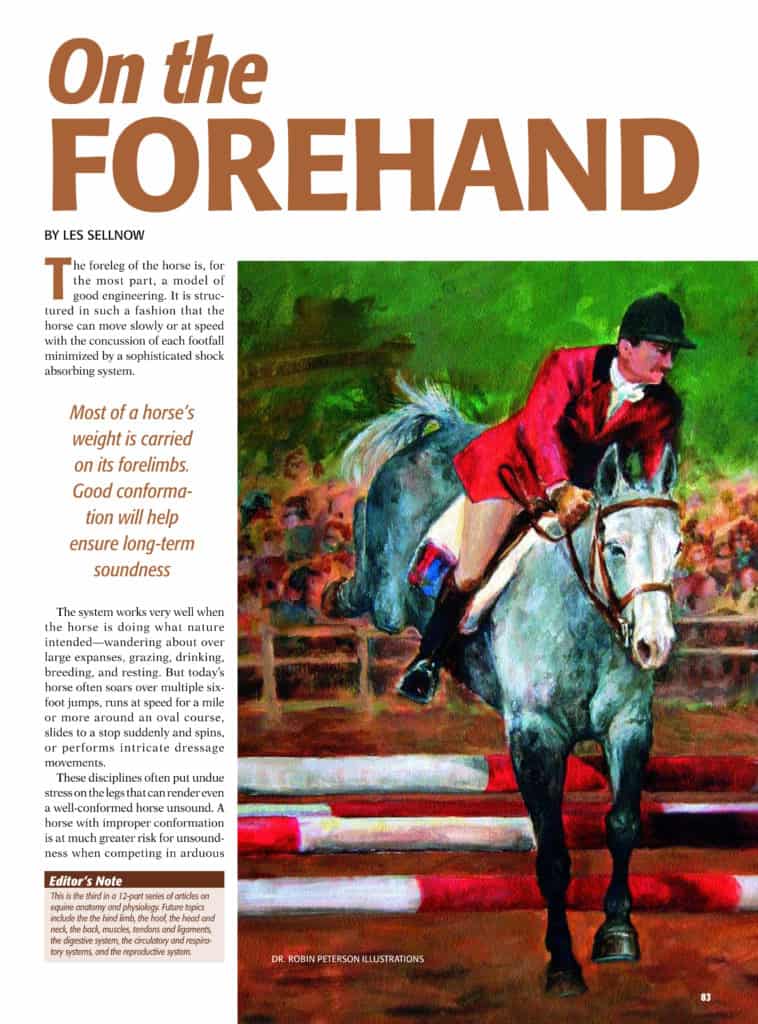
The Horse’s Hind Legs: The Perfect Engine

No matter the breed or discipline, good conformation of the hind legs will contribute to more successful performance and a better ride. We want a horse to have excellent rear leg conformation so that it can tolerate the demands placed on it.

Read More

Joints: It All Hinges on This

There are 205 bones in the horse’s skeleton, and the spot where one or more bones join is the joint. This installment of the anatomy and physiology series focuses on these critical areas of movement.

Read More

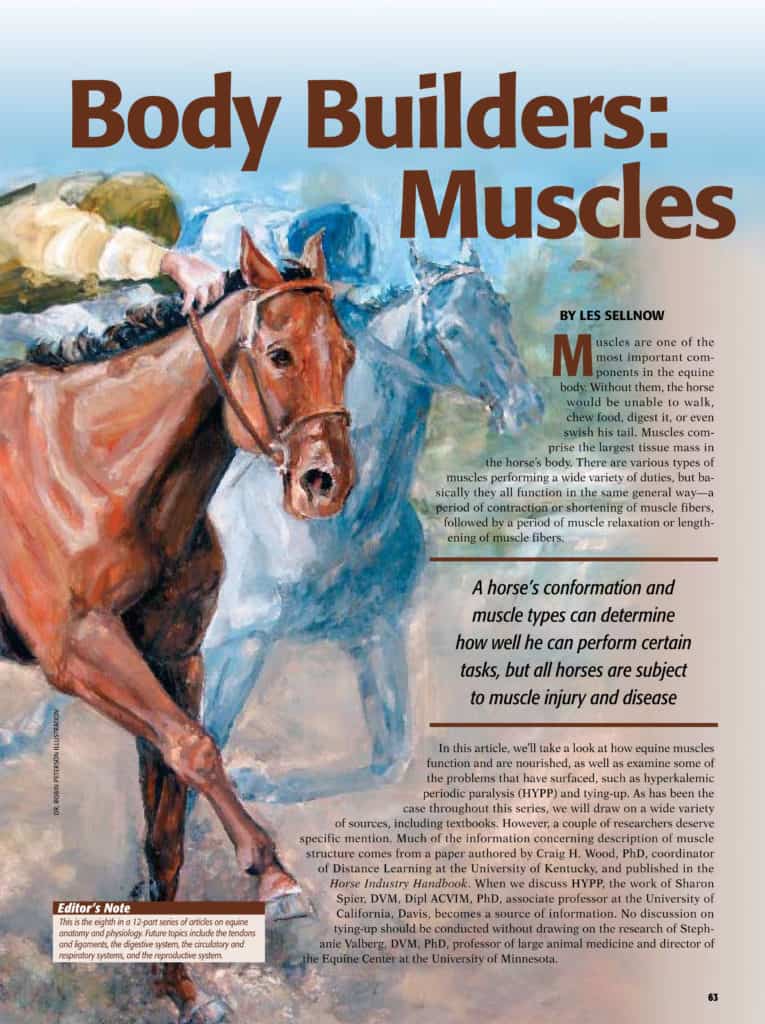
Body Builders: Muscles

A horse’s conformation and muscle types can determine how well he can perform certain tasks, but all horses are subject to muscle injury and disease. In this article, we’ll take a look at how equine muscles function and are nourished.

Read More

Anatomy and Physiology: Complete Series

Learn how your horse’s anatomy works with our complete anatomy and physiology guide, including basic terminology, skin, forelimbs, hindlimbs, feet/hooves, head and neck, tendons/ligaments, muscles, digestive, cardiovascular and reproductive systems.

Read More

More From The Horse

1861117807_2679871376001_Standing-wraps
Fine art horse nose with black copy space
Beautiful horses, animals, pasture, stables, horseback riding
White horse nose detail

Stay on top of the most recent Horse Health news with

FREE weekly newsletters from TheHorse.com

Weekly Poll

sponsored by:

What’s your biggest challenge when trying to improve barn air quality?
39 votes · 39 answers

Create a free account with TheHorse.com!

The Horse
Privacy Overview

This website uses cookies so that we can provide you with the best user experience possible. Cookie information is stored in your browser and performs functions such as recognising you when you return to our website and helping our team to understand which sections of the website you find most interesting and useful.