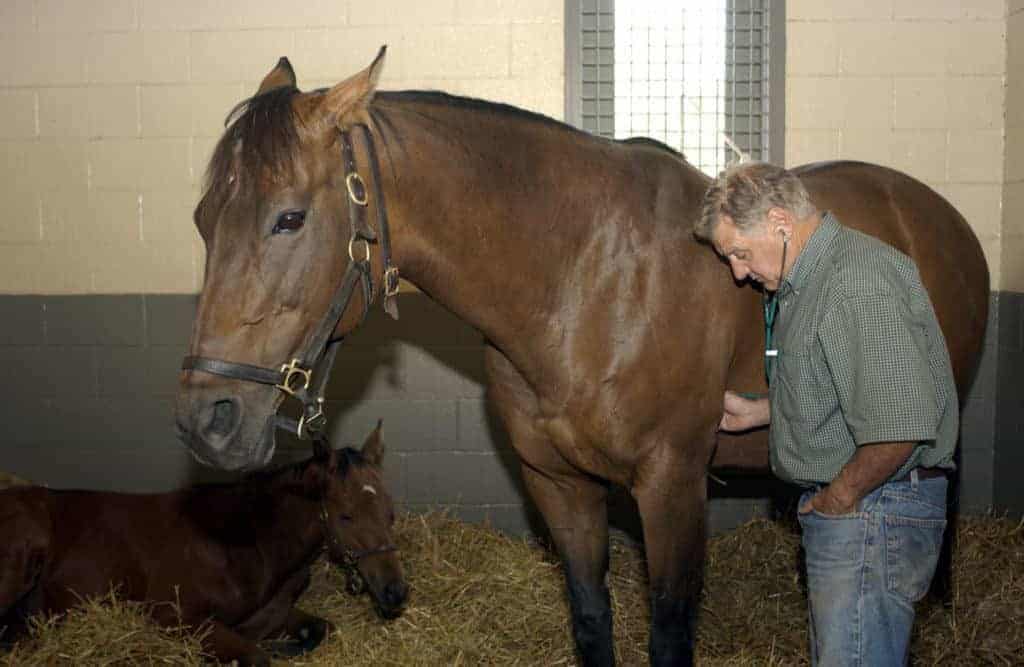
Checking the Vitals: Heart Function and Sound
Knowing how to identify abnormalities in your horse’s heart rate and rhythm will help you and your veterinarian treat him or her when illness strikes.

Knowing how to identify abnormalities in your horse’s heart rate and rhythm will help you and your veterinarian treat him or her when illness strikes.

Understand the structure and function of the equine upper respiratory system to understand horses’ breathing.

A joint is defined as an anatomic union or junction between two or more bones. There are three basic types of joints in the horse: Synovial, fibrous, and cartilaginous.

Oral supplements might be indicated for horses with dry, cracked, or brittle hooves.

Cardiac disease is considered the third-most common cause of “poor performance” in athletic horses (after musculoskeletal disease and respiratory disorders).

The horse’s digestive system is large, complex, and functions like a factory, yet it is exceedingly delicate. Digestive tract dysfunction in the horse is an important concern for owners and veterinarians.
Horses are athletes, too, and according to research, they need that stretching as much as humans do.

Dr. Alan Ruggles of Rood & Riddle Equine Hospital discusses some of the advances in management of septic orthopedic disorders in foals.

Researchers discussed respiratory topics in horses including influenza outbreaks and vaccination boosters, furosemide for exercise-induced pulmonary hemorrhage, dorsal displacement of the soft palate, dynamic respiratory tract endoscopy (during exercise), and more at the 2009 convention of the American Association of Equine Practitioners.

The horse’s body is both exceedingly powerful and capable of bending, turning around tight corners, and stopping on a dime, all thanks to his intricate combination of muscles, tendons, and ligaments.
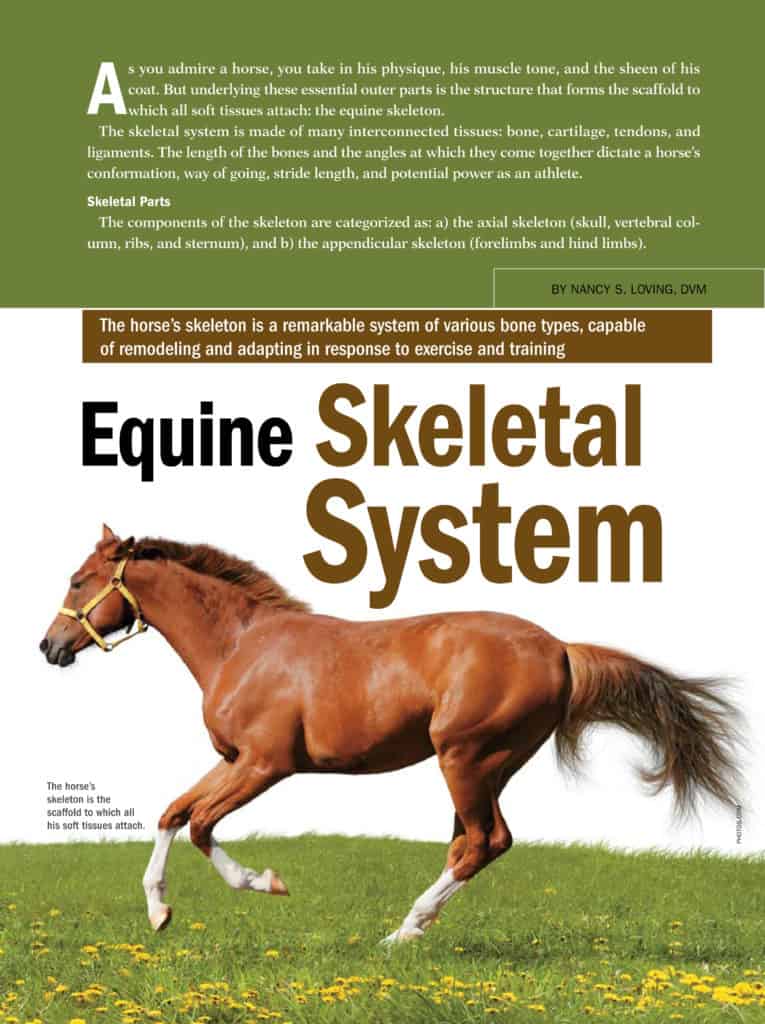
As you admire a horse, you take in his physique, his muscle tone, and the sheen of his coat. But underlying these essential outer parts is the structure that forms the scaffold to which all soft tissues attach: the equine skeleton.
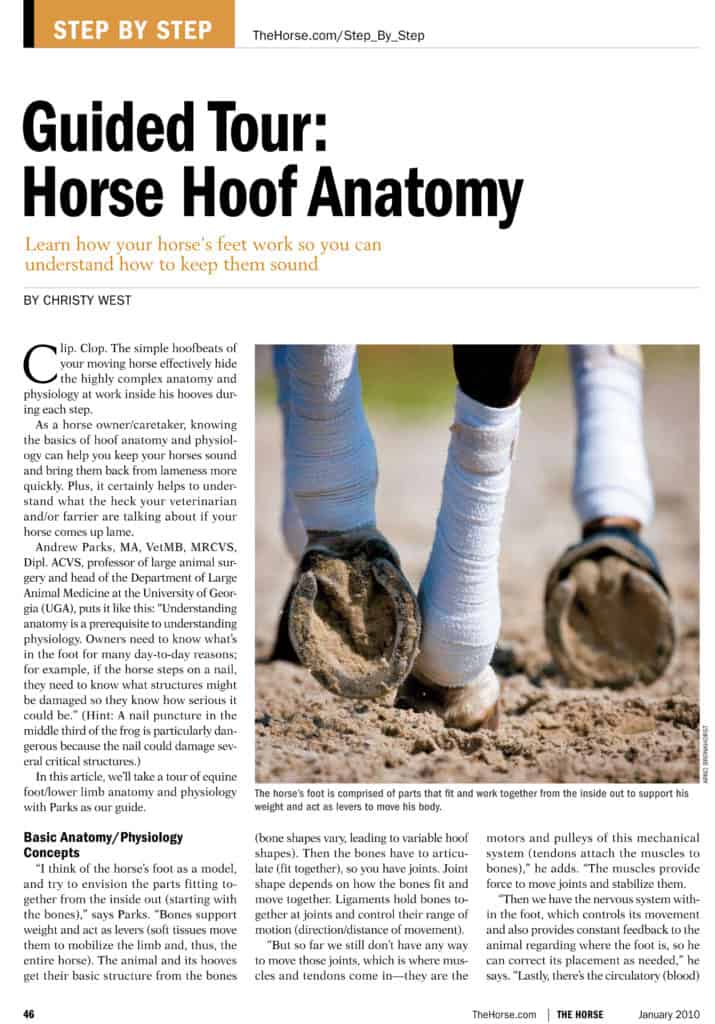
The simple hoofbeats of your moving horse effectively hide the highly complex anatomy and physiology at work inside his hooves during each step.
Newborn foals can be susceptible to many viral and bacterial infections. One example is the unique susceptibility of young foals to Rhodococcus equi, a common cause of bronchopneumonia.

Knowing how the hoof is built and what it is capable of can help you understand what it needs to stay healthy and recover if compromised.
Guttural pouches are more than just ill-defined air-filled vats located somewhere in the horse’s head, said Julie Fjeldborg, DVM, PhD, an associate professor in the department of large animal sciences at the University of Copenhagen, Denmark, during the 11th Congress of the World Equine Veterinary Association, which was held Sept. 24-27, 2009, in Guarujá, Sao Paulo, Brazil.

If the horse’s gastrointestinal (GI) tract were a highway, no self-respecting engineer would take credit for its design. Take a trip along the highway of the equine GI tract to learn more about how your horse digests his food.