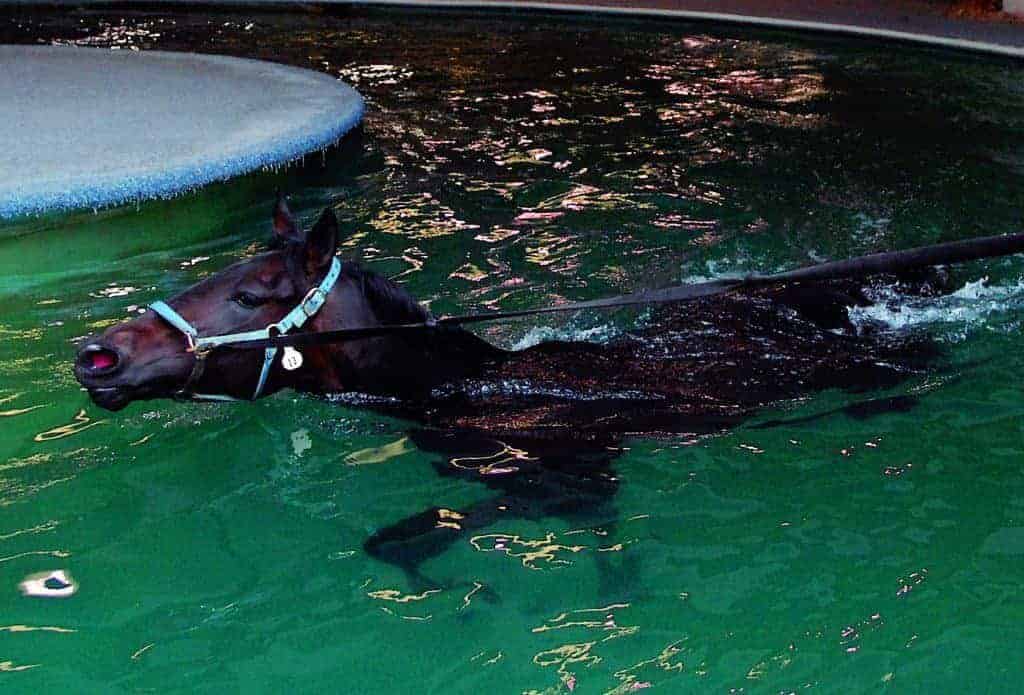
Hydrotherapy to Rehabilitate Injuries in Horses (AAEP 2011)
Veterinarians can prescribe aquatic therapy in the form of swimming pools or underwater treadmills.

Veterinarians can prescribe aquatic therapy in the form of swimming pools or underwater treadmills.
This year’s program will focus on pasture weed control, reducing parasite loads, and when to fertilize.
The stallion was a model patient at the UF in 2008 and 2009 and is now being turned into a Breyer model horse.
Mixed study results indicate more research is needed to determine dosing frequency and therapeutic window.

In the current study most horses successfully returned to their prior athletic function after colic surgery.
On Tuesday, Feb.7, from 6:30 to 7:30 p.m., the New Bolton Center will present “Colic in 3D: The Glass Horse.”
The multistate outbreak in 2011 illustrated the need for infectious disease control in the equine community.
More travelling and visitors for residents, and the admission of rescue cases prompted the new policy.
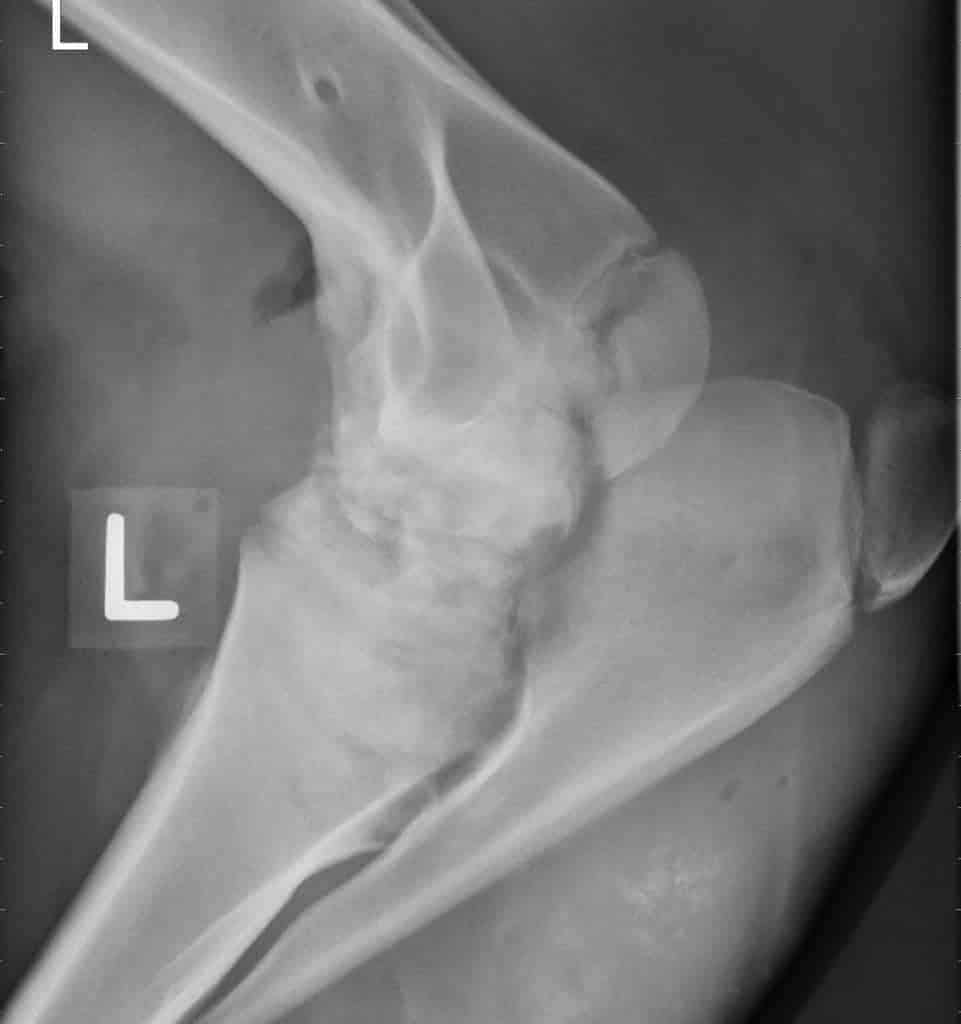
Treatment goals should be to aid in performance without eliminating the joint’s natural response to injury.

Topical anti-inflammatories, hyaluronic acid, and shock wave therapy are among the popular treatment options.

Panelists said there is no scientific evidence supporting a ban on the use of furosemide on race day.

Past studies showed that vaccines were only sometimes effective in preventing development of viremia.
One veterinarian combined a barbecue and fecal egg testing to educate clients on a new deworming strategy.
It’s never too late to implement biosecurity protocol to help protect horses from potentially fatal diseases.
The deadline for spring vaccines through the Unwanted Horse Veterinary Relief Campaign (UHVRC) is Feb. 1.
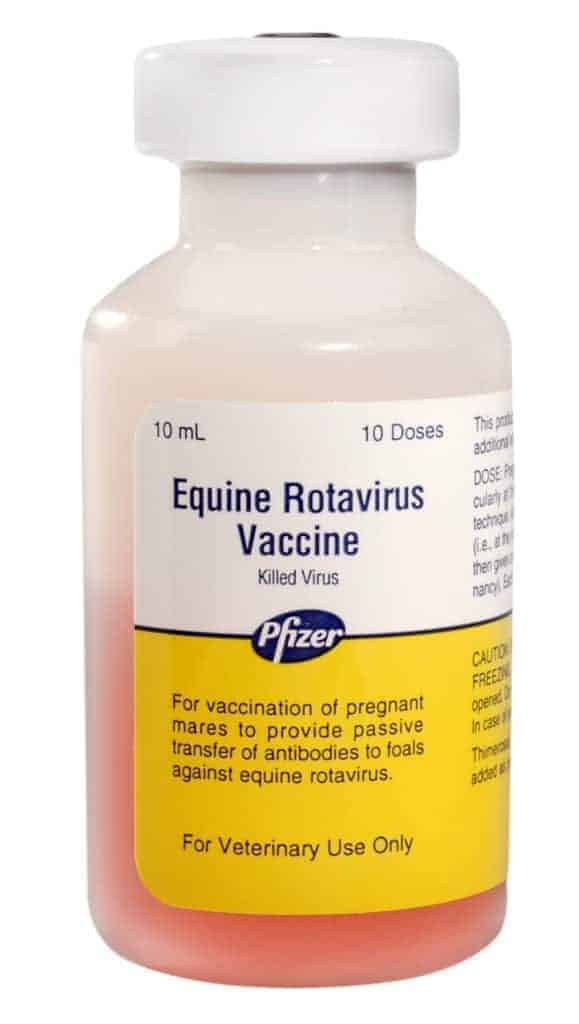
Pfizer’s Equine Rotavirus Vaccine has an updated appearance and packaging to reflect the current manufacturer.