Neck Problems in Sport Horses
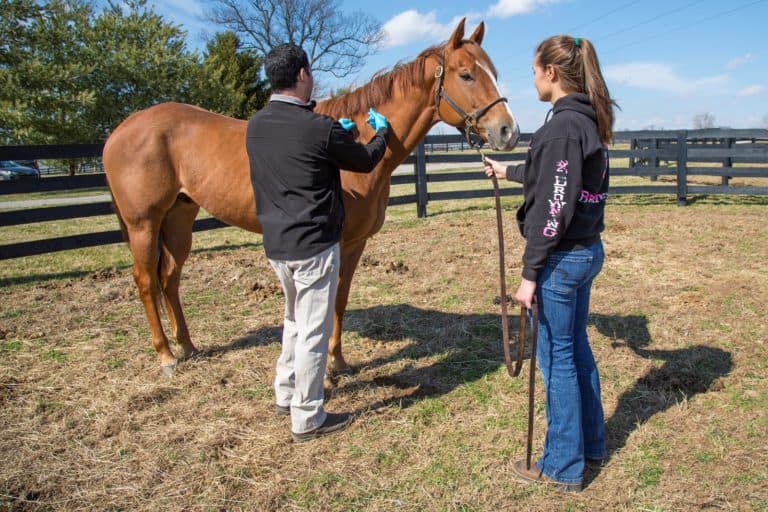
Some of the more typical clinical signs horses with a neck problem might present include stiffness, muscle atrophy, patchy sweating, shortened forelimb stride, forelimb lameness, and abnormal head carriage.

Some of the more typical clinical signs horses with a neck problem might present include stiffness, muscle atrophy, patchy sweating, shortened forelimb stride, forelimb lameness, and abnormal head carriage.
The equine carpal (knee) joint is a veritable puzzle of bones and sometimes a diagnostic enigma for veterinarians. Mike Ross, DVM, Dipl. ACVS, of the University of Pennsylvania’s New Bolton Center offered some insight to practitioners on working
The International Society of Equine Locomotor Pathology (ISELP) held the first of its second series of lectures earlier this month. Around 100 veterinarians attended the weekend course hosted by Virginia Equine Imaging and led by Jean-Marie
The sacroiliac joint, which forms the articulation between the pelvis and the spine, is often considered a location of elusive pain in horses. However, its deep location and, thereby, limited accessibility make diagnosis (via nerve blocks) and
Many methods have been used to straighten crooked limbs on foals, and in the past staples placed across the “long” side’s growth plate have received somewhat mixed reviews. However, some researchers suggest that this was due to poor staple choic

Learn how your horse’s anatomy works with our complete anatomy and physiology guide, including basic terminology, skin, forelimbs, hindlimbs, feet/hooves, head and neck, tendons/ligaments, muscles, digestive, cardiovascular and reproductive systems.
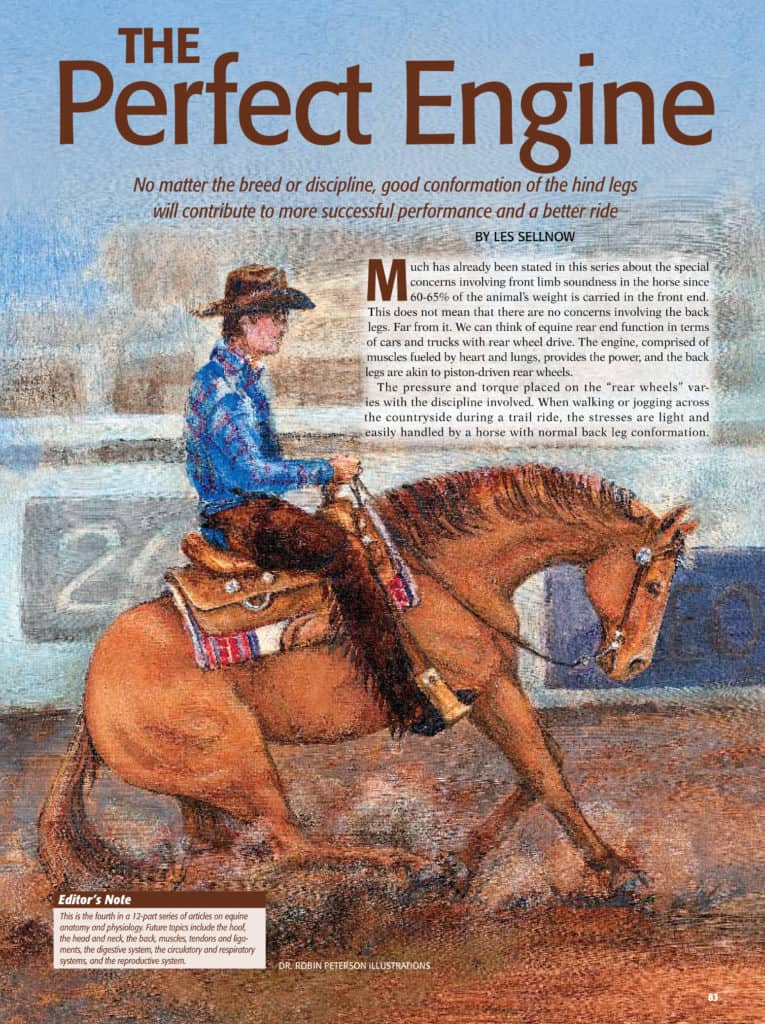
No matter the breed or discipline, good conformation of the hind legs will contribute to more successful performance and a better ride. We want a horse to have excellent rear leg conformation so that it can tolerate the demands placed on it.
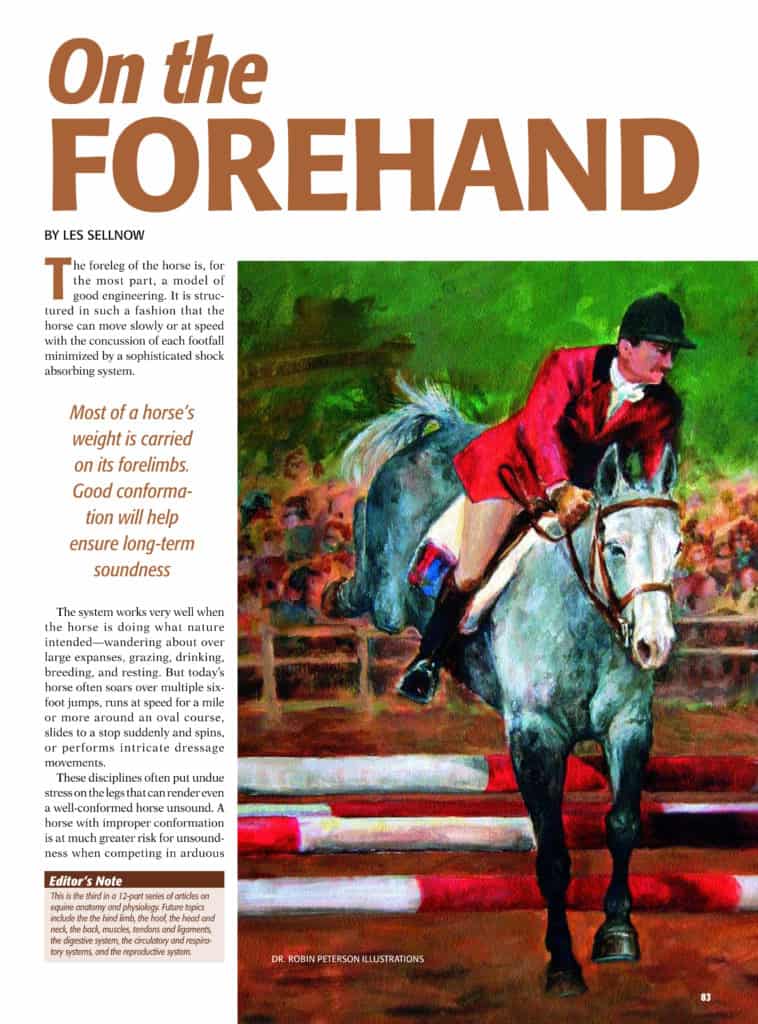
The foreleg of the horse is, for the most part, a model of good engineering. Most of a horse’s weight is carried on its forelimbs. Good conformation will help ensure long-term soundness.
My 4-year-old Quarter Horse gelding does not like to bend his knees and hocks. He feels like he’s walking on stilts.
Back pain is often suspected in horses, but most treatments haven’t been researched much or at all. Results of a study designed to measure the effects of massage, chiropractic, and phenylbutazone (Bute) on back sensitivity were presented at the 200
Subluxation (partial dislocation) of the coxofemoral joint between the femur and pelvis in horses is rare; only two cases have been reported in the literature. However, six cases were seen at the University of California, Davis, in a three-year
The stifle joint is often implicated in cases of lameness, but it can be a notoriously tough joint to image. Radiography, ultrasonography, nuclear scintigraphy (bone scan), and diagnostic arthrography (joint evaluation) all can be used, but they
Measurement of osteocalcin (a marker of joint metabolism) in 2-week-old foals might be useful for identifying foals at risk for developing osteochondrosis.
Osteochondrosis (OC) is a developmental orthopedic disease that results from a
Take more than 1,000 veterinarians and veterinary students from around the globe, some armed with presentations representing thousands of hours worth of equine research, and add to it some tartan, bagpipes, and Scottish fare. Drop it all into a
Two veterinarians compiled the latest on equine orthopedic topics and presented it to their colleagues at the 46th British Equine Veterinary Association Congress, held in Edinburgh, Scotland
Each year at the British Equine Veterinary Association Congress (BEVA), the organization awards prizes to top student presentations in the clinical research portion of the program. The 2007 award winners? talks were both rooted in orthopedics,