Feeding Horses on Stall Rest
Take steps to manage your horse’s weight and behavior while he’s cooped up.

Take steps to manage your horse’s weight and behavior while he’s cooped up.

Find out how Claire Godwin, DVM, keeps her 27-year-old endurance horse PL Mercury in elite condition, from joint support to conditioning tactics.

Caring for the older horse can require special attention to his needs. Download this free guide to find out what health issues to watch for and how to keep your senior horse happy and healthy.

Nutritionist Dr. Clair Thunes explains why ration-balancer protein contents might seem high but aren’t.

Although owners are frequently warned against the consequences of feeding these carbs, horses need them in their diets.

Learn about vitamin B-12’s role in the horse’s body and when supplementation might prove beneficial.

Why might replacing long-stem hay with hay pellets help resolve a senior horse’s loose manure? Our equine nutritionist weighs in.

Making dietary changes as horses lose their ability to grind long-stem hay will help prevent weight loss and other issues that can affect older horses.

Our nutrition expert explains how diet changes can help horses with pituitary pars intermedia dysfunction (PPID).

From reducing PPID-associated muscle wasting to managing IR and obesity, here’s what to consider for your old horse.

This suggests old horses need an appropriate diet and management plan to help minimize the risks associated with insulin dysregulation, such as laminitis.
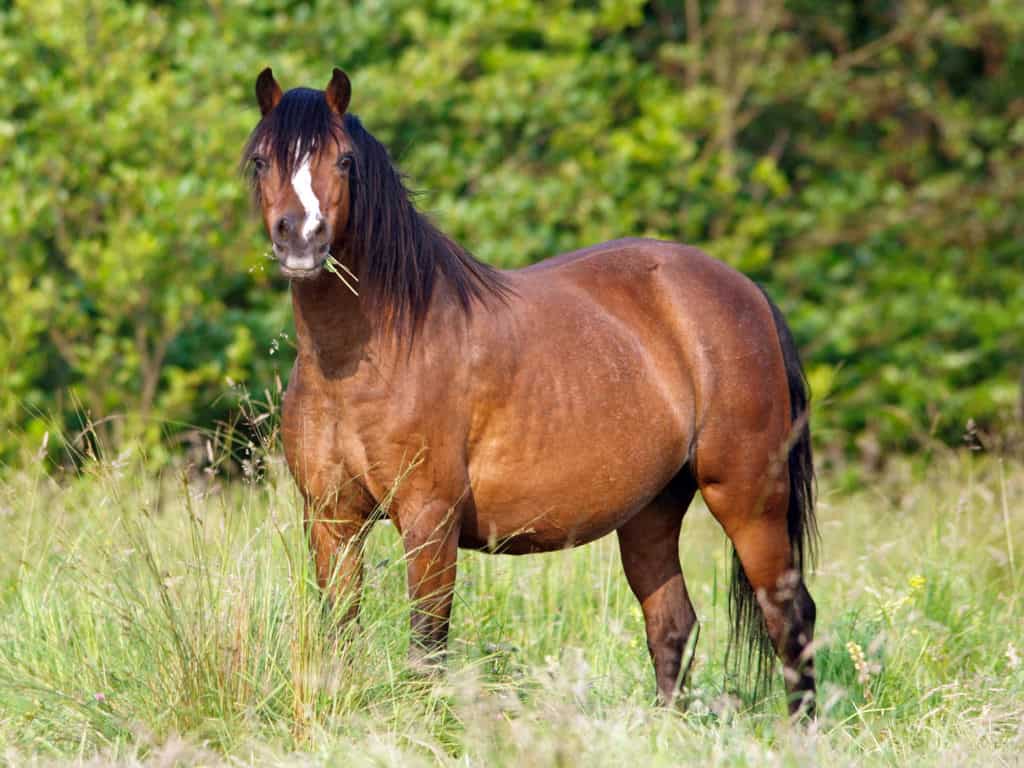
Researchers are working to help owners find ways to help their horses lose weight no matter their circumstances–from boarding facility set up issues to unsound horses that can’t be exercised.

Our equine nutritionist explains the differences between horse life-stage and feed types.

Need to stretch your hay supply? Consider adding hay cubes, complete feeds, or forage byproducts.

Learn what distinguishes PPID, EMS, and IR from each other and how to care for “metabolic” horses.
Learn more about nutrition’s role in the development and management of equine endocrine disorders and how you can reduce your horse’s risk of developing a secondary disease.