Spontaneous Quarter Crack? Check for Sheared Heels
One researcher says that it is very rare to see a spontaneous quarter crack not associated with sheared heels.

One researcher says that it is very rare to see a spontaneous quarter crack not associated with sheared heels.
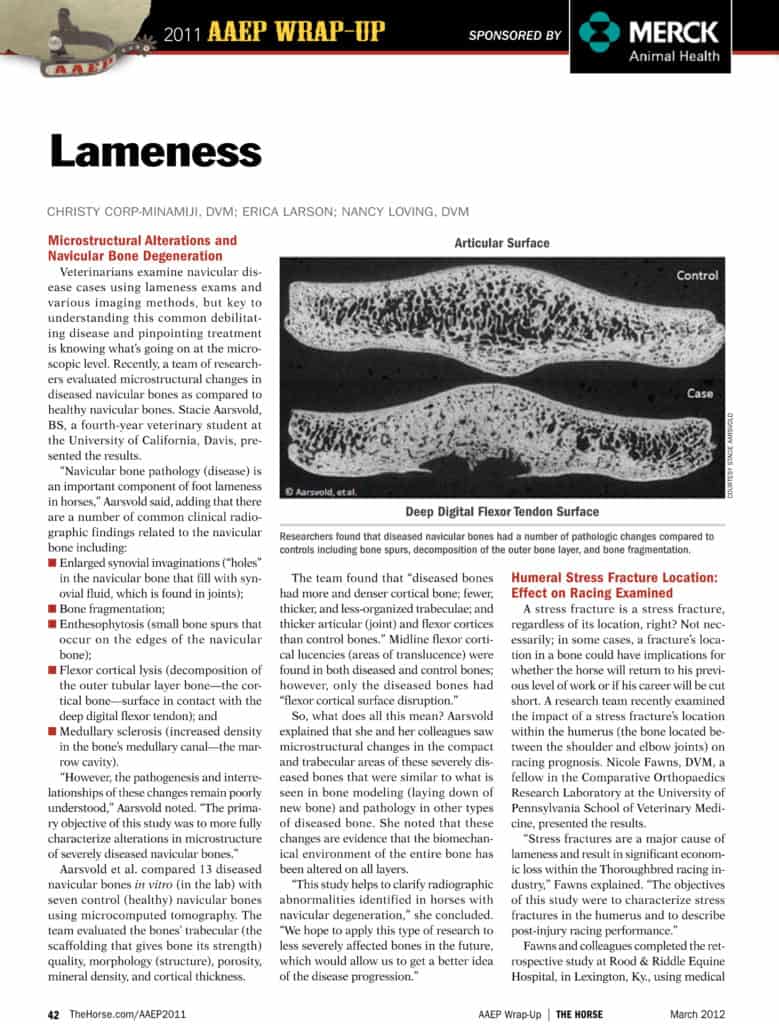
Developments in equine lameness research, discussed during the 2011 AAEP Convention in San Antonio, Texas. Topics included tendon/ligament injuries, microstructural alterations, navicular bone degeneration, bone marrow-derived stem cells, and more.
The summit will offer 68 hours of hoof care education focused around the theme “Zeroing in on Soundness.”
Sue Dyson, MA, VetMB, PhD, DEO, FRCVS, and Chris Gregory, CJF, FWCF, will present at the lecture in January.
Attendees discussed hoof lameness, club feet, track surface’s effect on lameness, back and neck pain, and EPM.
Equine lameness exams, regenerative medicine, podiatry advancements, and case studies will be discussed.

Healthy hooves are paramount to a horse’s soundness. This fact sheet lists some common hoof problems, such as hoof abscesses, quarter cracks, bruises, navicular syndrome, underrun heels, and thrush, and how to identify, manage and prevent them.
Your equine athlete’s performance hasn’t been blue ribbon-worthy as of late. Or maybe your broodmare’s gaits are looking a little off kilter. Could long toes on the hind feet be to blame? According to the results of a recent study, the answer in some
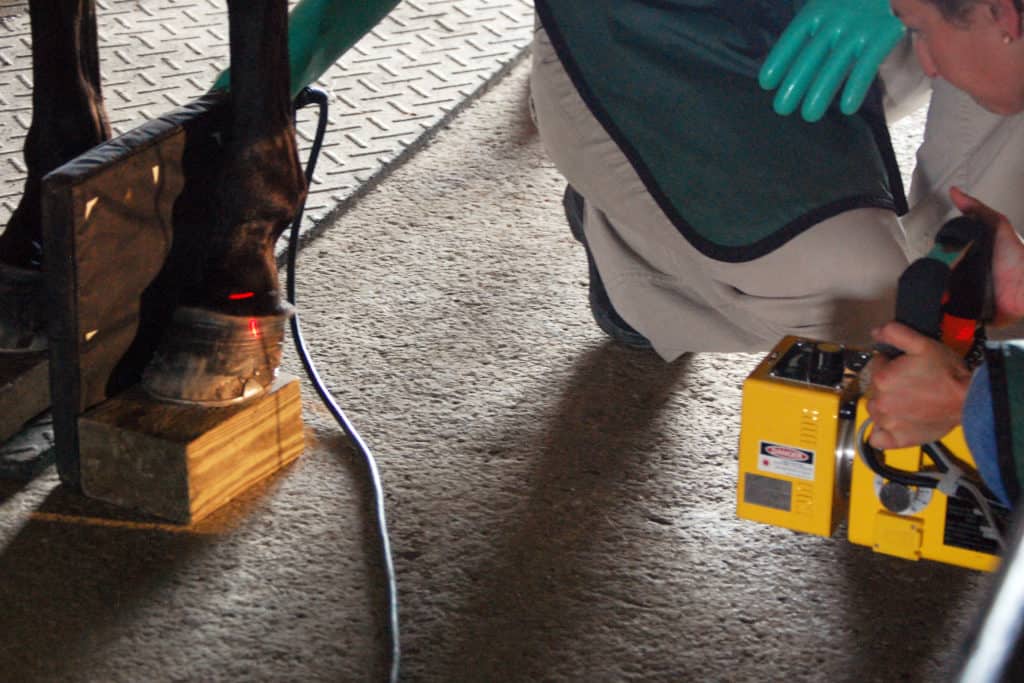
Dr. Vernon Dryden of Rood & Riddle Equine Hospital demonstrates navicular syndrome diagnosis in a 16-year-old Quarter Horse.

Equine lameness, defined as a deviation from a normal gait, is an indicator of a structural or functional disorder of the musculoskeletal system (the limbs or spinal column) that is noted while the horse is either moving or stationary.
Pinpointing lameness in horses is crucial before proper treatment can be prescribed. There are several approaches to lameness examinations and diagnostic methods, which will be partly determined by the age of the horse and what it does for living.
Foot lameness in horses was the topic of two separate Table Topics during the 2009 American Association of Equine Practitioners (AAEP) Convention in Las Vegas, Nev., in early December. About 100 veterinarians attended each session.
A
A recent study of coffin bone (distal phalanx) fractures in foals found they were far from rare. In fact, all 20 of the Warmblood foals in the study (all foals on a particular farm in one season) had fractures at some point in their first year of life.

Knowing how the hoof is built and what it is capable of can help you understand what it needs to stay healthy and recover if compromised.

MRI uses magnetic fields to create various types of cross-sectional and three-dimensional images.
A new track designed specifically for detecting lameness in horses and five refurbished boxes for treating foals have been opened at the University of Melbourne’s Veterinary Clinic and Hospital based in Werribee, Australia.
Equine staff at