Feeding Horses With Special Needs
Read about the do’s and don’ts of feeding horses that have 4 common health conditions, including gastric ulcers, metabolic disorders, and more.

Read about the do’s and don’ts of feeding horses that have 4 common health conditions, including gastric ulcers, metabolic disorders, and more.
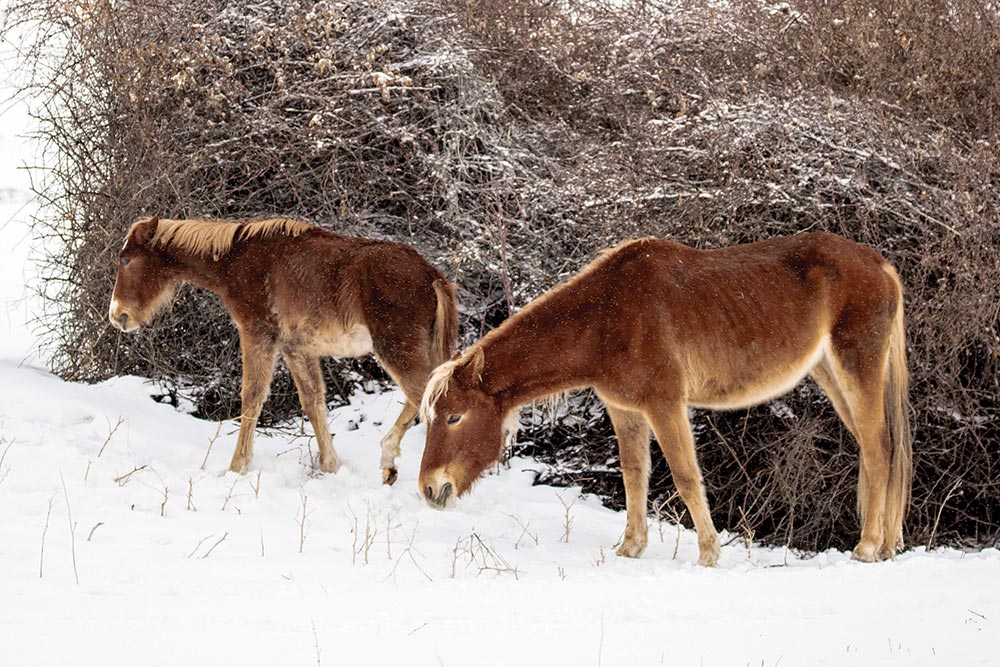
Consider the reasons your horse needs to gain weight and learn how to help safely and effectively. Read more in the Winter 2025 issue of The Horse.

Cold weather often brings unwanted weight loss in hard-keeping horses. Two experts offer advice on preventing this as we prepare for temperatures to drop.

Can horses lose weight too fast? Does exercise or dietary restriction work better for equine weight loss? Two experts answer these questions and more.

Learn about the benefits and drawbacks of adding hydroponic fodder to a horse’s diet.

An equine nutritionist answers common questions about beet pulp, which has long been a mainstay in many feed rooms for horses.

One’s designed to be the horse’s whole diet, while the other is meant to complement his forage ration. Which is best for your horse?

Grass sugar levels shift with time of day, season, and weather. Careful turnout timing can help prevent problems in horses with EMS, IR, or a history of laminitis.

Here’s why you should consider how closely horses graze, along with compost, water, and rest to cultivate healthy soil in horse pastures.

Abruptly putting a horse on pasture can lead to colic or laminitis. Here’s advice to help avoid health problems.

Learn how to tailor your mare and foal’s feeding program from late pregnancy to weaning with expert guidance.

An equine nutritionist emphasizes the importance of fiber in horse diets and shares 2 rules for safe fiber-feeding practices.

Dr. Patty Graham-Thiers describes the safest ways to help a horse lose weight without overrestricting his forage intake and increasing his risk of gastric ulcers.

Dr. Kelly Vineyard explains how to estimate the amount of grass your horse consumes when turned out on pasture and calculate his total daily forage intake.

When your older horse’s pearly whites are past their prime, keep an eye out for signs of specific problems.

Find out how climate change might affect your horse’s pasture in this U.S. region.