Feeding the Ulcer-Prone Horse
Learn how to craft a diet for the horse with painful lesions in his stomach.

Learn how to craft a diet for the horse with painful lesions in his stomach.

Find out how horses can be exposed to and affected by these toxic compounds.

Horses can consume hay pellets or cubes rapidly. How can we slow them down to increase their time spent chewing?

Is one grass hay variety more palatable than another? Should I feed my horse the first or second cutting of hay? Equine nutritionists answer these questions and more.
Addressing your high-energy horse’s behavior using diet might involve some trial and error. Learn what you should consider before adjusting his feeding program.
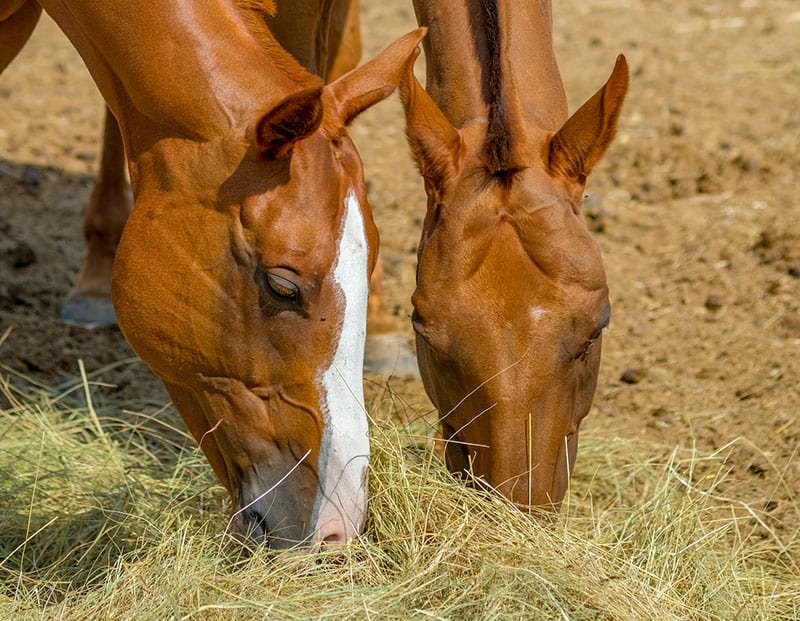
Getting back to basics and simplifying meals might be the key to keeping the horse’s hindgut healthy and functioning properly.

Regularly monitor your horse’s condition and workload to ensure his energy requirements are being met with a forage-focused diet this show season.

What should and shouldn’t horses with heaves (or equine asthma) eat? A nutritionist offers advice.

Learn why this antioxidant is important for muscle health and how to supplement it safely.

Learn about 10 common plants, chemicals, organisms, and toxins your horse should never eat.
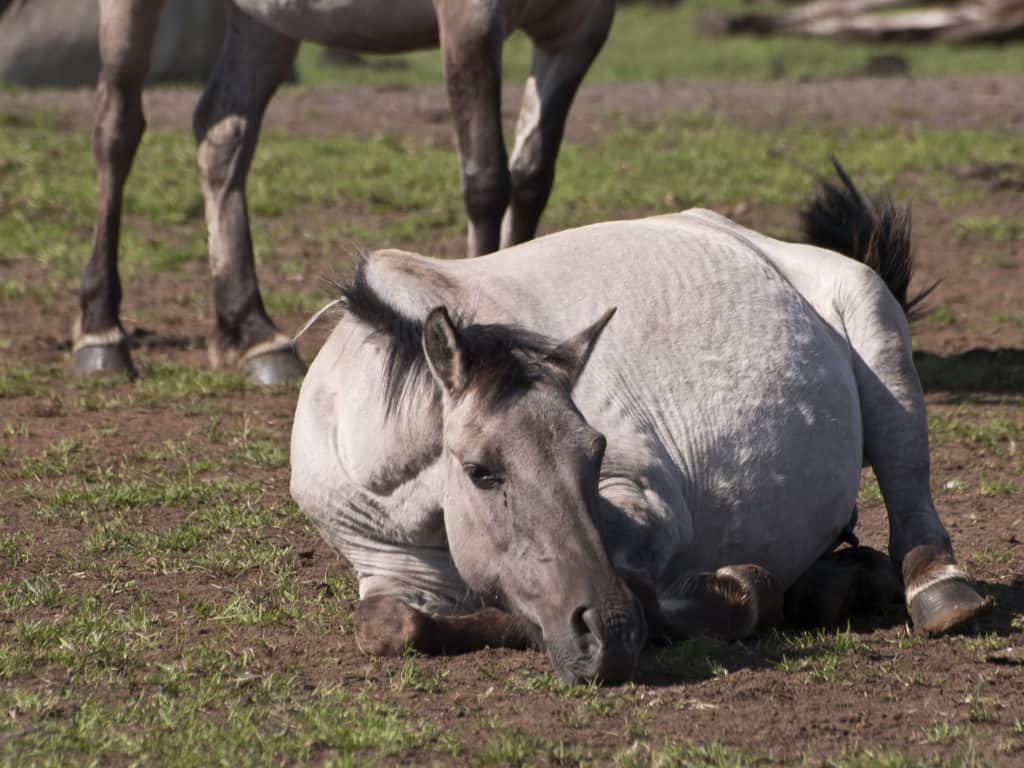
Find out how to design an affordable feeding program while still meeting your horse’s nutritional requirements.

Is your hay more than 6 months old? Then it might be losing vitamin A and E.

Black cherry leaves are blowing into a horse pasture, and the owner is worried they will put her horses’ health at risk.

A forage-only diet can meet most horses’ nutritional needs.

Learn how to design a diet for horses suffering or recovering from equine odontoclastic tooth resorption and hypercementosis (EOTRH).