Understanding Carbohydrates in Equine Diets
When it comes to designing diets, knowing the basics of how horses digest food is half the battle. It’s important to consider each horse’s energy requirements before developing a feeding schedule.

When it comes to designing diets, knowing the basics of how horses digest food is half the battle. It’s important to consider each horse’s energy requirements before developing a feeding schedule.
A recent study found that horses with pica–a propensity for consuming non-food items–have lower iron and copper blood levels than horses who restricted themselves to food items, only. According to researchers from Turkey, “prophylactic u
In a survey of leading three-day event riders, researchers found that the majority of riders fed their horses based on research-driven recommendations, but the number of supplements used per horse did raise some eyebrows.
During the Jersey
Just because a supplement comes in fancy packaging with a tamper-resistant foil seal and promises of efficacy does not necessarily mean that it is safe for your horse.
According to the Committee on Examining the Safety of Dietary
Authored and narrated by Kathryn Watts, BS, a Power Point lecture on CD entitled “Soil Minerals: The Basis of Nutrition” is now available for horse owners interested in equine health and hoof care. The science behind mineral nutrition in grass and ha
As if hay scarcity and high prices aren?t enough, experts are warning horse owners that imported hay could also hide horse health dangers including seriously low amounts of essential vitamins such as A and E, excessive amounts of selenium, and
Horses can become vitamin-deficient, and these deficiencies can have devastating effects on their normal functions, but equally dangerous are toxicities from an overdose–a real possibility with some (but not all) of the vitamins.
Name a part of your horse you’d like to enhance–anything from his coat or hooves to his stamina–and there’s likely a supplement for it. Marketed alongside the products that improve joint function and breathing ability, there are supplements
Alltech, a Kentucky-based biotechnology company, announced its title sponsorship yesterday (June 19)for the 2010 FEI games to be held at the Kentucky Horse Park in Lexington. This marks the first time in FEI history that the World Equestrian
We all know a horse’s primary food is pasture grass and/or hay (forage). The quality of the forage is, thus, a major factor affecting his health. Do you know if your horse’s forage meets his needs? Truly, most of us don’t–but we should.
Nonenzymatic antioxidants, such as vitamin E, are critically important to protect horses from tissue damage and disease, and they might enhance immunity during these processes. However, the form of vitamin E your horse obtains determines the
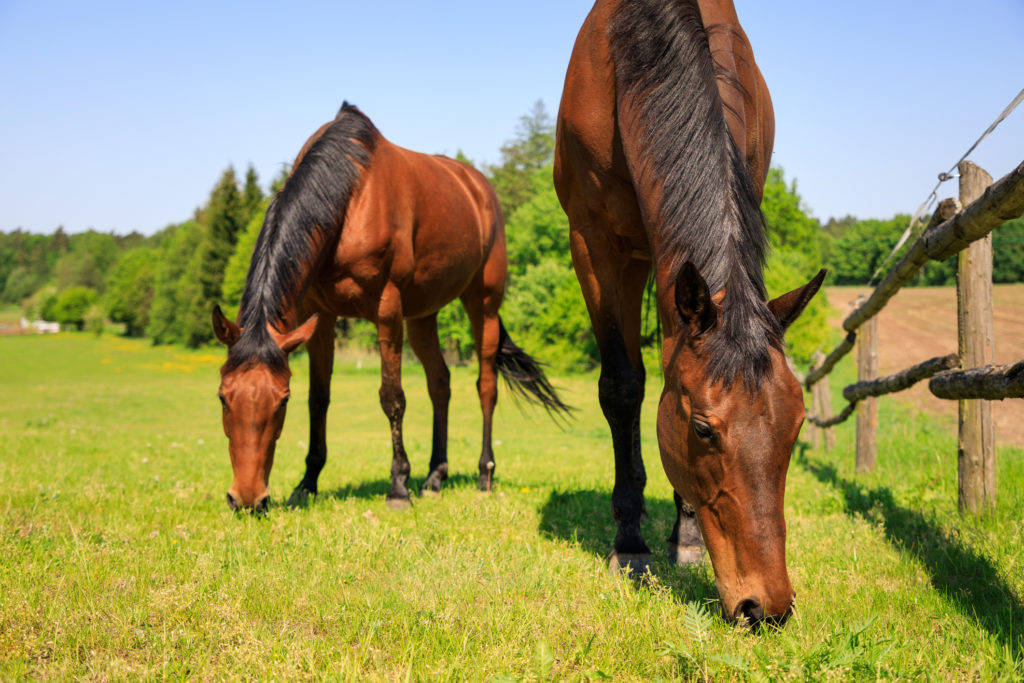
Antioxidants (which include vitamins E, C, and A, selenium, glutathione, lipoic acid, coenzyme Q10, and isoflavins) act to stabilize free radicals and halt oxidative damage. Here’s a look at how they function.
Making sure that copper requirements are met in the overall diet of horses is prudent. However, there is no real need to test soils for copper, and certainly no evidence that fertilizing with copper sulfate will minimize the occurrence of the ergot
Researchers at Oregon State University and elsewhere are continuing to examine the role of vitamin E in horse health, including disease prevention and therapy. In particular, vitamin E deficiencies and/or supplementation could be important
Of all the ingredients of a horse’s diet, minerals are unique. Here’s a rundown of the most important minerals in your horse’s diet.