How Much Does a Horse Cost?
A look at what it really costs to own a horse besides the initial purchase price.

A look at what it really costs to own a horse besides the initial purchase price.
It’s beneficial to look at biomarkers that reflect changes in cartilage as well as the joint capsule and bone.
On March 6, New Bolton Center will present “Suspensory Ligament Diseases in the Performance Horse.”

Using computational modeling, researchers can examine “what if” scenarios related to equine injuries.

Nonsurgical exogenous crosslinking therapy (NEXT) is undergoing efficacy testing in healing equine tendons

Research indicates adipose tissue is a reliable source from which to collect stem cell aspirates in horses.

A better understanding of the growth factors require for tissue healing could enhance stem cells’ efficacy.

Find out how stem cells are currently being used to treat orthopedic injuries in horses and how the cells
The wealth of scientific technology makes it difficult to keep track of treatment options for injured horses.
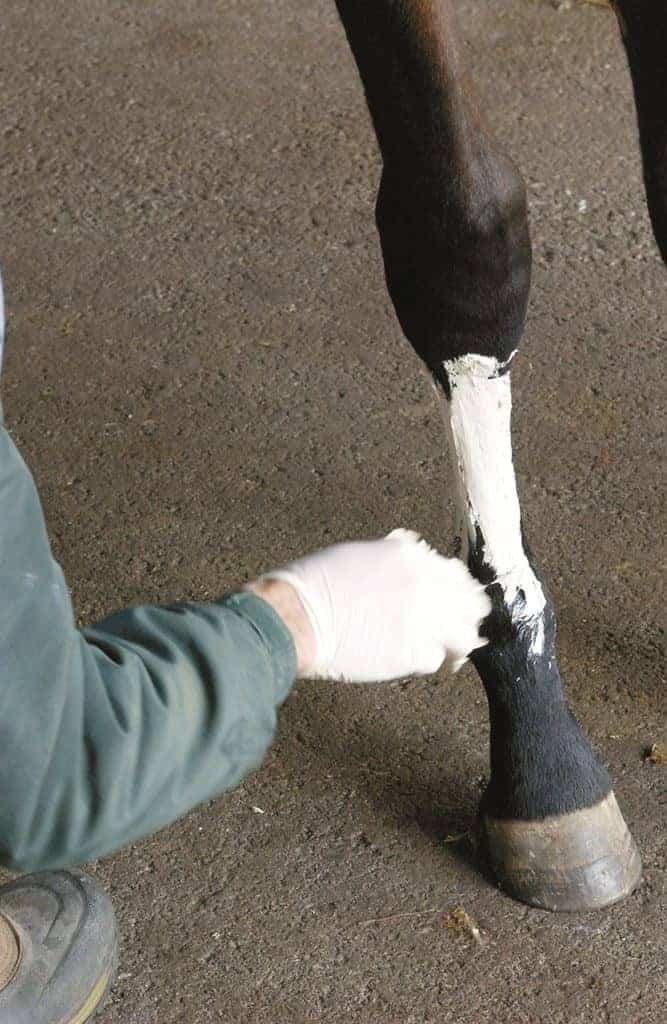
Poultice can help reduce tissue heat and swelling caused by high intensity training and performance.

The latest therapies for injured tendons and ligaments focus on rebuilding tissue to its original strength.
Equine atypical myopathy (EAM), a seasonal, pasture-associated muscle disorder of unknown etiology (cause), presents a particular challenge to veterinarians. The disease is characterized by a generalized complete degeneration of muscle fibers, which
Mouth injuries can happen in any horse, whether during elite competition or in our own stables and pastures.

It has been suggested that 60% of equine lameness problems are related to osteoarthritis, which stresses the importance of advancements of both medical & surgical treatment options.

A joint is defined as an anatomic union or junction between two or more bones. There are three basic types of joints in the horse: Synovial, fibrous, and cartilaginous.

Equine joint injections can help veterinarians diagnose lameness or medicate a horse’s painful joint.