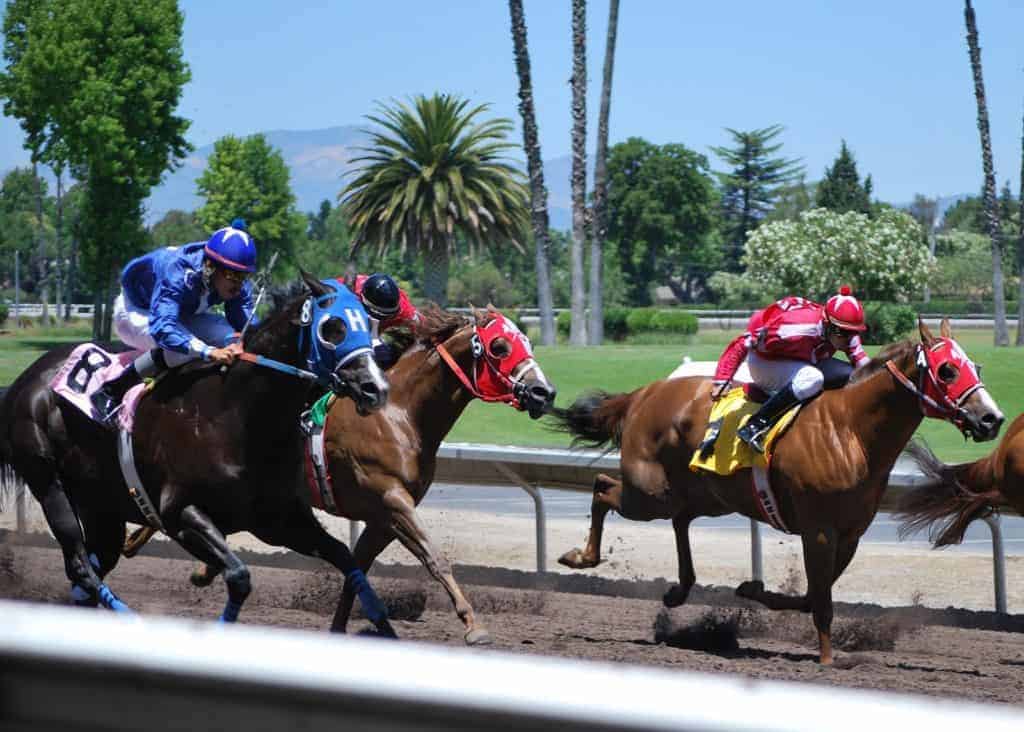
Catastrophic Injuries in Racing Quarter Horses Studied
More than 56% of injuries occurred in the right forelimb, the opposite of what’s most commonly seen in Thoroughbreds.

More than 56% of injuries occurred in the right forelimb, the opposite of what’s most commonly seen in Thoroughbreds.

Discover what flexing a joint can tell a veterinarian about a horse’s soundness.

What riding conditions give you pause, and how do you protect your horse from footing-related injuries?

Learn about three common sport horse injuries and how to prevent and manage them.

Researchers found pre-existing abnormalities in all horses with lumbar vertebral fractures that underwent a necropsy.

From feeding and training to shoeing and warm-up protocols, learn how to keep your dressage horse fit to perform.

Find out how dynamic mobilization, core strengthening, and balancing exercises can help stabilize the horse’s spine and the fore- and hind limbs’ attachment to the body.

Shock wave is a noninvasive, nonsurgical therapy for orthopedic conditions. Learn how it can help your horse.

Dr. Bryant Craig shares steps to prevent arthritis in the athletic horse. This podcast is from the Equine Life Stages: Adult Horses Q&A audio event.

Joint disease causes lameness, impedes training, creates behavioral issues, and can end a horse’s riding career. From hoof care and nutrition to medical and supportive care, learn how to keep your horse comfortable and sound despite joint disease.

Equine muscle expert Dr. Stephanie Valberg explains the differences between these two diseases that cause horses to tie up.

Learn why magnetic resonance imaging (MRI) considered the “gold standard” for diagnosing equine lamenesses and get your questions answered about how MRI can help your horses during this live event.

Learn about how horse joints work and how you can keep your horse’s joints healthy with this step-by-step visual guide.

The composite pain scale lists common behaviors often seen in horses suffering from either abdominal or musculoskeletal pain.

And while veterinarians are well-versed in how to help keep these performance horses going, there are management techniques and training protocols owners can employ to give their animals that extra edge.

Have you ever wondered how a veterinarian would train and develop a horse? Find out from a veterinarian who’s also a Grand Prix dressage trainer and clinician.