Supplement to Support Post-Surgical Joint Health (AAEP 2012)
A supplement fed after osteochondral fragment removal could help reduce post-surgical joint inflammation.

A supplement fed after osteochondral fragment removal could help reduce post-surgical joint inflammation.

Researchers evaluated a new method that could help vets monitor joint infections’ response to treatment.

Learn about the newest research and information about therapeutic joint injections for horses, including hyaluronan (HA), site prep, corticosteroids, infection, and more.
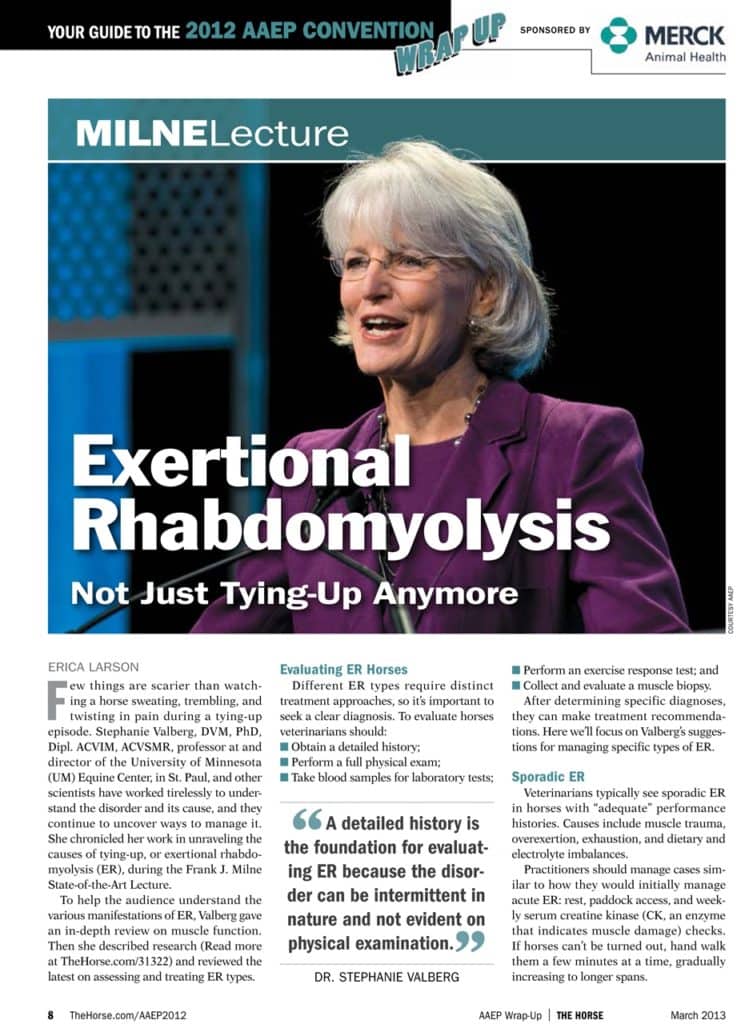
The University of Minnesota’s Dr. Stephanie Valberg discussed exertional rhabdomyolysis (formerly tying up) the 2012 Frank J. Milne State-of-the-Art lecture during the 2012 AAEP convention.

One veterinarian reviews different non-steroidal joint medications commonly used in equine joint therapy.

One veterinarian believes CT offers a better option for imaging some lower limb fractures than radiography.

MRI could detect bone changes indicating a horse is at risk for catastrophic fractures before accidents occur.
Authorities are investigating two unrelated incidents occurring 15 minutes apart at The Meadows Racetrack.

With appropriate care and use, vets can mitigate some risks associated with intra-articular corticosteroids.
The racetrack has no intention to remove its Polytrak surface after this year’s spring meet.

Non-weight-bearing lameness is one of the most common emergencies practitioners manage in the field.
Veterinarians must take several steps to minimize the horse’s chances of developing a joint infection.

Researchers found variations in degree of fetlock flexion, hoof slide in horses working on different surfaces.
Read how veterinarians saved a record-breaking racehorse after she sustained a life-threatening injury.
The 5-year-old gelding was euthanized after fracturing both sesamoid bones in his left front leg.

Consider the following “wishes” equine experts made to help maximize your horses’ quality of life.