Clinical Indicators for Tieback Surgery in Horses
Consider doing tiebacks in horses where the problem is or will be performance-limiting.

Consider doing tiebacks in horses where the problem is or will be performance-limiting.

Safety in Thoroughbred horse racing became a very public concern two years ago when a series of catastrophic breakdowns at Santa Anita Park in Southern California became national news. Veterinarians presented safety measures put in place to protect horses and humans.

Researchers used PRP-L to treat joint infections caused by the common bacterium Staphylococcus aureus, with encouraging results.

Scientists looked at the drug’s safety, efficacy, and ease of use under natural conditions.

The chief revision: addition of intrathecal lidocaine hydrochloride 2% with the horse in a surgical plane of general anesthesia.
A. Gary Lavin, VMD, veterinarian, Thoroughbred breeder, and exemplar of leadership in his profession, died at his home in Louisville, Kentucky, on Feb. 27. He was 83.

Is your horse’s annual wellness exam comprehensive? Learn about common wellness steps and how your veterinarian can help you address and correct problems you might encounter.

The guidelines, available as a PDF file, were reviewed and approved by the AAEP’s infectious disease committee and board of directors.
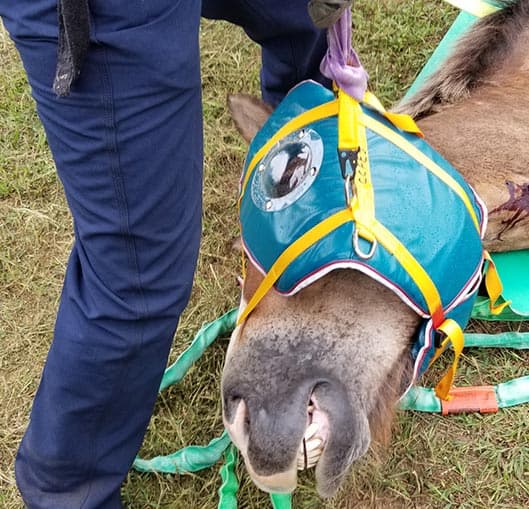
Vets and handlers can take these steps to keep horses restrained during recovery or rescue.

Researchers confirmed using resistance band systems, balance pads, and dynamic mobilization can help improve spinal muscle characteristics and postural stability.

Neurologic examinations in foals are easy to perform and provide useful information about the neonate’s overall health status.

Veterinarians can use these fetal parameters to monitor foal health and predict foaling date.

Researchers tested pooled platelet-rich plasma lysate as a unique anti-inflammatory approach to joint preservation on lab samples.

Renowned equine anesthesiologist Dr. John Hubbell described equine anesthesia, and its strengths and limitations, in the Milne Lecture.
Researchers explored the ability of bone marrow mononuclear cell (BMNC) therapy to improve lameness, with good results.

Researchers found horses treated with antibiotics have significantly less diversity (fewer bacterial species) in their GI microbiomes than healthy horses.