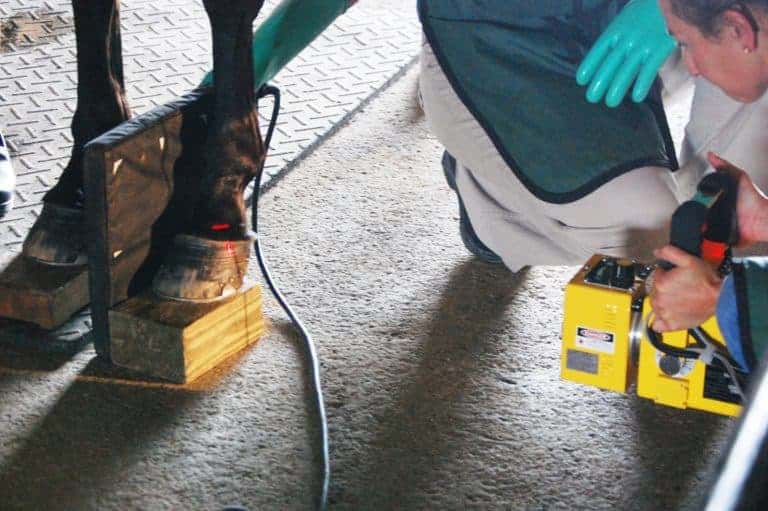
Penetrating Injuries in Horse Hooves
When it comes to penetrating hoof injuries, early, aggressive treatment is key to a favorable outcome.

When it comes to penetrating hoof injuries, early, aggressive treatment is key to a favorable outcome.
Foal owners need to be especially mindful of Parascaris equorum, commonly known as ascarids, the most dangerous worms found in these youngsters, according to D. Craig Barnett, DVM, senior equine technical services veterinarian for I
It isn’t for lack of effort that the equine industry still doesn’t have new options for treating Rhodococcus equi pneumonia in foals. “To date, alternatives to macrolides for effective treatment of R. equi pneumonia in foals have not been identified
Any lameness can be tough for a veterinarian to treat and resolve, but pastern joint lameness caused by osteoarthritis can be especially problematic. In low-motion joints, sometimes the solution to lameness troubles is physiologic fusion (fixation of
What does a veterinarian look for when evaluating a horse for neurologic disease? Hint: The neurologic exam starts with simple field tests, not sophisticated imaging equipment. “Each clinician has his or her own method of performing a neurologic exam
Transrectal ultrasounds can be up to 100% accurate in determining fetal sex at a determined gestational age.

Teams of veterinarians and farriers from around the country gathered at the fifth International Conference on Laminitis and Diseases of the Foot in Monterey, Calif., Sept. 17-18, 2010, to discuss the most cutting-edge information available for the fight to conquer laminitis.
The World Equine Veterinary Association (WEVA) held an intermediate meeting May 28-29 in Debrecen, the second largest city of Hungary.
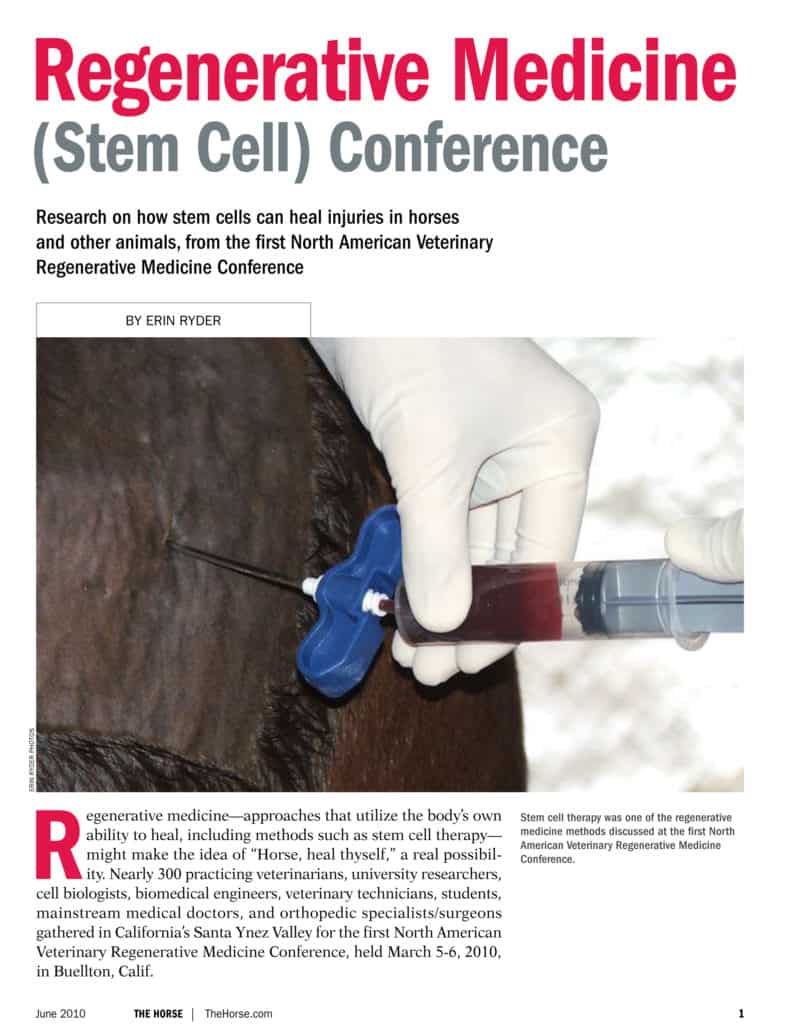
Regenerative medicine (stem cell therapy) might make the idea of “Horse, heal thyself,” a real possibility. This was the topic at the first North American Veterinary Regenerative Medicine Conference in 2010.
With their large, exposed eyes, horses are at risk for diseases of the cornea, the clear outer layer of the eye, said Elizabeth A. Giuliano, DVM, MS, Dipl. ACVO, associate professor of veterinary medicine and surgery at the University of Missou
Veterinarians might be able to prevent abortions in some pregnant mares that show premature mammary development, Dietrich H. Volkmann, BVSc, MMedVet (Gyn), Dipl. ACT, told equine veterinarians at the 2010 Western Veterinary Conference, held Feb
Multiple clues can help a practitioner determine the cause of infectious diarrhea or colitis in adult horses, including the farm’s history of previous outbreaks, geographic location, and season.
Adjusting a laminitic horse’s weight bearing plays a crucial role in the animal’s recovery, explained Debra Ruffin Taylor, DVM, MS, Dipl. ACVIM, of Auburn University, at the 2010 Western Veterinary Conference, held Feb. 14-18 in Las Veg
A lively Table Topic discussion on Equine Behavioral Abnormalities was held at the 2009 AAEP Convention.
The High Risk Pregnancy in the Mare session at the 2009 AAEP Conference was very well attended.
Because navicular problems might affect soft tissue as well as bone, MRI is a better diagnostic tool than X ray in these cases, said Robert K. Schneider, DVM, MS, professor at Washington State University College of Veterinary Medicine, and part