Horses and Veterinarians: How to Get Along

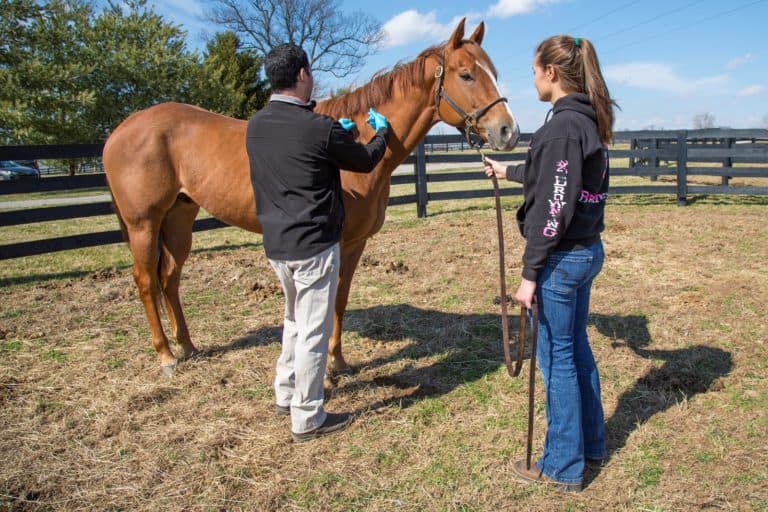
“Veterinarians work under a great handicap when handling horses–almost everything the veterinarian does to a horse is either frightening or painful,” began Robert Miller, DVM. However, that doesn’t mean there’s no way for a v

Read More

Equine Influenza Vaccine Protocols: Boosters are Best

A 300-horse study sought to find the vaccination protocol that best prevents flu in horses–intranasal (IN) or intramuscular (IM), given as a single dose or two doses given 30 days apart (boosted). Researchers also looked at boosting an initial

Read More

Broken Coffin Bones Common in Warmblood Foals

A recent study of coffin bone (distal phalanx) fractures in foals found they were far from rare. In fact, all 20 of the Warmblood foals in the study (all foals on a particular farm in one season) had fractures at some point in their first year of life.

Read More

Equine Reproduction Advances Discussed at AAEP

What was the hottest news in equine veterinary medicine in 2009? During the popular Kester News Hour session at the annual American Association of Equine Practitioners (AAEP) Convention, three top veterinarians (who focus on equine reproduction, inte

Read More

Electrotherapy Devices for Equine Veterinary Use

Electrotherapy technology, available since the 1960s, is useful to manage pain, improve range of motion, decrease edema (fluid swelling), improve motor control and strength, reverse muscle wasting, deliver blood flow, and serve as a vehicle for ionto

Read More

Colic: In-Depth Discussion by Vets at AAEP

Almost all horses with colic can be saved if the problem is recognized quickly and treatment is instituted rapidly, said Anthony Blikslager, DVM, PhD, Dipl. ACVS, of North Carolina State University, during the “In-Depth: Colic” portio

Read More

Standing Chemical Restraint of Horses

“Many surgical and medical procedures can be accomplished in the standing horse if appropriate combinations of physical and chemical restraint are employed,” began John Hubbell, DVM, MS, professor of veterinary clinical sciences at The Ohio State Uni

Read More

Deworming Drug Efficacy in European Horses

Numerous research papers and presentations over the last several years have noted that internal parasites in horses are growing more resistant to the deworming drugs (anthelmintics) we have available. A study of European horses presented at the

Read More

Reducing Your Horse’s Exposure to Dust

Researchers have shown that significant amounts of mucus in a racehorse’s airway can negatively affect his performance, and they’ve theorized that dust in the horse’s environment contributes to that mucus. Therefore, the logical nex

Read More

World Equine Veterinarians Meet (WEVA 2009)

The 2009 WEVA Congress was held in Guarujá, São Paulo, Brazil, which ranks among the top 10 countries with the highest population of equids. It boasted one of the largest gatherings in WEVA’s 24-year history with attendance of 1,175. Topics included Rhodococcus equi pneumonia, sleep disorders, seizures, guttural pouch problems, abortion, and lameness from tendon sheath issues.

Read More

More From The Horse

screwworm-fly-photo-by-usda_large
Horses, Mutual Grooming, social interaction-iStock
horse
Horse Acting Up on Longe Line

Stay on top of the most recent Horse Health news with

FREE weekly newsletters from TheHorse.com

Weekly Poll

sponsored by:

What’s your biggest challenge when trying to improve barn air quality?
47 votes · 47 answers

Create a free account with TheHorse.com!

The Horse
Privacy Overview

This website uses cookies so that we can provide you with the best user experience possible. Cookie information is stored in your browser and performs functions such as recognising you when you return to our website and helping our team to understand which sections of the website you find most interesting and useful.