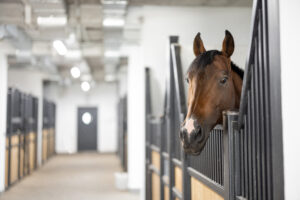
Some horses enjoy farrier visits; they remain calm and relaxed. They lift their limbs eagerly and might even sneak in a few affectionate nuzzles on their farrier’s head, neck, or back. However, others seem to dread the experience. With flared nostrils, tense jaws, stiff posture, and pinned ears, these horses make the appointment difficult and, in some cases, dangerous.
Most horses fall somewhere between. They tolerate the work but fidget, shift, or jerk their legs away. That leaves owners asking: What can I do to help my horse stand better for the farrier?
Researchers have shown regular trimming and shoeing helps horses move better and feel more comfortable. So, it seems reasonable farrier visits should be positive experiences. Kate Fenner, PhD (in horse behavior and training), of the University of Sydney, in Australia, says they can be. “It’s important that they enjoy these visits.” A relaxed horse makes the farrier’s job easier and keeps the horse’s stress levels down, too.
Here’s how you can help make your horse’s farrier visits calm and even enjoyable for him.
1. Train the Horse to be Calm Before Farrier Visits
Horses can’t enjoy farrier visits unless they’re calm—and that calm comes from training and predictability. “First and foremost, horses need to learn that it’s okay to be calm when tied up—whether that’s for grooming, saddling, veterinary checkups, or foot care,” says Lorenzo Zoppi, a Tuscany-based farrier and behavior scientist.
That training must come from the owner. “I only see the horse once a month,” Zoppi notes. “What the owner does beforehand and between times is going to affect how things go when the farrier arrives.”
Fenner recommends rewarding calm behaviors such as a lowered head and deep exhales. While food rewards can be effective, they can also overstimulate anxious horses, she adds. Instead, try scratching his withers, soft stroking on the neck, or gentle words. Clicker training can also work well, if the horse has been properly conditioned to understand what the clicker means.
Horses benefit from learning self-carriage with their feet, Fenner adds, meaning they hold a position until given a cue to change. “When I ask a horse to give me his foot, he needs to know there’s a signal to pick it up and a signal to put it down again,” she says. “It reassures him that there’s going to be an endpoint.”
Zoppi says introducing these experiences early in life makes a big difference. “They have to learn through gentle conditioning not to be scared of things farriers do,” he says. Tapping and scraping a young horse’s hooves with a pick can create positive associations with the sounds and sensations of farrier work.
2. Promote Confidence, Trust, and Predictability
Horses relax more when they know what’s coming and what’s expected of them, says Fenner.
Standing on three legs makes horses feel vulnerable. “They know they have no escape,” she adds. “So they have to trust us and trust the situation.”
Zoppi echoes this sentiment. “When that horse gives me his foot, he needs to know that everything’s going to be okay,” he says. “That’s a lot of trust!”
Owners can cultivate that trust by routinely asking for their horse’s feet. Zoppi says this practice builds both the horse’s and the handler’s confidence. “But I see a lot of owners feel insecure about picking up their horses’ legs,” he adds. “They need to do it confidently so the horse feels like it’s okay to trust people when they ask for his legs.”
3. Know What You’re Teaching Your Horse
Understanding learning theory helps owners train more effectively—and avoid reinforcing the wrong behaviors.
Zoppi sees many well-meaning owners make timing mistakes. “They’ll pick up the horse’s leg, and the horse moves, and they let go,” he says. “So what they’re actually telling the horse is they want him to move when they pick up his feet.”
Similarly, offering treats or praise at the wrong moment, such as when a horse moves around, can reinforce unwanted behavior. “You have to really think about your timing,” says Zoppi. “Ask yourself, ‘What am I telling the horse by giving him that carrot?’”
4. Set the Scene for Farrier Visit Success
Environment matters. Choose quiet, familiar places for farrier work and avoid times of high activity, such as during feeding or deliveries. Get out of the sun, wind, and rain if you can. Don’t underestimate how annoying flies can be.
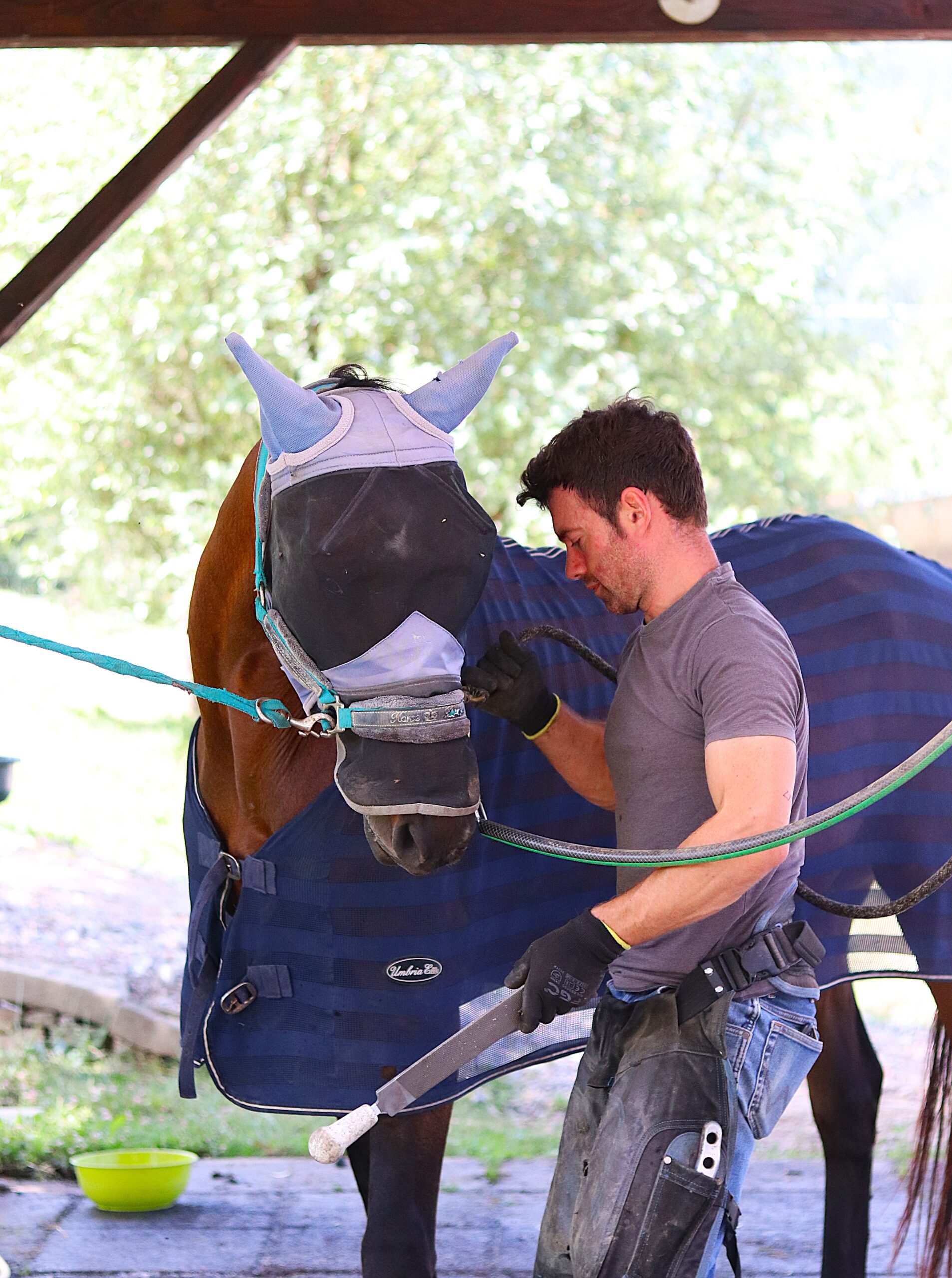
Zoppi makes sure all horses he works on wear fly masks and sheets. “We don’t want horses having to endure flies just because they know they’re not supposed to move,” he says.
Fenner recommends using insect repellents and, if needed, gently brushing flies away with a hand. You could also use a horsehair fly whisk. If the horse struggles with separation, don’t use the farrier visit to work on that; bring a companion horse instead.
Playing calm music or nature sounds can help some horses relax. While studies are still ongoing, researchers have reported that horses prefer low-tempo music including country or classical—and seem more stressed by rock and jazz genres.
5. Work With Behavior-Savvy Farriers
Farriers with a strong understanding of equine behavior can make a big difference during visits, but most farrier programs don’t include training in this area. While some professionals seek out additional education, others develop these skills through experience and observation.
“Ask around, and watch how farriers interact with horses,” says Fenner. “Look for those with a quiet, gentle way about them.”
If your farrier’s methods cause unnecessary stress, it’s okay to make a change. “It’s your responsibility to make that call,” says Fenner. “Don’t let your horse go through a terrible experience just because you’re embarrassed or you’ve already paid. It’s not worth it. It’s never worth it.”
Take-Home Message
Farrier visits go more smoothly when horses do more than tolerate—they feel safe and settled. These tips can benefit every horse, including those that already seem calm. “Make the entire experience really peaceful and pleasurable for the horse from start to finish,” Fenner says. “And as long as they’re standing still, give them all the love and attention they want.”