Horse owners might assume an aging horse that takes longer to finish his feed, no longer runs with his pasturemates, or acts grumpy while being groomed is simply getting old. But these behavior changes can signal ongoing pain in older horses.
Senior horses, generally considered more than 15 years of age, might experience chronic discomfort from conditions such as arthritis or deteriorating teeth yet show only subtle signs of pain. As prey animals that depend on flight for survival, equids are hardwired to hide signs of weakness.
How to Recognize Ongoing Pain in Senior Horses
“Chronic pain can be difficult to recognize in horses because it often develops gradually, over time, and the clinical signs may be subtle and variable—with good and bad days,” says Alex Bianco, DVM, MS, Dipl. ACVIM, an associate professor at the University of Minnesota College of Veterinary Medicine, in St. Paul. “Identifying a horse with chronic pain requires an intimate knowledge of what’s normal for the individual—subtle signs of pain can be easy to overlook.”
“Pain-related behavior changes in prey animals can be fairly subtle, so close observation is vital,” Dyson says. “However, we also know that horses can alter their behavior depending on the presence or absence of people. Some are much more likely to show abnormal behavior when alone, so a review of CCTV footage can be valuable for identifying otherwise hidden behavioral changes.”
Bianco adds that recognizing discomfort can be especially challenging in retired horses because owners or riders often detect pain during exercise, when changes in performance or behavior become more apparent.
Pain, Not Bad Behavior in Horses
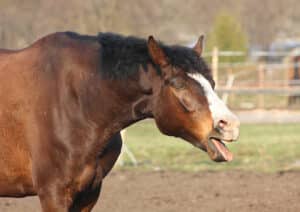
“A horse that suddenly becomes irritable when groomed or pins his ears when approached might not be developing a bad attitude,” Dyson says. “And a horse that spends less time playing with pasturemates or seems quieter than usual might be in pain. Most so-called ‘slowing down’ reflects discomfort.”
That can make it difficult for owners to distinguish between normal aging and pain. Because many painful conditions develop gradually, changes often become normalized over time. Bianco encourages horse owners to think differently about changes in mobility. “Commonly used terms such as ‘lame,’ ‘stiff,’ or ‘less flexible’ should all be investigated as potential signs of pain.”
Common Pain-Causing Senior Health Issues
Arthritis remains a main source of pain in older horses. “Most geriatric horses should be assumed to have some degree of orthopedic disease, namely osteoarthritis affecting one or more joints,” Bianco explains. She adds that pain associated with chronic osteoarthritis can fluctuate depending on exercise, body condition, diet, and medical treatment.
“Older horses are also at increased risk of pituitary pars intermedia dysfunction (PPID, formerly known as equine Cushing’s disease), which can increase the likelihood of developing the painful, debilitating hoof disease laminitis,” Dyson adds.
Dental disease also becomes more common with age as horses wear out their teeth. Difficulty chewing can affect both comfort and body condition, potentially leading to weight loss. “Observing eating patterns is critical,” Dyson says. Note what and how much your horse eats, how long meals take, and whether his eating habits have changed. If he’s losing weight, quidding (dropping wads of partially chewed feed), or having difficulty chewing, have your veterinarian examine him, she adds.
Owners should also monitor changes in resting behavior. “Paying attention to how often a horse is lying down is also useful,” Bianco says. “While it’s easy to recognize pain in a horse that is spending excessive time lying down, it may not be noticed if a horse is not lying down enough. Older horses with mobility issues may be less willing to lie down, which prevents REM sleep and leads to sleep deprivation.”
Pain, Muscle Loss, and Aging in Horses
Age-related loss of muscle mass (sarcopenia) is normal in horses, but pain can accelerate the process. “Muscle atrophy can also be exacerbated by decreased exercise and by underlying PPID,” Bianco explains. “While diet plays a role, exercise is equally important for maintaining muscle mass. Chronic pain contributes to muscle atrophy through a decrease in movement, which can exacerbate mobility loss and contribute to more chronic pain.” She recommends regular PPID screening in older horses because early diagnosis and treatment can help preserve muscle mass and reduce laminitis risk.
Improving Quality of Life for Senior Horses
You can manage many painful conditions affecting older horses, making an accurate diagnosis the first step. Bianco says successful management does not necessarily mean eliminating every ache and pain. “Our goal is not for geriatric horses to be pain-free all the time; this isn’t realistic for horses just as it isn’t realistic for geriatric (or even middle-aged) humans. With noncurable, chronic conditions, such as osteoarthritis, our goal is to manage pain in a way that facilitates a good quality of life for the animal.”
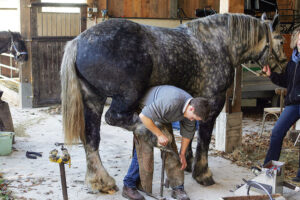
Bianco encourages owners to work closely with their veterinarians as soon as subtle changes appear, rather than waiting until the horse’s body condition score declines. Management changes might include strategic use of non-steroidal anti-inflammatory drugs (NSAIDs), targeted therapies, exercise and dietary modifications, and corrective shoeing, she says.
Take-Home Message