Tongue Ties Could Cause Stress for Horses
Tongue ties help some racehorses breathe better, but study results suggest they can also cause stress, even in horses that have been tied regularly in the past.


Tongue ties help some racehorses breathe better, but study results suggest they can also cause stress, even in horses that have been tied regularly in the past.

The ability to select Quarter Horse breeding stock for behavior traits might improve equine welfare and human safety, researchers said.

Foals’ initial expressions of their developing personalities are clear signs of the horse’s adult personality–and even learning capacity–to come, researchers found.

Learn how these “heroes” of the equine veterinary industry step up to save other horses’ lives.

While the horses recognize positive from negative emotions in whinnies, they might not become positively or negatively emotional as a result.

Recent study results suggest competitive riders would be much more inclined to use technology to keep track of their mounts’ biometric data than recreational riders would.
A single-toe format “outweighed the costs” of multiple-toe formats as horses gained body mass and grew longer legs.
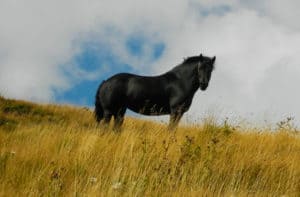
Researchers found black coats in horses became more common when climate change pushed horses into predator-filled forests.
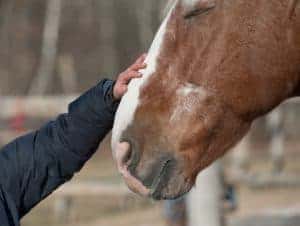
Researchers found that young people recognized signs of poor horse welfare in common training practices as well as adult experts did.

The “alpha” concept of showing dominance when training a horse doesn’t coincide with what equitation science research is revealing, scientists say.

A look at racing ethics could help researchers and industry members acknowledge rightful concerns from a well-meaning public, help resolve misconceptions, and contribute to better equine welfare.
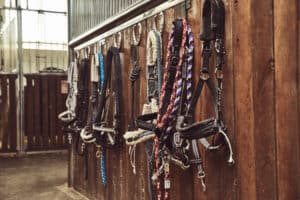
A good wipe-down with sanitizing agent might work well on wood, concrete, and plastic, but nylon equipment is harder to properly disinfect, researchers found.
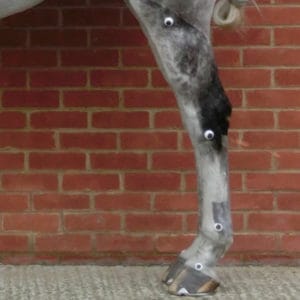
For every degree of increase in hock angle, researchers found a 12% greater chance of a horse having proximal suspensory desmopathy (PSD).

A recent study has revealed that aspirin’s effects on horses seem less pronounced than in humans. In fact, some horses might be resistant to it.

Activated charcoal administered via a nasogastric tube might help stop the intoxication process that leads to death.
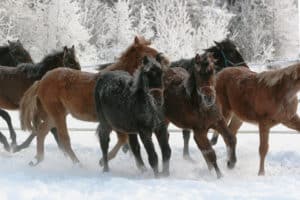
Weanlings turned out with shelter access had no more respiratory issues than those housed in warmer stables during a harsh Finnish winter.