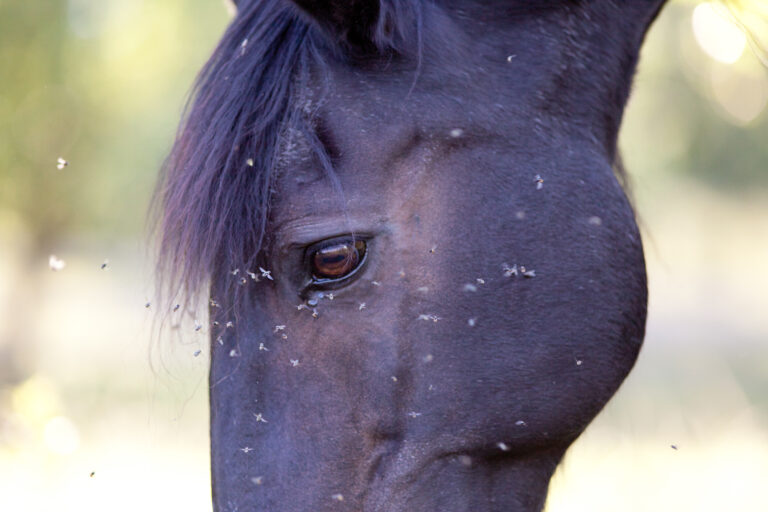
Screwworm Myiasis: A Re-emerging Concern
Although maggots typically pose little serious threat to hosts, screwworms are a separate and often dire exception.


Although maggots typically pose little serious threat to hosts, screwworms are a separate and often dire exception.

Coronavirus is associated with disease outbreaks in adult horses in Japan and the United States. Learn more.

One researcher describes the promising progress that’s been made in lameness diagnosis and treatment.

Vets can glean crucial information by evaluating horses with performance issues in hand, on the longe, and under saddle.
Diseases reported include African horse sickness, influenza, EHV, EIA, rabies, and more.

Genomic tools could help address horse health problems that couldn’t be resolved with earlier technologies.

Asymptomatic carrier stallions maintain infectious agents in the breeding population from one season to the next.

“Genomics” covers all aspects of genes, including structure and function. Here’s what equine researchers are learning.
The gradual north- and westward expansion of the fire ant’s range is exposing more horse owners to this important pest.
Reported diseases include African horse sickness, herpesvirus, influenza, strangles, and equine infectious anemia.

Cleaning and disinfecting stalls is critically important for biosecurity, especially in controlling disease outbreaks.

Once an animal is affected, the disease is invariably fatal. However, rabies prevention is easy. Here’s what to know.

A pathologist shares his thoughts on evolving microbes and how researchers are working to control associated disease.

Congenital cardiovascular malformations are rare in horses but can have serious implications.

Veterinarians can use progesterone diagnostically to evaluate luteal function during early pregnancy.

A recently discovered resistance gene in bacteria has focused attention on emerging multidrug resistance.