Not Your Grandmother’s Bedding: Horse Bedding Alternatives
In search of a new type of bedding for your horse? Check out these different options.


In search of a new type of bedding for your horse? Check out these different options.

Learn about the core vaccines recommended by the American Association of Equine Practitioners and the five deadly diseases they prevent.

Bare pastures and potential hay shortages, coupled with winds blowing seeds from laden sycamore trees, have created the “perfect storm” to increase the risk of atypical myopathy in grazing horses in Britain, BEVA warns.

Confirmed diseases include equine influenza, equine herpesvirus, piroplasmosis, salmonellosis, rabies, and more.
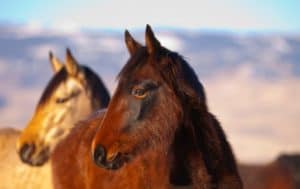
The Bureau of Land Management (BLM) will host a public tour of the Indian Lakes Off-Range Wild Horse and Burro Corral, in Fallon, Nevada, on Oct. 26.

Decisions the FEI makes don’t just affect the welfare of high-level horses. Impacts can trickle down to competitions at all levels. Here’s what you need to know.

As of August 2018, the invasive Asian longhorned tick has been found in at least one location in Arkansas, Connecticut, Maryland, New Jersey, New York, North Carolina, Pennsylvania, Virginia, and West Virginia.

The total population of the Maryland herd stands at 79 horses—21 stallions and 58 mares. Additionally, the third foal of the year, a colt, was born.

A simple color change, based on new research into how horses perceive color, could make jump racing fences in Britain safer, scientists say.

Certain muscular disorders, such as HYPP and PSSM, are common in horses because breeders have selected for specific traits, including enhanced muscle mass and metabolism economy.
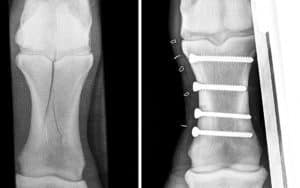
A new EVJ collection available for free online highlights researchers’ breakthroughs in diagnostic imaging and equine fracture management.
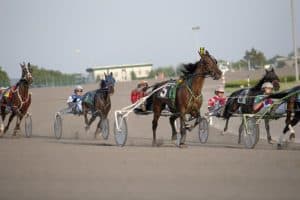
In addition to enhanced security measures, the protocols require out-of-competition drug testing of all participating horses.
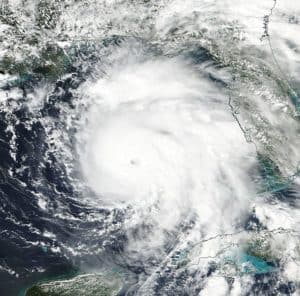
Horse owners in Florida and elsewhere on the Gulf Coast are hunkering down as they await the arrival of Hurricane Michael, expected to make landfall on Wednesday.

The theory is that when the polyurethane pour-in packing absorbs the shock from the hoof impacting the ground, it prevents it from traveling further up the musculoskeletal system, where it could cause wear and tear injuries.

The North Carolina Department of Agriculture and Consumer Services has confirmed a case of equine West Nile virus (WNV) in an unvaccinated horse in Yadkin County.

The affected horse from Bonnyville, Alberta, Canada, had potential exposure to EIA and, at the time of testing, was exhibiting clinical signs compatible with EIA infection