These equids differ from horses in both their nutritional and management needs
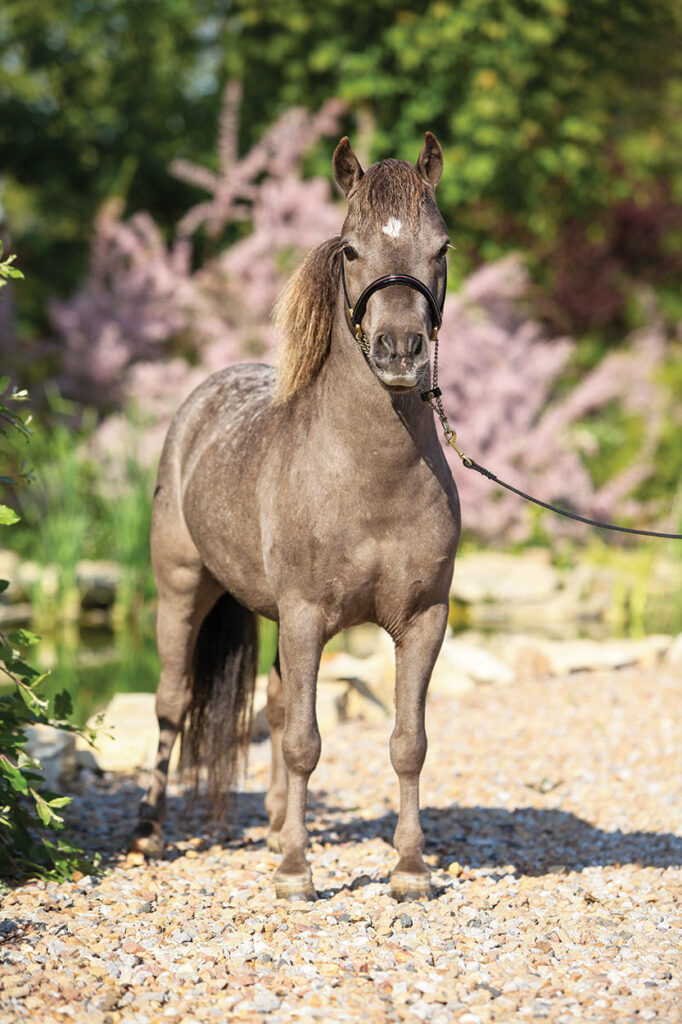
obstacles, and driving. | Adobe stock
Miniature Horses, donkeys, and mules might resemble horses—but they don’t eat, think, or thrive like them. Managing these equids means thinking differently compared to having horses. From nutrition and metabolism to behavior and handling, they need care that fits their unique biology.
A Look at Miniature Horses
Miniature Horses (Minis) are the smallest horse breed in the world. The American Miniature Horse Association sets the maximum height for Minis at 34 inches, measured at the base of the last mane hairs, and adult Minis typically weigh 150 to 250 pounds.
Feeding and Nutrition for Miniature Horses
Ashley Fowler, MS, PhD, director of research at Kentucky Equine Research, in Versailles, says “Miniature Horses love to eat; therefore, it is easy for owners to overfeed (them), especially if they are used to feeding full-size horses.”
Minis should maintain an ideal body condition of 5 on the Henneke Body Condition Scoring system. Most Mini owners either overestimate or underestimate their Mini’s body weight, says Fowler. “I usually eyeball their weights,” she says. Because weight tapes can be unreliable and barns don’t commonly have scales, she recommends a useful calculation for body weight based on body length and girth measurement:
Estimated body weight (lbs) = (9.36 x girth measurement in inches) + (5 x body length in inches) – 348.5.
“There has been very little research done on Miniature Horses,” Fowler continues. “Therefore, the feeding recommendations are based on the standards for other equine, balanced with experience in working with Minis. Ideally, Minis should consume 1.5 to 2.0% of their body weight in forage daily.” If a Mini weighs 200 pounds, that would translate to 3.0 pounds of hay per day. Just like their larger relatives, working and lactating Minis have higher nutritional demands and need to consume as much as 3% of their body weight in forage daily.
Because of the small amount of hay recommended for Minis, Fowler strongly suggests weighing hay to ensure you are not over- or underfeeding your Mini, emphasizing that each horse should be fed as an individual based on his specific needs.
Feeding and Obesity
In terms of mineral, vitamin, and protein requirements for Minis, Fowler says, “They are the same as large-breed horses, just adjusted for differences in body weight. A vitamin-mineral supplement or ration balancer can be offered that will not interfere with caloric content.” In addition, she says Minis have the propensity to become obese. They should not have free access to graze lush pasture grasses or be fed hays high in nonstructural carbohydrates (NSC).
Obesity increases the risk of your Mini’s susceptibility to a syndrome called hyperlipemia (elevated fat concentration in the plasma). Fowler says this condition happens when fat stores are quickly broken down. “It occurs when animals go into an energy deficit and mobilize fat,” she explains. “This can be triggered by lowered feed intake, stress, and disease. Hyperlipemia can be deadly due to the massive amounts of lipids (fats) being released from fat storage sites that can cause dysfunction of major organs if not swiftly caught and treated by a veterinarian.”
Fowler suggests the best way to prevent obesity in Minis is to avoid oversupplying them with excess energy and causing excessive weight gain. Shannon Pratt Phillips, PhD, PAS, professor in the Department of Animal Science at North Carolina State University, in Raleigh, agrees and adds, “It is easier to keep lean than to have a fat animal to lose weight, so keep them lean in the first place. Exercise will not only keep weight off but can off set any metabolic issues like insulin dysregulation.”
Training and Behavior
Minis are known for their eager-to-please personalities. The AMHA says Minis are versatile and excel in various disciplines, including halter, jumping in-hand, hunter in-hand, obstacles, and driving. However, don’t be fooled by their small stature. They are not a big dog but every inch a real horse and should be treated that way. A badly behaved Mini can be as dangerous as a full-sized horse. Although it might seem like an easy option, do not to manhandle Minis as it might make them more difficult to handle. Train them as you would a big horse—teaching them all the fundamentals so they will lead, stand, tie, and pick up all four feet.
Miniature Horse Hoof Considerations
Mark Hirschler, an AFA-certified, 30-year practicing farrier in Charleston, South Carolina, says Minis’ hooves tend to be harder in comparison to standard horses, therefore they hold up better. “I don’t shoe Minis. I recommend (hoof) boots if someone really needs them,” he adds.
Understanding Donkeys
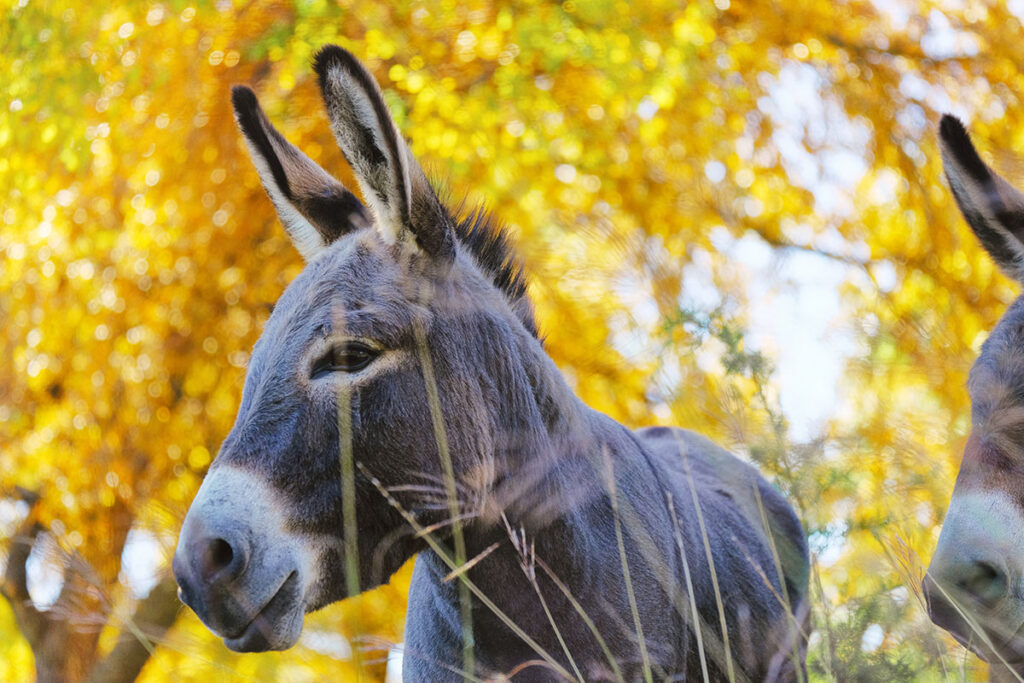
Nutritionally, donkeys differ greatly from horses; they’re highly efficient at digesting poor-quality fiber. As Erin Goodrich, DVM, Dipl. ACVPM (preventive medicine), associate professor of practice and director of veterinary support services at Cornell University College of Veterinary Medicine, in Ithaca, New York, says, “Donkeys are highly desert-adapted equids, and that has shaped their nutritional needs.”
Feeding and Nutrition
In the wild, donkeys typically walk long distances for much of the day while foraging primarily on low-energy plants. “Donkeys are able to digest higher-fiber forages, what we would typically consider poor nutritional fiber, than horses,” says Goodrich. “They have a slower gastrointestinal transit time, which allows for increased digestion and absorption.”
Fowler agrees, adding, “They have a greater activity of fiber-digesting bacteria in their hindgut.”
That said, “under most conditions donkeys thrive on a very fibrous grass hay low in NSCs or even barley or wheat straw,” says Goodrich. “They have evolved to be both browsers and grazers, utilizing shrubs and trees as food when grass is not available.”
Sometimes donkey owners or barn managers add straw as a forage source. In these cases Fowler recommends donkeys consume up to 25% of their forage intake in clean straw. Straw helps dilute the energy content of the diet while allowing them to eat enough dry matter. Donkeys need to consume less energy per day than horses, when adjusted for body weight, so they should consume less feed.
“A good average is 1.5% of their body weight in dry forage per day,” Fowler says. Don’t feed improved pasture like you might feed horses; rather, offer forage with a low energy value so donkeys can eat enough to satisfy their appetite but not become obese.
“Grazing donkeys on pasture often proves too risky as most pastures are too high in nutritional value to be safe for donkeys,” Goodrich says. “If donkeys are to be allowed on pasture, it is important that the grasses are allowed to mature and go to seed so that the nutritional value is low … then (allow) donkeys access to only small amounts at a time, such as with strip grazing.”
Donkeys have a different body shape than horses, says Fowler, and owners should use a donkey-specific body condition score scale to maintain ideal condition. (The Donkey Sanctuary’s ideal body condition score is 3). An adult donkey’s weight ranges from 220 to 1,100 pounds, depending upon breed and age. Fowler suggests using a weight tape specifically designed for donkeys, or The Donkey Sanctuary also has a chart available for estimating body weight based on height at the withers and heart girth (thedonkeysanctuary.org.uk).
“Donkeys have the unique ability to reabsorb urea that is filtered by their kidneys,” Goodrich says. This means they have a much lower crude protein requirement (3.8-7.4%) than that of a mature horse (8-12%). For this reason legumes such as alfalfa do not suit most mature donkeys not in heavy work.
Feeding and Obesity
Following a metabolic pattern similar to Minis, donkeys can easily become obese if you feed them like a horse, and that can result in many unfortunate secondary issues such as donkey metabolic syndrome and laminitis. “We need to try our best to mimic their natural environment—that means providing ample opportunity to exercise, while trickle feeding on highly fibrous low-energy forages,” says Goodrich. She also recommends providing them with opportunities to browse on safe trees and shrubs.
As with Minis, Goodrich recommends providing donkeys with an appropriate vitamin and mineral supplement or a low-calorie, low-protein ration balancer that does not promote weight gain.
Like their small equid relatives, overweight and obese donkeys are highly susceptible to hyperlipemia. “When managing your donkey’s weight, care should be taken not to crash diet as this will put your donkey at risk,” says Fowler. Promote gradual weight loss (no more than 11 pounds/month) by providing appropriate feeds that are low in energy (NSCs) but high in fiber.
Training and Behavior
Donkeys need a reason for everything they do. They might appear to be in deep thought, but their comprehension and memory retention is very acute. The Donkey Sanctuary reports that donkeys learn things that are closest to their natural behaviors such as bonding with other donkeys and rolling in the dirt (used for grooming and stress relief). They have a good sense of self-preservation and might be unwilling to do things they perceive as dangerous. Activities unnatural to donkeys include standing and picking up feet or moving away from pressure. Therefore, successfully training a donkey requires understanding what motivates them to learn and building on that motivation.
“When handling a donkey, you should always be alert because they are extremely agile,” Hirschler says.
Donkey Hoof Considerations
“Hoof angles on donkeys are generally more upright, and depending upon footing, the feet wear off more uniformly,” says Hirschler. In addition, he says their hoof walls are more dense, making their hooves hold up better to wear compared to horses. Hirschler notes that he sees more white line disease in donkeys than horses, but they do not always become lame from it.
Understanding the Long-Ear Hybrid: Mules
Mules are the hybrid offspring of a male donkey (jack) and female horse (mare). Mules often have the body type of a horse with the ears, mane, and tail of a donkey.
Feeding and Nutrition
“There is little to no nutritional information available for feeding mules,” says Fowler. “We often see that mules do best when fed more similarly to donkeys. Like donkeys, per body weight, mules have lower energy and protein needs in comparison to horses. However, even though mules are more efficient at digesting poor-quality fiber in comparison to horses of a similar weight and activity level, they are not as efficient as a donkey.”
Mule owners should provide forage at 1.5 to 2.0% of the individual’s body weight daily. Fowler notes that like Minis and donkeys, mules should consume low-NSC hay. Because mules gain weight quickly, again, maintaining an ideal body condition remains important. Fowler says to use a hybrid scale that combines the Henneke system (BCS of 5) with comparisons to the Donkey Scale (BCS of 3). She also recommends using a horse weight table or commercially available weight tape, keeping in mind that the weight tape underestimates a mule’s body weight.
Depending on the mule’s genetic background, the breed of the dam, and the type and amount of work he does, he might need additional calories if not maintaining body condition and weight on a forage-only diet. Fowler says if he needs additional energy, start by increasing the amount and quality of forage. Offer a more digestible fiber source, such as beet pulp, or a fat source, such as a vegetable oil or stabilized rice bran, to increase the energy needed for weight gain and improved body condition. “Concentrate feeds designed for horses should not be used for mules,” she says. “Feeding high-starch concentrates designed for horses may increase the risk of developing insulin dysregulation in these animals.”
Make sure to include a vitamin-mineral supplement or ration balancer to meet mules’ mineral and vitamin needs as well.

of training and good handling. | Adobe stock
Feeding and Obesity
“The biggest risk in feeding mules, along with the other equids discussed, is oversupplying energy and causing weight gain and obesity,” says Fowler. She also stresses that mules, like Minis and donkeys, are prone to develop the same metabolic issues, so owners should follow the same preventive measures.
Training and Mule Behavior
Mules tend to take the nonflight behavior of the donkey, which has bearing on their training. They are more likely to stop and think when faced with an issue, say mule trainers. This makes them better problem solvers and quick learners compared to horses and less appreciative of repetition. Getting help from a trainer who knows mules will help give your mule a solid foundation of training and good handling.
Hoof Considerations for Mules
Hirschler, who has worked on mules for over 25 years, says, “Like donkeys, mules tend to have more upright angles and denser hoof walls.” He mentions that full-sized mules use shoes for carriage driving, going over rough terrain, and some for showing.
Take-Home Message
Minis, donkeys, and mules have distinct characteristics that separate them from horses. They are easy keepers with lower energy requirements. They are smart and in some cases need specialized training so they can be handled calmly and safely. It is best to work with a qualified equine nutritionist and trainer or behaviorist to help understand the needs of your unique equids.