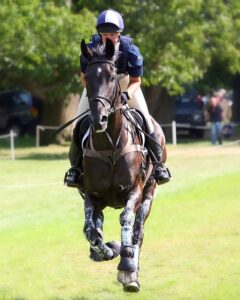
Biometric sensors and other technologies are reshaping how we monitor horse health and performance across various disciplines
The best jockeys know a great racehorse when they gallop him. They feel it in their hands, their feet, their knees. Veterinarians and researchers have long sought to capture that same kind of insight—and today technology is beginning to make it possible, not just for racehorses but for sport and pleasure horses, too.
David H. Lambert, BVSc (Hons), MRCVS, CEO of StrideSAFE, in Midway, Kentucky, has spent his four-decade equine veterinary career trying to identify which Thoroughbreds have that same kind of brilliance a seasoned rider feels instinctively.
In 2005 Lambert began using accelerometer sensors on racehorses to translate that ineffable feeling of galloping the very best Thoroughbreds into data. It worked; the sensors helped identify top athletes, he says. But they were picking up something more, too.
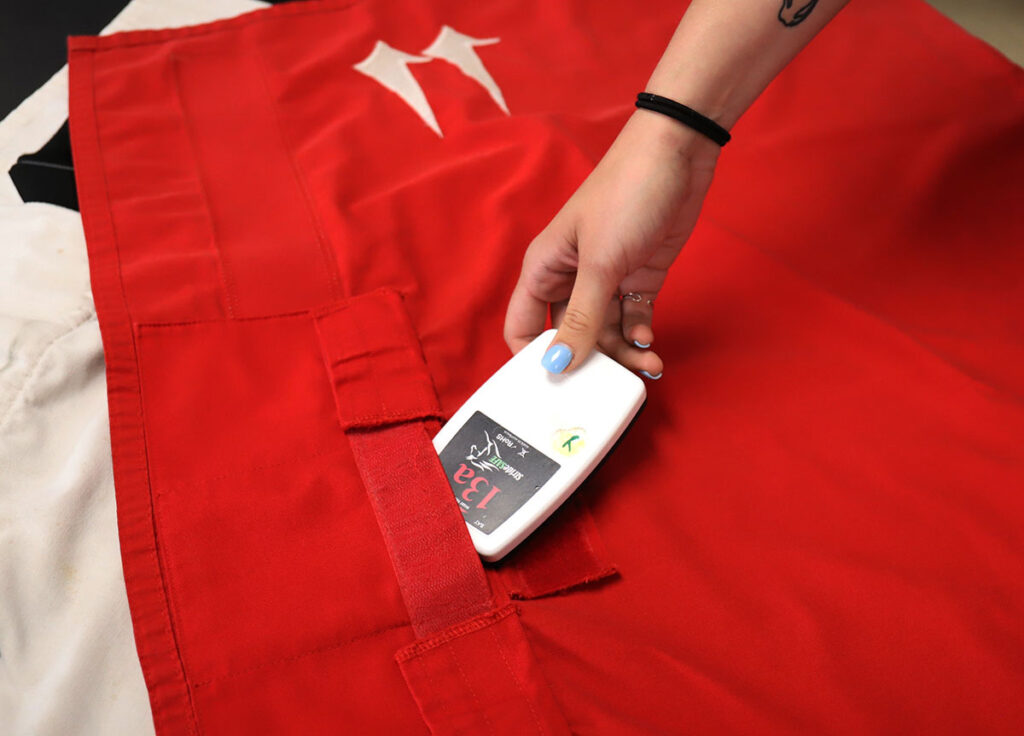
In 2019 after a spate of racehorse injuries drew national attention, Lambert and his company, Equine Analysis Systems, partnered with Australian company StrideMaster to create StrideSAFE, a system designed to flag horses at risk of catastrophic breakdowns. StrideSAFE emerged at the intersection of veterinary science and technology, aiming to catch anomalies before they become injuries.
Wearables for Horses
Those efforts reflect a much broader movement. Once niche tools for studying racehorses, equine wearables are now among the buzziest developments in equine health technology, appearing in sport horse barns, research herds, and even consumer markets. These biometric devices can track heart rate, stride, movement symmetry, and more. Researchers and companies worldwide are working to prove what sensors can reveal about performance, wellness, and—critically—injury prevention.
Whether sensors can detect racehorse injuries is the central question in a yearlong study led by the American Association of Equine Practitioners (AAEP).
Valentin Rapin is the managing director of Arioneo, a Paris-based company with two devices. One collects heart, locomotion, and GPS data; another can be used for diagnosing locomotion asymmetries.1
Rapin and Lambert’s companies are two of six working with the AAEP on the catastrophic injury study, along with Alogo Analysis; Equibase/Stable Analytics; Equimetrics; and Garmin. In the study 200 2-year-old Thoroughbreds wear biometric sensors during workouts.
Outside that project, equine wearables have already reached the market, with more announced. Some companies sell directly to veterinarians or racing professionals, while others target horse owners.
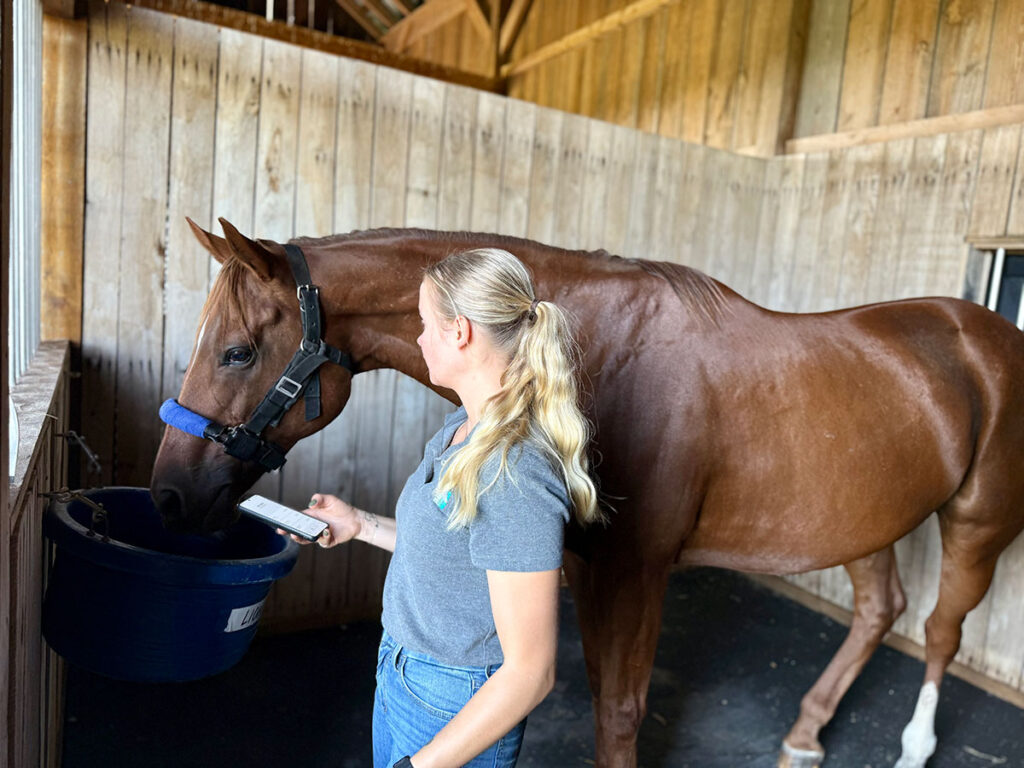
Sensor placement depends on the device and purpose. Some systems fit on the girth or in the saddle pad, while others go on the chest or the tail.
One advantage of sensor placement on the tail, said Garmin team members during a presentation to equestrian journalists about their new Garmin Blaze Equine Wellness System, is the underside of the tail is naturally hairless, so there is no special skin preparation needed.
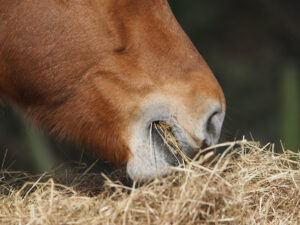
In 2025 scientists at Kentucky Equine Research (KER) published a study using halters with chewing sensors to track the number of bites and the duration of chewing with different kinds of food.2
“There’s been a literal explosion in these wearables now, and there are really good ones,” says Joe D. Pagan, MS, PhD, founder and president of KER, an international equine nutrition and sports medicine research, consulting, and product development firm.
Pagan says his KER colleagues use several equine wearables in their controlled research environment with their own research horses.
“They do amazing things in terms of being able to measure how the horse is actually exercising,” he says. “That’s going to be a game changer, really, in terms of how people actually can follow their horses and improve their performance. But the trick is making sense of all the numbers.” Wearables can take some of the guesswork out of research. “Normally, if we ask someone, ‘Well, how hard are you working your horse?’ they don’t know,” Pagan says. With wearables, researchers can get a precise answer.
Artificial Intelligence in Your Pocket
Artificial intelligence (AI) can make sense of the sensor data. Other high-tech horse health care products use AI as well.
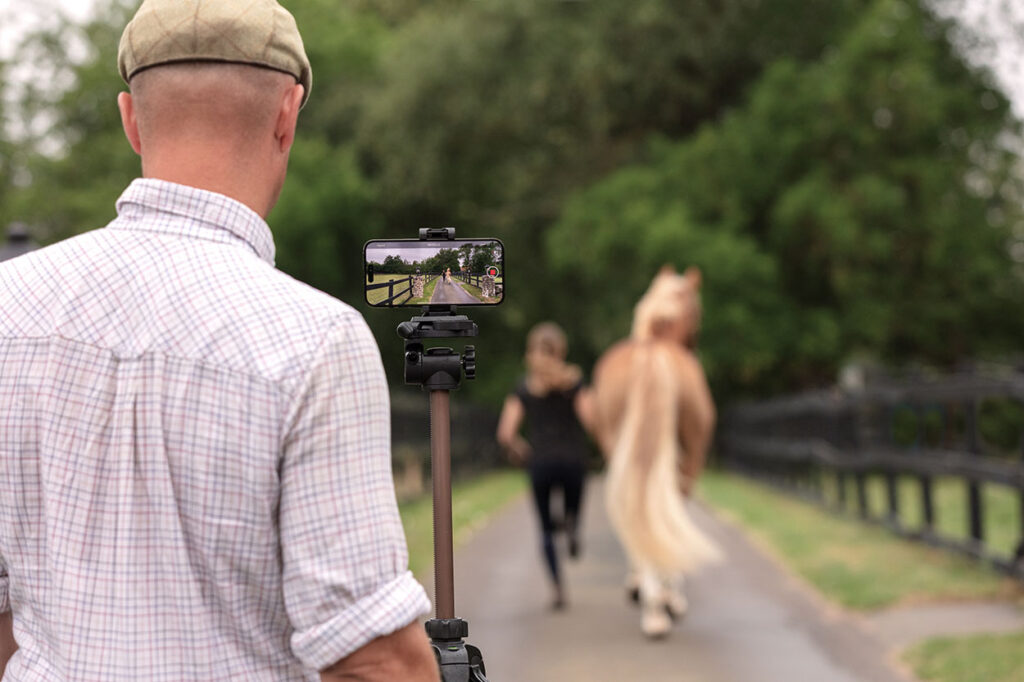
Sleip, a smartphone app that performs motion analysis based on video, relies on deep neural networks—a type of machine learning used for classifying images.
Once the user uploads the video and it’s processed in the cloud—a term for shared computing power accessed through the internet instead of on your own device—Sleip’s AI looks for anatomical landmarks on the horse and sends its analysis to the users (mostly veterinarians and trainers). Uneven movement can indicate lameness.
“We’re not making anything up. We’re looking at the prediction of these anatomical landmarks,” says Elin Hernlund, DVM, PhD, Dipl. ECVSMR, associate professor at the Swedish University of Agricultural Sciences, in Uppsala, and one of the founders of Sleip. Thirty years of biomechanical research puts into context “what that motion pattern tells us in terms of clinical usefulness.”
In recent years equine researchers have published studies involving AI models in breeding programs, detecting eye disease, and tracking behaviors, among other topics.
Algorithms Improve as User Numbers Increase
Through machine learning, programs refine their analysis as programs collect more data.
StrideSAFE’s algorithms are based on tens of thousands of cases, Lambert says; the company was advertising 70,000 by press time. They’ve learned which sensor signals are associated with catastrophic injury, including two of the most common injuries, condylar and sesamoid fractures.
“And as time goes by and we add more and more data, this process is just going to get even more defined and even more precise,” Lambert says.
Hernlund says the same thing happened with Sleip; the program identified more precise landmarks as it acquired more data.
Getting Good Data in Horses
Producing AI technology for horses starts with a lot of data. But the data must be good and, again, it has to be understandable, experts say.
You’d have to begin by knowing a lot about, say, dressage horses, and how they move, Lambert says. Then, you’d identify what it is you’re trying to examine; for example, you might be interested in stride length. You’d organize testing procedures and collect relevant data—then do it 50,000 more times before starting the analysis.
“You’re talking a long process. You’re talking five to 10 years to be able to think that through carefully and get the level of expertise that you would need to guide the process and then collect the data to be able to develop the understanding,” Lambert says. “So, it takes a while. This isn’t something you can do one afternoon.”
Hernlund stresses the importance of critical thinking and being intentional about technology development. “I think the technology that we enter into the equine field has to be driven by the will to solve a problem and not sort of the other way around … having a technology and then wondering what you could apply it to,” she says.
‘There is No Gold Standard’
As the horse industry adopts AI products, sending and storing more horses’ data into the cloud, algorithms will change. But the AI is only as good as the data.
Hernlund acknowledges that generative AI is “à la mode” but has some hesitations about its application. “I think a lot of the potential generative AI might go down the route of classifying disease,” she says. “And if you want to teach an AI to classify disease, you have to have a gold standard. And a lot of the times in veterinary medicine and equine medicine, there is no gold standard, so that makes it quite difficult.”
Artificial intelligence needs to be trained on high-quality data, she says. An AI program trained on low-quality data could misguide veterinarians.
Gold standards can be hard to come by in equine science because of the difficulty of performing robust, repeatable studies. Thoroughbreds are the focus of so much research in part because the racehorse lifestyle is a natural fit.
“It’s all so structured and choreographed … being able to immerse a sensor system in that daily activity is rather straightforward,” Lambert says. “A lot of the controls are done for you. Anywhere else it’s not so easy.”
Getting Online and Into the Cloud
The cloud makes possible the analysis of lots of data all at once. The industry has used Gro-Trac, KER’s growth monitoring software program, for decades to track the growth of more than 50,000 Thoroughbred foals from around the world. With that much data in the cloud, KER can ask new questions by comparing current rates to historic data, considering, for example, the weather. How does rainfall and temperature affect pasture growth? How does that affect foals?
“We wouldn’t have been able to do that without this being cloud-based, because before it just took too long to gather up all the data,” Pagan explains. “We were looking at results that happened years ago in some instances, rather than what happened last month.”
Artificial intelligence depends on the cloud, too. But there’s a catch: If the analysis must be done in the cloud instead of directly on your device, you need internet access. In rural areas with weak internet connectivity, uploading video files to the cloud—as Sleip does—is a slow process.
The Sleip team is working to reduce the app’s reliance on internet connectivity by analyzing video on the device. “That means the smartphone itself will function as the brain,” Hernlund says. “That’s coming (in the) not-too-distant future.”
Biometric sensors also have a data transmission speed issue. Lambert says building 4G technology into the sensors will help speed that up.
Take-Home Message
Lambert hopes trainers and owners will use biometric sensors to help decide when to retire a racehorse so the animal can begin a sound, successful second career.
Moreover, the sensors could tell trainers when the horse just needs a break. Lambert, recalling his time as a steeplechase jockey, says horses used to race until 12, steeplechase until they were 14, then retire to a hunting career. If the horse sustained an injury, he got time off to heal, not anti-inflammatory medications. Visits from the veterinarian were rare. “In an ironic way, our super-modern, sophisticated scientific sensor system is simply going to put the clock back 60 years and bring back old-fashioned horsemanship, because the sensor is telling you what the old-fashioned horse people kind of knew anyway,” Lambert says.
REFERENCES
1. Poizat E, Gérard M, Macaire C, De Azevedo E, Denoix J-M, Coudry V, Jacquet S, Bertoni L, Tallaj A, Audigié F, Hatrisse C, Hébert C, Martin P, Marin F, Hanne-Poujade S, Chateau H. Discrimination of the lame limb in horses using a machine learning method (support vector machine) based on asymmetry indices measured by the EQUISYM system. Sensors. 2025;25(4):1095.
2. Fowler AL, Guinard C, Imbeault NA, Erwin VL, Grayston IN, Sweetman P, Winchester M, Pagan JD. Chewing requirements and glycemic response of fibrous feedstuffs. J Equine Vet Sci. 2025;148:105541.