Insulin dysregulation (ID), which is a key feature of equine metabolic syndrome, remains one of the most challenging metabolic problems for veterinarians and horse owners to manage. Characterized by an increased insulin response to dietary sugars and starches, the condition can lead to persistently high insulin levels (hyperinsulinemia), exaggerated insulin responses after meals, and an increased risk of laminitis.
While management strategies for ID in horses typically focus on diet restriction and exercise, pharmaceutical options continue to be limited. Michelle Coleman, DVM, PhD, Dipl. ACVIM, associate professor at the University of Georgia College of Veterinary Medicine, in Athens, presented the research work of her team, including Canaan Whitfield-Cargile, DVM, PhD, Dipl. ACVS, ACVSMR, and Kelsey Hart, DVM, PhD, Dipl. ACVIM, on the topic during the American Association of Equine Practitioners Convention, held Dec. 6-10, in Denver, Colorado. She suggested a plant-derived compound might offer another tool for veterinarians and horse owners managing ID.
Evaluating Mulberry Safety and Efficacy in ID Horses
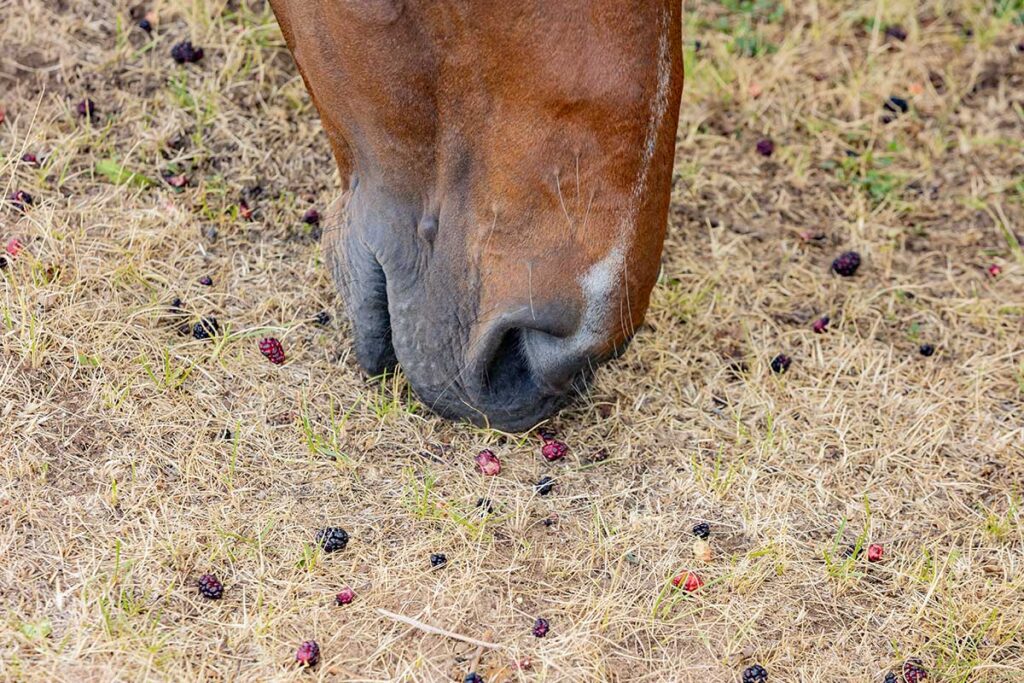
Coleman said the research team’s goal was to evaluate the safety and efficacy of mulberry extract containing 5% 1-deoxynojirimycin (DNJ) in horses with ID. Deoxynojirimycin is a naturally occurring compound known to influence glucose metabolism in other species, but until now its effects in horses had not been studied.
The scientists conducted a three-phase trial involving both healthy horses and those diagnosed with ID. “In the first phase, we gave six healthy horses gradually increasing doses of DNJ over four weeks to evaluate safety,” said Coleman. They reported no significant adverse effects, including no concerning changes in clinical parameters, gastrointestinal health, or systemic inflammation.
“We also tested the compound in five horses at risk of ID at five different dosages,” she added. “These results showed a dose-dependent effect: As the DNJ dose increased, the horses experienced reductions in postprandial (post meal) glucose and insulin responses.”
Horses with ID often release excessive insulin after consuming carbohydrate-rich feeds, and reducing those spikes could be important for lowering laminitis risk, said Coleman. Elevated insulin concentrations are strongly associated with endocrinopathic laminitis, a hormonally driven form of laminitis that disrupts the tissues supporting the coffin bone within the hoof.
In the third phase of the study, Coleman and her fellow researchers explored whether administration timing affected the compound’s efficacy. They gave DNJ to 16 horses at risk for ID at different intervals relative to feeding and performed oral sugar testing at different intervals after administration of the DNJ. They saw the most pronounced reduction in postprandial glucose and insulin when horses received DNJ one hour before oral sugar testing, suggesting timing plays a key role in maximizing its metabolic benefits.
Practical Uses for Mulberry Extract in ID Horses
“Mulberry extract containing 5% DNJ appears to be a safe and effective option for managing ID in horses, with the best results observed at a dosage of 500 mg administered orally twice daily one hour before feeding,” said Coleman.
She emphasized that additional research is needed to determine the compound’s long-term effects and whether it can help reduce laminitis risk in horses with metabolic disease. However, the findings provide evidence that targeted nutritional or pharmacologic approaches might eventually complement traditional ID management strategies.