How horses maintain their body temperature and how to respond when heat puts those systems under strain
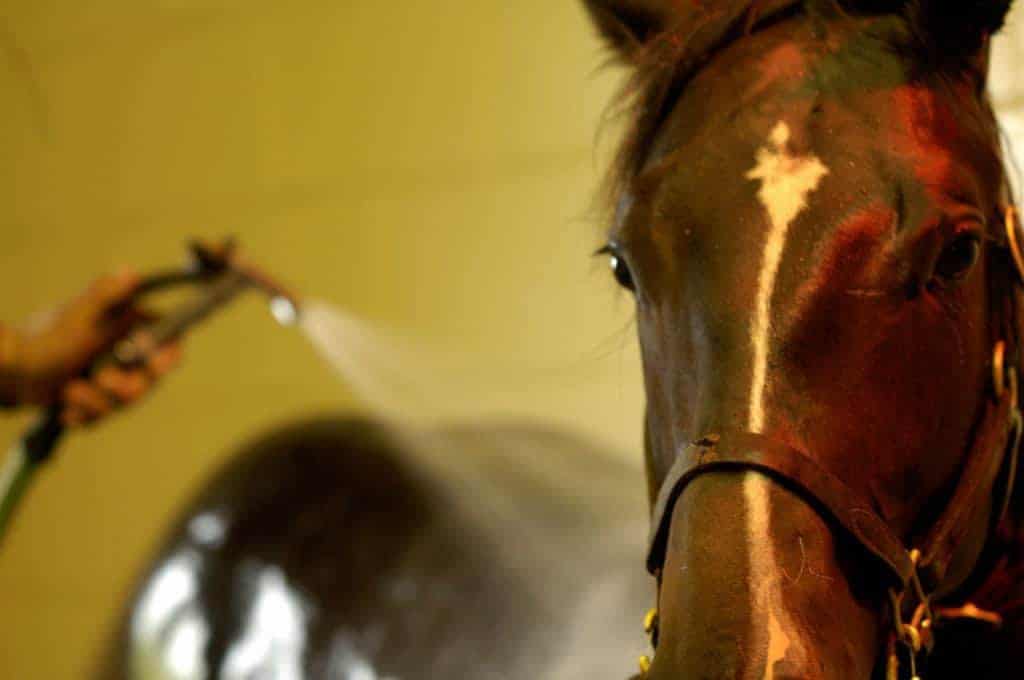
When is it too hot to ride your horse? And why does humidity make things worse? What is the best way to cool down a hot, sweaty horse? Under most conditions the equine body adapts remarkably well to heat, dissipating it and maintaining core temperature within a healthy range. However, when environmental conditions, workload, or individual risk factors overwhelm these systems, horses can experience heat stress and exertional heat illness (EHI).
In this article we’ve called on the expertise of two veterinarians who are pioneers in equine heat stress research to explain how horses regulate their body temperature—including what to do when their thermoregulatory abilities reach their limits.
How Do Horses Maintain Their Body Temperature?
From an evolutionary standpoint, horses are far better equipped to cope with cold than hot temperatures. Body condition, including subcutaneous fat, provides insulation.1 Additionally, hindgut fermentation of volatile fatty acids in forage generates internal warmth, and the winter coat provides insulation and a protective barrier against wind and cold.2 In cold conditions horses can increase internal heat production and conserve warmth relatively efficiently, provided they are at a healthy weight, have an adequate coat, and have access to forage and shelter.
Heat, on the other hand, presents a far greater physiological challenge for a muscular 1,200-pound animal. “The horse’s main avenue for dissipating heat is through evaporative cooling,” says Margaret Brownlow, BVSc, MVSc, MSc, Dip. Vet Anaes, Dip. Nurs., Dip. Public Health. Brownlow is a retired racetrack veterinarian who now conducts equine research and has studied exertional heat illness in Thoroughbred racehorses in Victoria, Australia. “The horse’s entire skin surface is highly vascular and specialized for sweating,” she says. “During exercise, muscular contraction generates substantial heat. To prevent dangerous rises in core body temperature, blood flow is redirected toward the skin, where sweat evaporation allows heat to escape into the environment.
“Horses do quite well in dry heat because the sweat evaporates efficiently from the skin surface,” she adds. “Very hot temperatures, however, greater than 40° C (104° F), can cause heat stress because the horse cannot secrete sufficient sweat to cool efficiently, and core body temperature will rise (above the normal 37.2-38.6 C or 99-101.5 F).”
The Humidity Factor
Hot and humid is the dreaded combo for horses. “The worst type of heat stress is when there are high levels of humidity,” Brownlow says.
Martha Mallicote, DVM, MBA, Dipl. ACVIM, clinical professor at the University of Florida College of Veterinary Medicine’s Large Animal Hospital, in Gainesville, says horses lose most of their heat through sweat evaporation. “Between 65 and 70% of heat is lost through sweat evaporation, and a humid environment decreases the efficiency of that sweat evaporation,” she adds. Mallicote says horses’ body temperature increases significantly during and immediately after exercise when humidity is higher, even at the same ambient temperature.
Indeed, researchers have confirmed hot, humid environments severely impair evaporative cooling, making sweating alone insufficient to regulate body temperature.4 “When temperatures range between 33 and 37° C (91-98.5° F) and relative humidity is high, the horses’ sweat does not evaporate but stays on the skin,” Brownlow explains. Meteorologists generally consider humidity above 60% high
This story requires a subscription to The Horse magazine.
Current magazine subscribers can click here to and continue reading.
Subscribe now and gain unlimited access to premium content.
Subscribe NowWe at The Horse work to provide you with the latest and most reliable news and information on equine health, care, management, and welfare through our magazine and TheHorse.com. Our explanatory journalism provides an understandable resource on important and sometimes complex health issues. Your subscription will help The Horse continue to offer this vital resource to horse owners of all breeds, disciplines, and experience levels.