Article

Subcategories:
None

Smart Horse: Understanding the Science of Natural Horsemanship

In horse training we really have two goals: first, to condition (train) the horse to perform a particular action in response to a particular stimulus (cue), and second, to motivate the horse to perform that action each and every time that stimulus is presented.

Read More

Trails, Trips, and Traveling With Horses

There was a time when trail riding was pretty much confined to where one lived. The choices might include a country road or a ditch along a busy highway. That, however, is in the past. Powerful trucks and sophisticated trailers have opened endless windows of opportunity for the horse owner who wants to travel. However, there is more to it than just loading up a horse and heading off across th

Read More

Old Horse Care and Feeding

Of the 5.32 million horses and ponies in the United States, 400,000 (over 7.5%) are 20 years or older and considered geriatric, according to Frank Andrews, DVM, MS, Dipl. ACVIM. About 50 horse owners convened at the University of Tennessee’s (UT) College of Veterinary Medicine on Jan. 31, 2004, to attend a seminar highlighting techniques for managing older horses.

Loss of muscle mass,

Read More

Obesity and Cushing’s Disease

Cushing’s disease has been around for a long time in people, horses, and other animals. For years, theories and information concerning the affliction all centered on one source for the problem–tumors of the pituitary gland, which is located at the b

Read More

AQHA Equine Public Service Award

The American Quarter Horse Association (AQHA) is accepting applications for its annual Equine Public Service Award until May 1. The award recognizes American Quarter Horses which are specifically used in the public service sector, including, but not limited to, police horses, park and mounted rangers, beach patrol, Royal Canadian Mounted Police, border patrol, and sheriff’s posse.

The

Read More

HERDA: Not Just Skin Deep

Today, it is primarily through Poco Bueno’s bloodline, say researchers at Mississippi State University and Cornell University, that the recessive gene that causes hyperelastosis cutis (HC) has passed. In some scientific circles, the disease is called hereditary equine regional dermal asthenia (HERDA).

Read More

Shipping of In-Foal PMU Mares on Hold

The shipment of PMU (pregnant mare urine) mares from farms in the United States and Canada was put on hold in February until after the foaling season, unless the shipping distance is very short.

The reason, says Nat Messer IV, DVM, Dipl. ABVP, associate professor at the University of Missouri, and a member of an advisory board created by Wyeth Industries in Brandon, Manitoba, is because

Read More

Excursion in Nova Scotia

Two of my equestrian dreams came true in August 2001 in Nova Scotia, at the beautiful 350-acre Beaverdam Farm owned by Arthur and Carol Rivoire. Our family vacation is usually spent at Chincoteague, Va., where the wild ponies roam on nearby Assateague Island, but after reading about the Beginner’s Driving Vacation in Nova Scotia, I convinced certain members of my family that we should head

Read More

Illinois Slaughter Legislation

New legislation to ban the slaughter of horses for human consumption in the state of Illinois was introduced Feb. 6, 2004, in the Illinois House of Representatives in the form of HB 6570. On Feb. 18, 2004, the bill was referred to the House Executive Committee. The legislation would also make it illegal to transport horses into or out of the state for slaughter.

The wording of the newly

Read More

Mosquitos and Disease: Halt the Assault

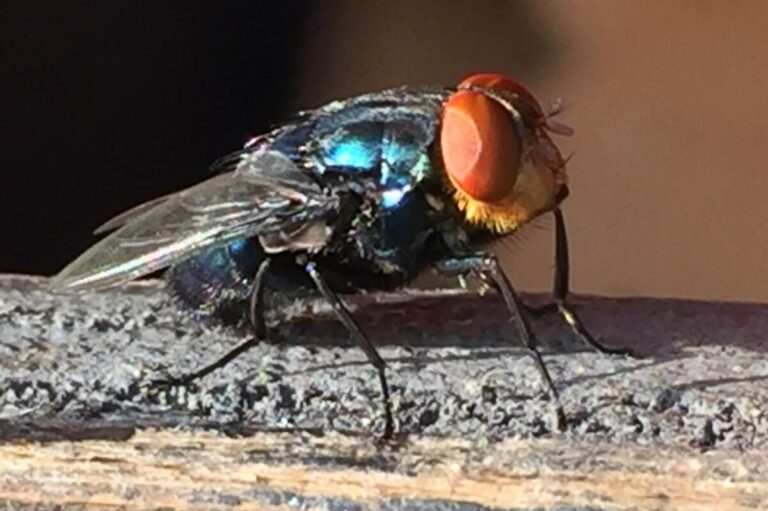
WNV isn’t the only threat posed by the common mosquito. All forms of arboviral encephalitis (arthropod-borne neurologic disease)–some of which, like WNV, can afflict both horses and humans–are mosquito-borne, as are malaria, dengue fever, and deadly canine heartworm disease.

Read More

Captive Bolt: Comments From The Industry

One item in the debate on equine slaughter is the use of captive bolt for euthanasia. This is the same method used on other livestock killed during slaughter or during a disease outbreak (such as foot and mouth disease on farms in England).

The Horse sent out a small survey to veterinarians and researchers around the world on the question: Is captive bolt a humane euthanasia for

Read More

Cushing’s Disease and Laminitis–Not Just Old Horses

Researchers recently revealed that Cushing’s disease is a major contributing factor to laminitis among horses in a primary care veterinary practice, and that the median age of laminitic Cushing’s horses was 15 1/2 years–disproving tha

Read More

Diet: When Horses Need Less Carbs

What the research findings suggest is that young, growing foals, horses that are prone to tying-up or laminitis, those with Cushing’s disease, and some that tend to be excessively ‘hot’ mannered could possibly be managed better on low-glycemic diets.

Read More

Animal Identification Plan Largely Misunderstood

Comments collected on the draft U.S. Animal Identification Plan (USAIP) have been largely characterized by misunderstanding and frustration, according to one government official. The plan, which at this time is not an official program of the USDA, was designed to establish a timely traceback system to minimize the spread of foreign animal diseases, such as foot and mouth disease, and to

Read More

New Research on the Merial WNV Vaccine

Horse owners and veterinarians alike have wondered if they can use Merial Limited’s Recombitek equine West Nile virus (WNV) vaccine in horses previously vaccinated with Fort Dodge’s West Nile-Innovator. Recently, Merial released the results of a

Read More

Pest Control: The Death Squad

When it comes to pest control products, the safest choices lie with EPA-approved chemical formulations developed for horse use, such as DEET, pyrethrins/pyrethroids, and organophosphates, or the EPA GRAS (“generally regarded as safe”) products like citronella and geraniol.

Read More

More From The Horse

horse nose snout nostril detail close animal equine pont
training issue or lameness; Think With Your Head About Your Riding Helmet
Farrier-Foal-AE
rucio horse

Stay on top of the most recent Horse Health news with

FREE weekly newsletters from TheHorse.com

Weekly Poll

sponsored by:

What’s your biggest challenge when trying to improve barn air quality?
81 votes · 81 answers

Create a free account with TheHorse.com!

The Horse
Privacy Overview

This website uses cookies so that we can provide you with the best user experience possible. Cookie information is stored in your browser and performs functions such as recognising you when you return to our website and helping our team to understand which sections of the website you find most interesting and useful.