Pain, Behavioral, or Both?
Often, a horse’s behavior problems are rooted in either pain or incomplete training. Here’s what to consider.

Often, a horse’s behavior problems are rooted in either pain or incomplete training. Here’s what to consider.

A veterinarian explains how to recognize when your horse is in pain.

Practitioners will create a grimace scale that can indicate stress, sickness.

A wide range of conditions can cause poor performance, but many cases circle back to lameness with a behavioral component.

Researchers assessed whether group housing situations influenced horses’ sleep routines.

A veterinarian describes some subtle signs to watch for that might point toward your horse having joint discomfort.

Study results showed horses might wait for a more appealing treat, demonstrating self-control.
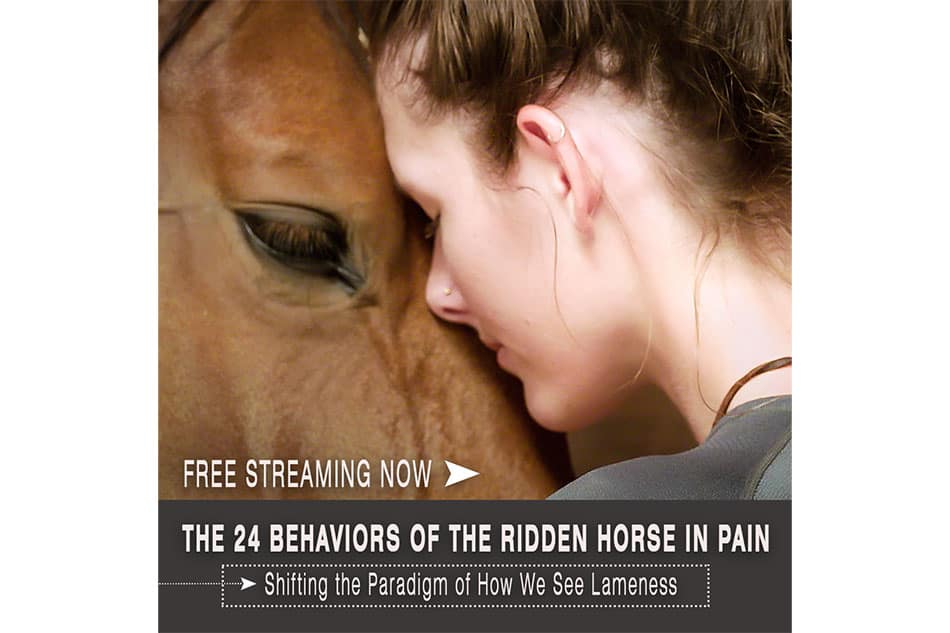
The film, featuring renowned equine orthopedics expert Dr. Sue Dyson, is available for free.

Brain dissections can give researchers and scientists a better understanding of how horses think.

Results from a new study revealed some horses might associate mounting blocks with bad experiences.

Film delves into how ‘naughty’ horse behavior is often a reflection of underlying musculoskeletal problems.

A positive horse-human relationship starts with an awareness of shared goals.

Here’s how to help your weanling foal transition to adulthood as smoothly as possible.

Many equine-assisted services providers said they’d consider using retired racehorses in their programs; nearly one-third already do.

Researchers showed that three repetitions of a task per training session yielded the same results as six in a group of study horses.

TheHorse.com readers and staff share their tips for preparing and keeping horses safe during Fourth of July festivities.