From Gawky to Grand
Raising a foal isn’t rocket science, but it does require some forethought and planning.

Raising a foal isn’t rocket science, but it does require some forethought and planning.
The events will take place Jan 20-21, 2012 at the UK Veterinary Diagnostic Laboratory.

Kristine Urschel, PhD, discussed factors that regulate equine muscle protein accretion and relevant research.

Nutritional support could reduce the stresses and health challenges that weaning places on young horses.

The second year of a horse’s life brings significant changes not only in his development but also his use.

Adjusting what a horse consumes can help prevent or squelch some equine ailments.

How you manage, feed, and care for your young horse can affect his future performance.
Gastric ulcers can affect horses of all breeds, ages, shapes, and sizes, including weanlings.
A nursing foal’s nutritional requirements will exceed his dam’s ability to supply nutrients a few months after birth, making creep feeding a good way to get the young horse off on the right hoof.

Carbohydrates are important energy sources for horses, and they are required for digestive health.

Tips on properly caring for the pregnant mare, newborn foal, and growing foal up to weaning with Dr. Nathan Slovis of the Hagyard Equine Medical Institute.
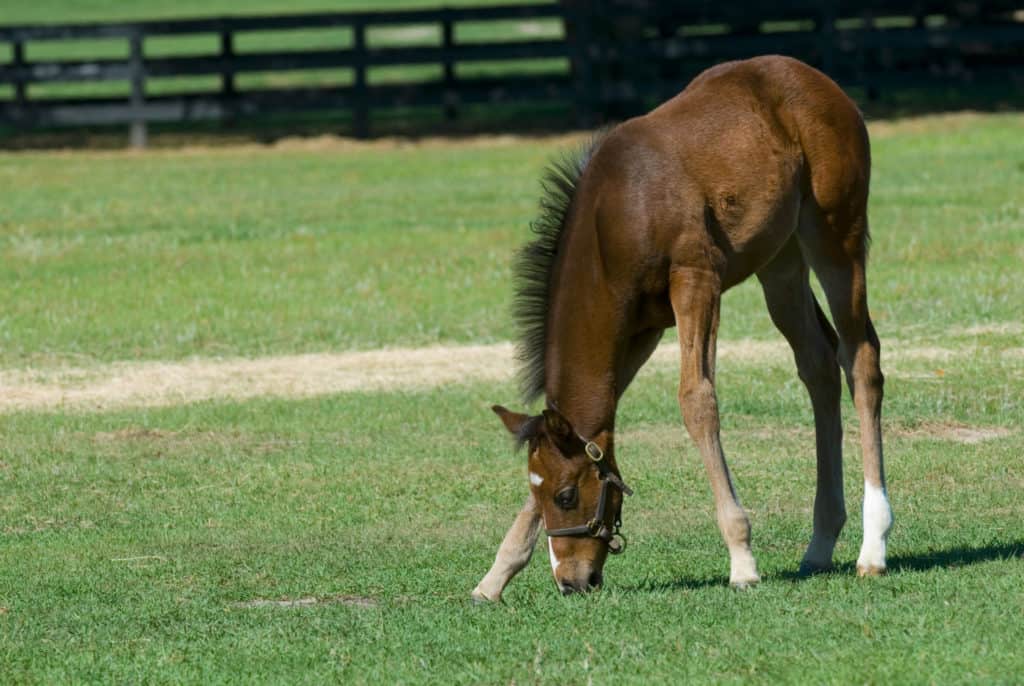
Proper nutrition, of course, is a critical factor in raising a healthy, sound foal–both for the broodmare before the foal is born as well as for the mare and foal throughout the foal’s development.

Breed-specific growth models help fine-tune feeding recommendations for young horses in the near future.
Proteins, composed of essential and nonessential amino acids, are important nutrients for horses.
Mare nutritional status is a critical component in foal health from conception through weaning.