Why Do Young Horses Champ Their Mouths?
Discover the possible reasons a foal or young horse might “gum” at an adult horse.

Discover the possible reasons a foal or young horse might “gum” at an adult horse.

Learn about what therapy choices to make, when to use them, and how much is necessary during treatment of the critically ill foal.
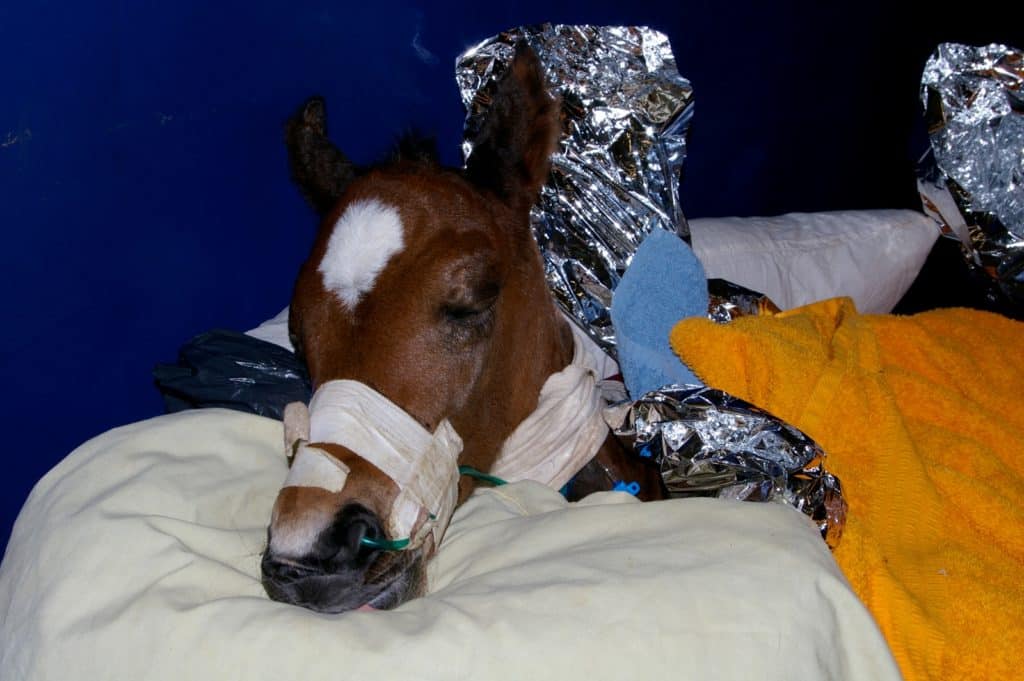
Weak or recumbent foals require early veterinary intervention. Here’s what to watch for.

Researchers implanted embryos from ponies, saddle horses, and draft horses into surrogate mares of different sizes and observed significant differences in weight, height, and metabolic markers among the resulting genetic half-siblings

Protect your foal from three important causes of young horse illness: Rhodococcus equi, equine proliferative enteropathy, and adrenal insufficiency.
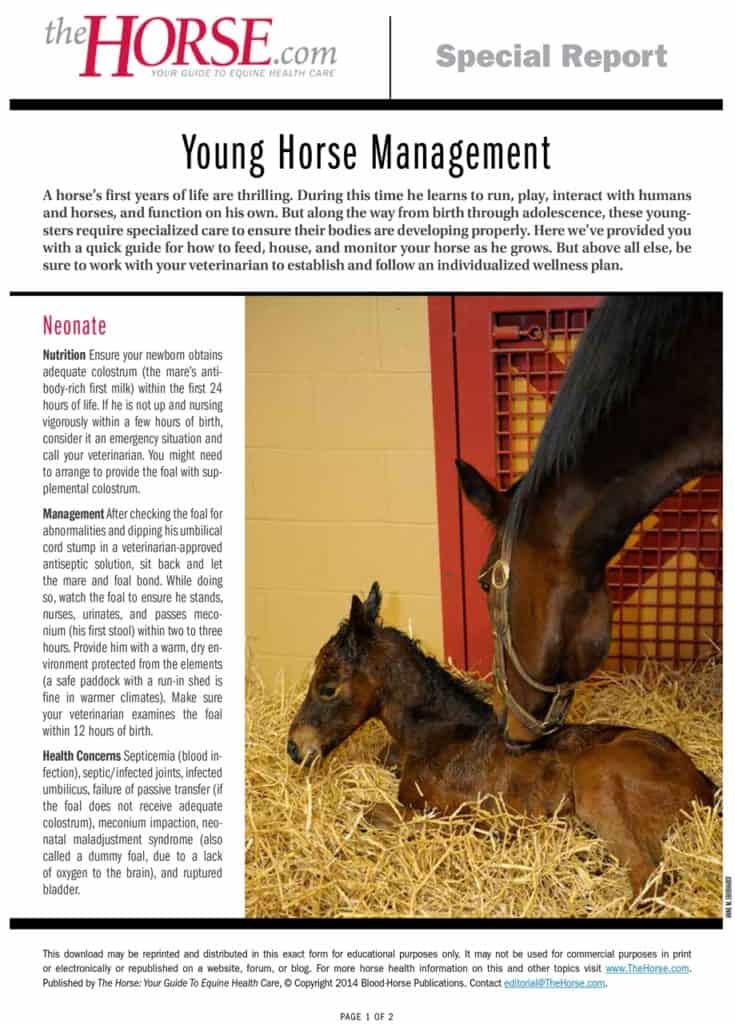
Use this cheat sheet to make sure your young horse–neonate to yearling–is getting the care she needs.

Marcarena Sanz, DVM, MS, Dipl. ACVIM, of the University of Kentucky’s Gluck Equine Research Center shares information about R. equi, a serious pneumonia-causing respiratory disease in foals up to 6 months old.

To a newborn foal, colostrum can mean the difference between life and death.
Should a foal be dewormed during its first 6 months of life? Dr. Wendy Vaala responds. This podcast is from the Equine Life Stages: Foals Q&A audio event.
Do foals, especially those born early in the season or in cold climates, need to wear blankets? Dr. Wendy Vaala responds. This podcast is from the Equine Life Stages: Foals Q&A audio event.

Rhodococcus equi is a serious infectious disease that can cause pneumonia in foals. Learn how to protect your herd of youngsters in this information-packed visual guide.

Birth to 6 months is a time of rapid change for foals. Nutrition, disease prevention, and much more are all vital to foal health. Learn how to help your young one thrive and get your questions answered during our hour-long special event!
A foal’s first six months of life are full of change. Learn about normal foal development, health risks, and quiz your knowledge in this special report.

Foals are susceptible to developing R. equi infection for at least the first two weeks of life.

The feature offers a look inside a neonatal intensive care unit treatment wing and surgical facilities.
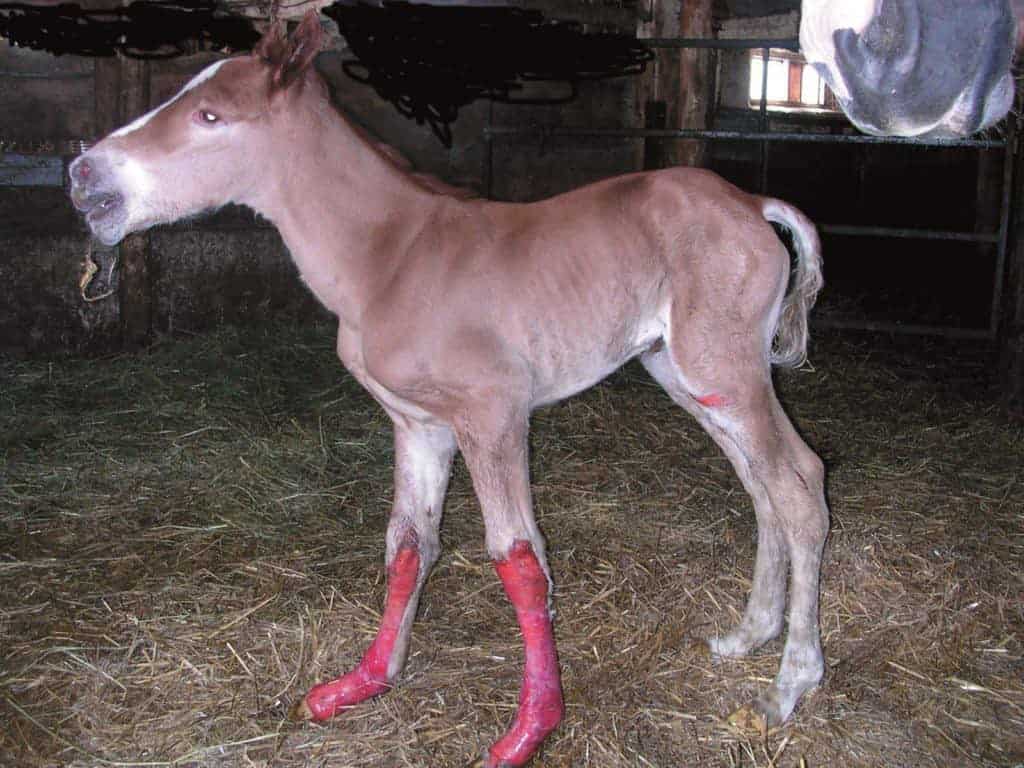
Such testing requirements aim to prevent the birth of JEB foals and reduce the number of carriers.