June Designated as Colic Awareness Month
Crusade Against Equine Colic was founded to prompt discussions about the potentially deadly disease.

Crusade Against Equine Colic was founded to prompt discussions about the potentially deadly disease.

Colic survival rates have improved greatly over the years, but timely treatment and diligent aftercare still a
Researchers find large intestinal thickening could indicate multiple diseases in addition to colic.

Why do some horses seem predisposed to experiencing colic episodes? And, if your horse has colicked in the past, what can you do to help prevent it from happening again?
Ask the Vet LIVE Podcast recording for post-colic care is now archived.
Researchers compared different suture materials’ integrity for closing abdominal incisions from colic surgery.
Tune in on Thursday, March 15, 8 p.m., EDT, for TheHorse.com’s free Ask the Vet LIVE audio and chat event.

The Lembert single layer pattern is faster, stronger, and less likely to impede the intestinal flow.
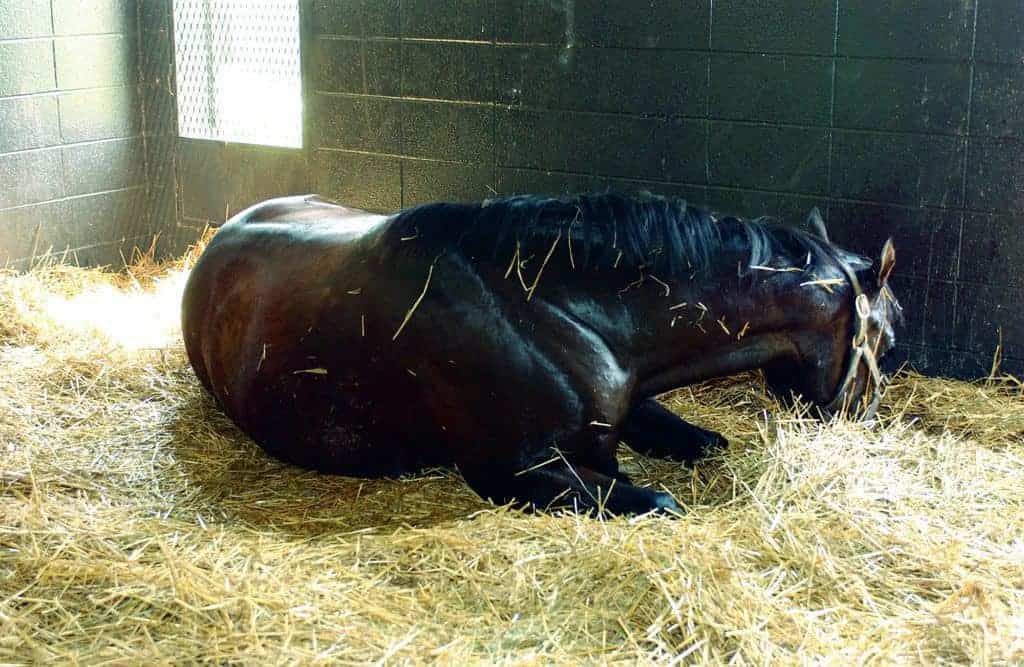
Horse owners should be prepared to make decisions about managing serious colic without the option of referral.
The panel’s report identified future research priorities for the study of equine colic.
In the current study most horses successfully returned to their prior athletic function after colic surgery.
On Tuesday, Feb.7, from 6:30 to 7:30 p.m., the New Bolton Center will present “Colic in 3D: The Glass Horse.”

Horses need more feed to replace energy loss brought about by harsh conditions as the temperature turn colder.

Ultrasonography successfully identified both small and large intestinal diseases and predicted surgery need.

The cortisol circadian rhythm ratio can identify horses under chronic stress and at risk for colic.

Researchers found the frequency of intestinal contractions was lower in stabled horses than pastured horses.