The Horse’s Digestive System
The horse’s digestive system is large, complex, and functions like a factory, yet it is exceedingly delicate. Digestive tract dysfunction in the horse is an important concern for owners and veterinarians.

The horse’s digestive system is large, complex, and functions like a factory, yet it is exceedingly delicate. Digestive tract dysfunction in the horse is an important concern for owners and veterinarians.
The bacterium Helicobacter pylori, a known disease-causing organism in human medicine, does not appear to be important in horses.
In humans, intensive research efforts have revealed that H. pylori can induce chronic gas
Champion Thoroughbred racehorse Speightstown had colic surgery April 1, and WinStar Farm, where the stallion stands, reported April 2 he’s “recovering well” after successful surgery.
Speightstown has covered more

When stalling your horse, consider the long-term effects this might have on general health and emotional state.
Lawsonia intracellularis is being forced out of hiding and its secrets extracted largely because of the intense research efforts of scientists like Nicola Pusterla, DVM, PhD, Dipl. ACVIM, and his colleagues at the University of Californi
Expression of a particular protein in fat tissue is positively associated with an increased rate of postoperative mortality in horses, researchers recently reported. The research was led by Melissa Packer, BVetMed, MRCVS, who recently
Multiple clues can help a practitioner determine the cause of infectious diarrhea or colitis in adult horses, including the farm’s history of previous outbreaks, geographic location, and season.
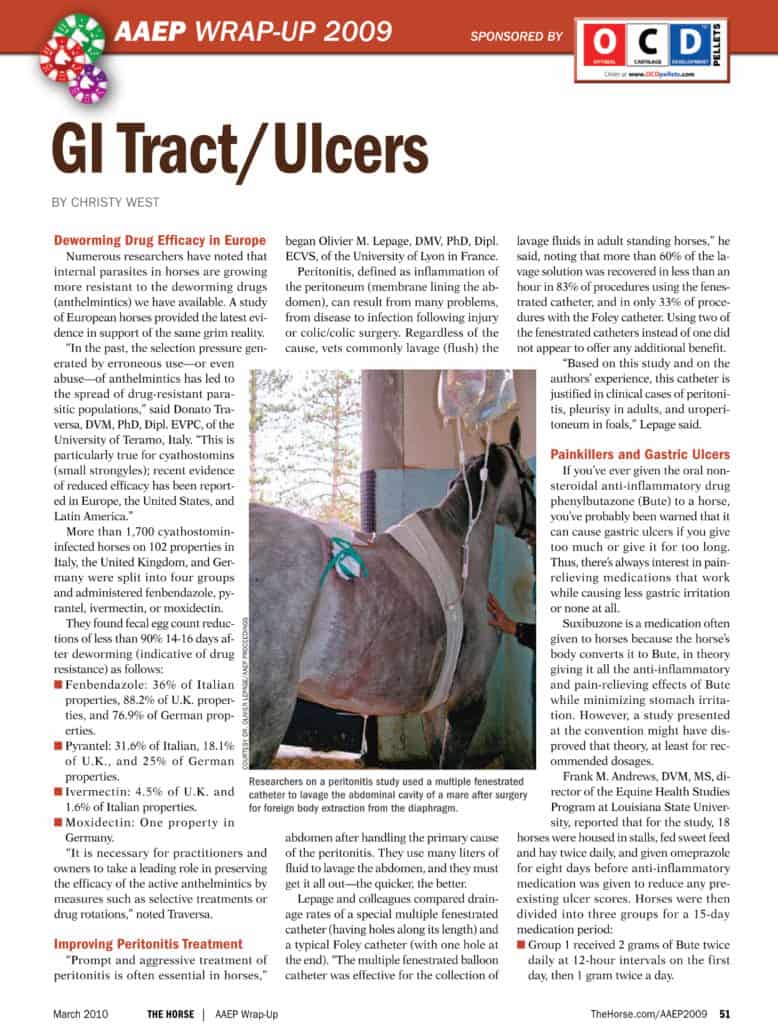
Deworming medication resistance, persimmon risks, peritonitis treatment advances, Salmonella biosecurity guidelines, and more equine gastrointestinal topics were discussed at the 2009 convention of the American Association of Equine Practitioners.
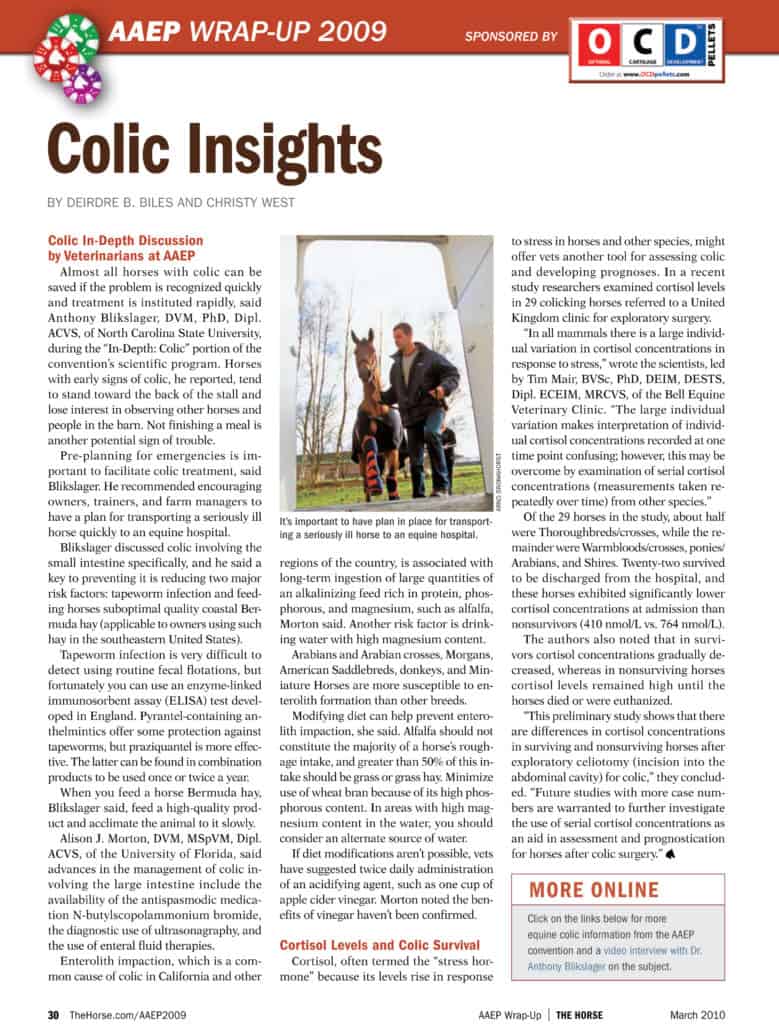
Updates on preparing for colic, enteroliths, tapeworm colic, and cortisol hormone levels in colicky horses, from the 2009 convention of the American Association of Equine Practitioners.
Colic in horses simply refers to abdominal pain, which has many causes, and the prognosis (chance of a positive outcome) can vary remarkably depending on the underlying cause. This article will help you understand colic basics and treatment advances.
What was the hottest news in equine veterinary medicine in 2009? During the popular Kester News Hour session at the annual American Association of Equine Practitioners (AAEP) Convention, three top veterinarians (who focus on equine reproduction
Almost all horses with colic can be saved if the problem is recognized quickly and treatment is instituted rapidly, said Anthony Blikslager, DVM, PhD, Dipl. ACVS, of North Carolina State University, during the “In-Depth: Colic” portio
Colic is a general term indicating abdominal pain. The anatomy of the horse’s digestive tract, how the tract works, and the management practices imposed by man seem to contribute to colic’s occurrence.

Dr. Anthony Blikslager of the North Carolina State University talks about colic in horses. (7:39)
Through a new program for veterinarians interested in a PhD called the Pfizer Animal Health-Morris Animal Foundation (MAF) Veterinary Fellowship for Advanced Study, Allen Page, DVM, will receive a substantial four-year stipend to complete his PhD at the University of Kentucky’s Gluck Equine Research Center.
The recipients of the fellowships are practicing veterinarians returning for a PhD.
If your horse is at risk for intestinal stones or enteroliths (a common cause of obstruction-induced colic in horses), consider replacing an alfalfa-based diet with grass hay, said Diana M. Hassel, DVM, PhD, of Colorado State University.