The horse’s large intestine absorbs large volumes of fluid from the bowel. When a situation interferes with fluid absorption from the large colon, fluid passes quickly from the body to increase the water content of the feces, resulting in diarrhea.

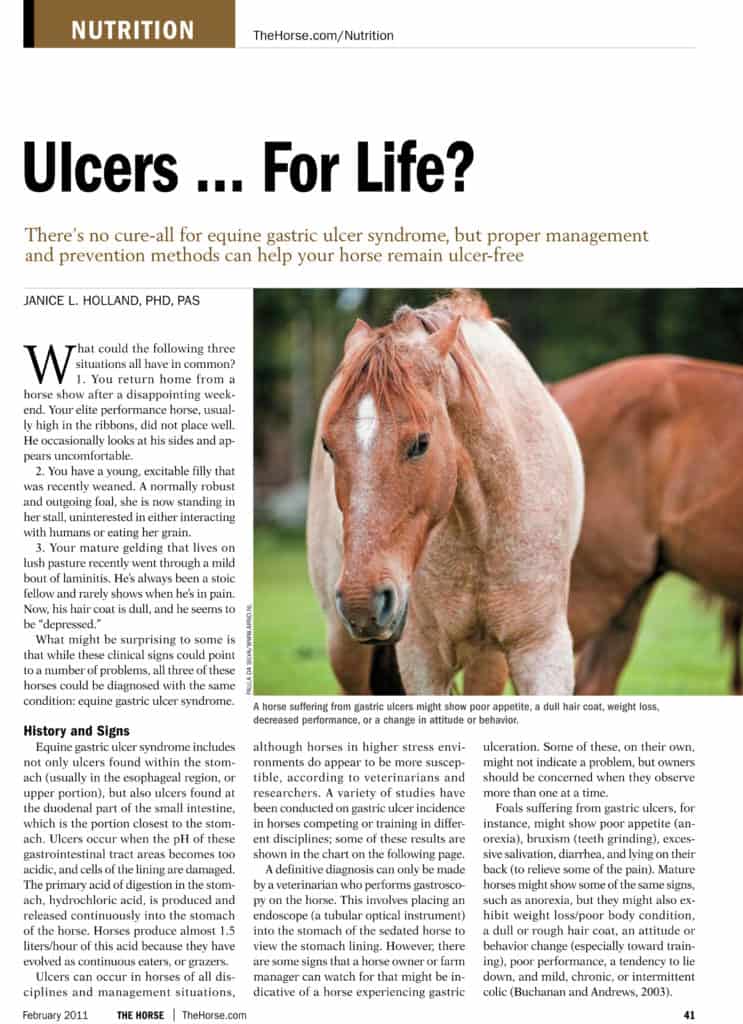
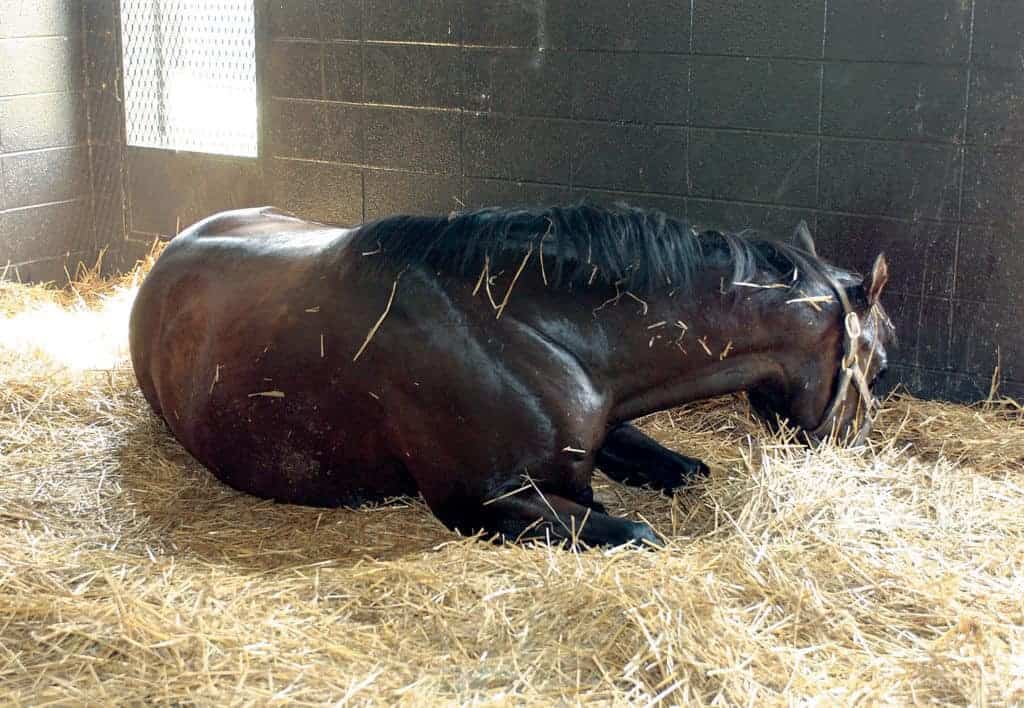
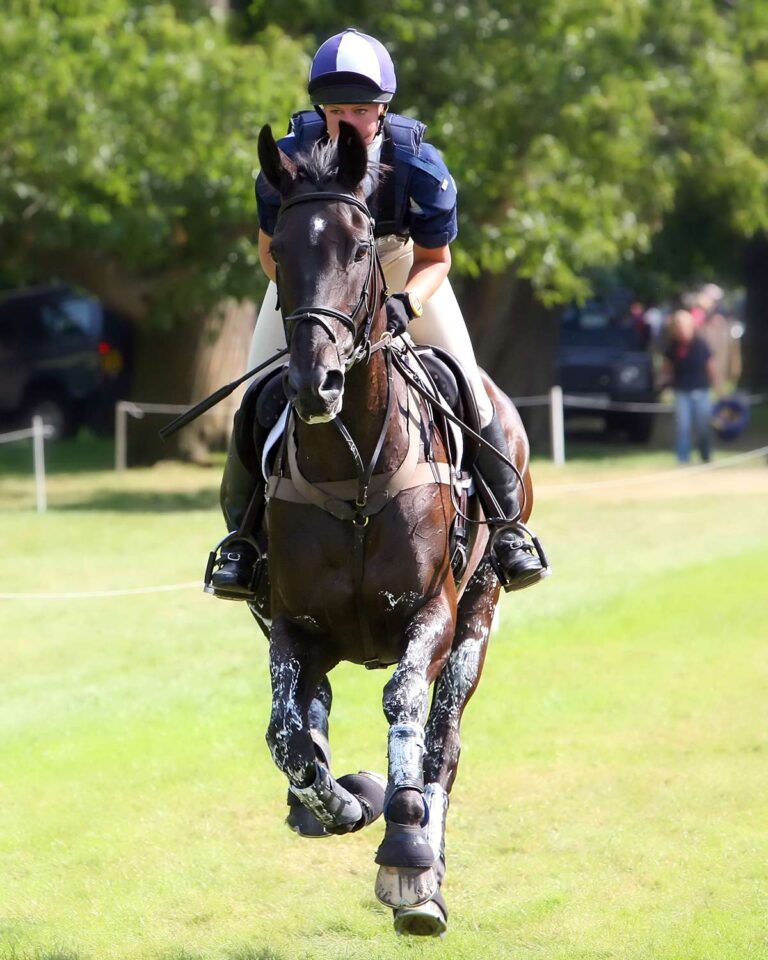
Ulcers can occur in horses of all disciplines and management situations, although horses in higher stress environments do appear to be more susceptible. There’s no cure-all for equine gastric ulcer syndrome, but proper management and prevention methods can help your horse remain ulcer-free.
Cold winds and changing winter weather might not seem like contributing factors for equine colic; however, these conditions can foster changes in routine and eating habits that could affect your horse’s well-being.
Colonization of the foal’s GI tract by pathogenic organisms can lead to diarrhea. Research has focused on identifying organisms responsible for the diarrhea, but less research has looked at what allows the pathogenic organisms to become established.

All about equine colic, from when to call the vet to how well horses recover from surgery.
Scientists have established the link between cribbing (also called windsucking) and colic, but a “causal” relationship between the two remains to be proven, say researchers from the University of California, Davis.

Lawsonia intracellularis bacteria can cause intestinal disease in horses, pigs, and other species worldwide. The syndrome in horses is often called equine proliferative enteropathy, or EPE.
Unlike heart and respiratory rates, abdominal sounds do not punch a specific time clock for generating “gut sounds.” The rhythmic peristaltic churning of food mixed with fluids within the gut varies in slower waves depending on meal time, the meal itself, and the level of activity. You don’t actually “time” bowel sounds, but you do want to know if they are present.
The University of Kentucky’s Gluck Equine Research Center needs Lexington-area Thoroughbred farms to participate in a study to determine Thoroughbred weanlings’ seroprevalence (presence of positive serum antibodies) to Lawsonia intracellularis, the causative agent of equine proliferative enteropathy (EPE).

The horse’s digestive system is large, complex, and functions like a factory, yet it is exceedingly delicate. Digestive tract dysfunction in the horse is an important concern for owners and veterinarians.
The bacterium Helicobacter pylori, a known disease-causing organism in human medicine, does not appear to be important in horses.
In humans, intensive research efforts have revealed that H. pylori can induce chronic gas
Champion Thoroughbred racehorse Speightstown had colic surgery April 1, and WinStar Farm, where the stallion stands, reported April 2 he’s “recovering well” after successful surgery.
Speightstown has covered more

When stalling your horse, consider the long-term effects this might have on general health and emotional state.
Lawsonia intracellularis is being forced out of hiding and its secrets extracted largely because of the intense research efforts of scientists like Nicola Pusterla, DVM, PhD, Dipl. ACVIM, and his colleagues at the University of Californi
Expression of a particular protein in fat tissue is positively associated with an increased rate of postoperative mortality in horses, researchers recently reported. The research was led by Melissa Packer, BVetMed, MRCVS, who recently
Multiple clues can help a practitioner determine the cause of infectious diarrhea or colitis in adult horses, including the farm’s history of previous outbreaks, geographic location, and season.
Stay on top of the most recent Horse Health news with
"*" indicates required fields