Caring for Critically Ill Newborn Foals
Learn about healthy foals, problems that are common in newborns, how veterinarians treat these issues, and more.

Learn about healthy foals, problems that are common in newborns, how veterinarians treat these issues, and more.
The Veterinary Diagnostic Lab is in-the-know on animal diseases, including equine ones, around the state and country.
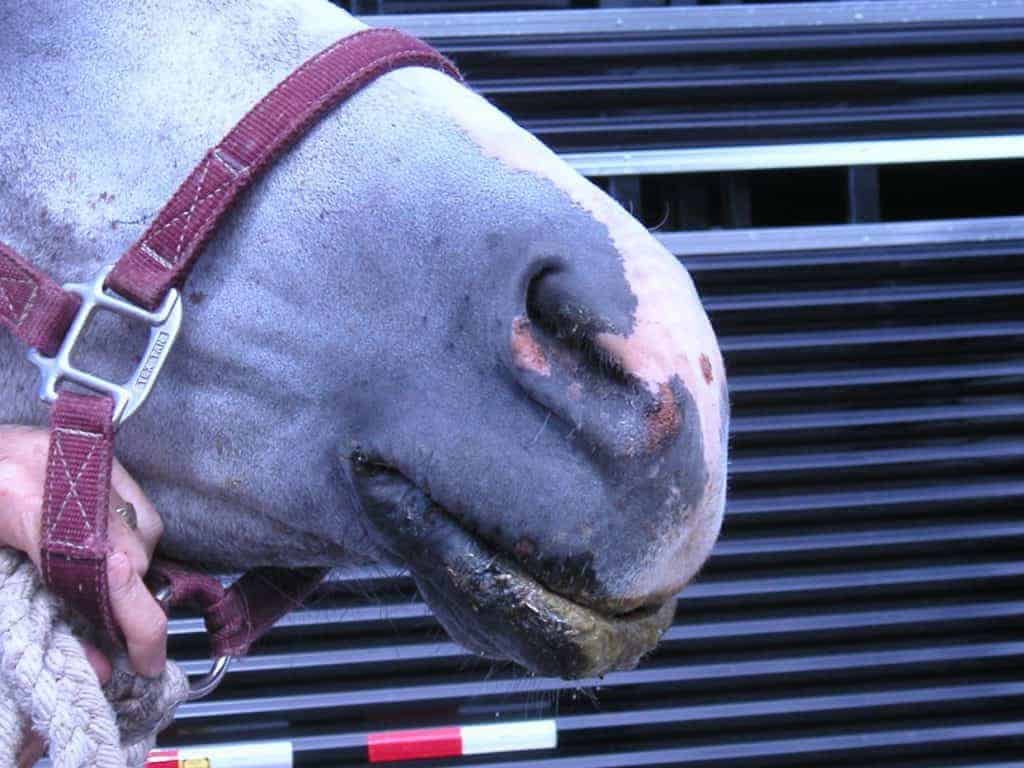
Earlier this month three horses in Pecos County, Texas, tested positive for vesicular stomatitis (VS), as well.

The three horses reside at a single farm in Pecos County, located approximately 30 miles north of Fort Stockton.
Officials said all fourteen equids placed under quarantine were released as of May 14.
The California Department of Food and Agriculture determined that a Turf Paradise horse had vesicular stomatitis (VS).
Two Arizona horses and a Utah mule have tested positive for vesicular stomatitis.

Officials are managing two vesicular stomatitis cases: one in a Grant County horse and one in an Otero County horse.

Learn about this uncommon, but often deadly, virus and its impact on infected horses in Australia.
The voluntary stop sale is due to reports of unexpected post-vaccination gastrointestinal issues in some horses.
The Canadian Food Inspection Agency has lifted all vesicular stomatitis (VS) import restrictions for U.S. horses.

The large-scale VS outbreak in 2014 caused extended quarantines and transportation headaches for horse owners.
Early recognition of emerging and re-emerging diseases is of paramount importance if their impact is to be minimized.

Improved diagnostic testing for Lyme disease is leading to more successful treatments. Here’s what you should know.
Diseases diagnosed include herpesvirus, tetanus, strangles, piroplasmosis, West Nile virus, and more.
The farm-level biosecurity standard is designed to help protect Canada’s equine industry from animal diseases.