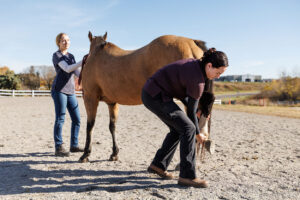
Understanding Equine Recurrent Uveitis (ERU)
ERU is one of the most frequent causes of equine blindness. Here’s what you need to know.

ERU is one of the most frequent causes of equine blindness. Here’s what you need to know.
Fumonisins are toxic byproducts of the fungus Fusarium verticilloides, which often grows on corn. These mycotoxins can cause leukoencephalomalacia (moldy corn poisoning) in horses, and are undetectable to the naked eye. Horses exposed to
Many of you are familiar with the respiratory condition known as “heaves,” also termed recurrent airway obstruction (RAO). Primarily caused by chronic exposure to dusts and molds in hay and bedding, heaves can cripple the function of a horse’s
by Kimberly S. Herbert and Stephanie L. Church
West Nile virus is a dangerous and scary disease, and it is spreading across North America very quickly. However, this is one of the few times when horses have it better than humans when it
Georgia Commissioner of Agriculture Tommy Irvin announced last week that four horses in Chattooga County tested positive for equine infectious anemia (EIA) and have been euthanized. At press time, 94 other horses in the county had been
West Nile virus is here to stay. Just like its cousins Eastern and Western equine encephalitis, it can be controlled, but only with diligence and hard work. West Nile virus (WNV) is deadly in about 40% of the horses which get the disease. It
Horse owners in Canada are becoming just as wary of the neurological disease West Nile virus (WNV) as their U.S. neighbors (see “West Nile Virus Alert” on page 32). The virus, which is harbored by birds and spread by the bite of an infected
Newborn foals are especially susceptible to gastrointestinal diseases such as clostridial enterocolitis, which is characterized by abdominal pain, diarrhea, toxemia, shock, or death without prior signs. While this disease occurs only
Two additional cases of Potomac horse fever (PHF) have been confirmed at Hagyard-Davidson-McGee (HDM) veterinary hospital in Lexington, Ky., bringing the clinic’s total to five confirmed cases since the end of July. Two other PHF cases previousl
You’re preparing your mare for the upcoming breeding season. The stud owner insists on a bacterial culture of your mare’s uterus prior to live breeding to reduce the chances of her passing any sexually transmitted diseases (STDs) she might have
Any company trying to put a new vaccine on the market must follow a specific process to obtain a license from the USDA before the product can be used in the horse population. A vaccine receives either a conditional or full license after a series
Three equine cases of West Nile virus (WNV) have been confirmed in West Virginia, according to state veterinarian Lew Thomas, DVM. The cases were detected over the last three weeks, and WNV was confirmed in each horse by the USDA National
The total number of equine cases of illness caused by West Nile virus confirmed at the USDA’s National Veterinary Services Laboratories or reported by state officials so far this year is 6,223. That is an increase of 843 cases since Sept. 17. Th
Fort Dodge Animal Health recently received USDA approval to release the following abstract regarding the West Nile virus vaccine and its efficacy. More information on the topic was presented in today’s sessions at the World
The Virginia Department of Agriculture and Consumer Services (VDACS) announced Monday that additional horses have tested positive for West Nile virus (WNV), bringing the total number of equine WNV cases in the state this year to 17.
The
The total number of equine cases of illness caused by West Nile virus (WNV) confirmed at the USDA’s National Veterinary Services Laboratories (NVSL) or reported by state officials so far this year is now 5,380. That is an increase of 774 cases