Common Foal Eye Problems
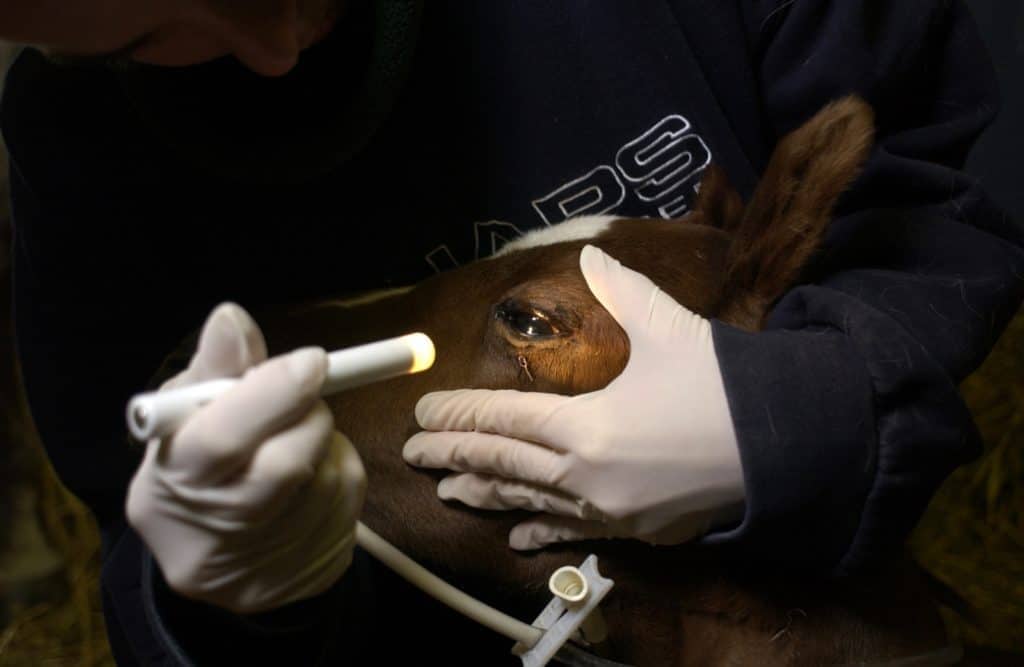
Learn about some of the most common eye problems found in foals and how they can be treated.

Learn about some of the most common eye problems found in foals and how they can be treated.
We recently shipped a horse to Montana. His coat is taking a beating with the cold, dry air. How can we help him?
The Florida Department of Health (DOH) and the Florida Department of Agriculture and Consumer Services (FDACS) announced Feb. 18 that the first cases of West Nile virus (WNV) for this year have been reported. It has been confirmed that a wild
Understanding how the horse sees the world can give horse owners an appreciation of their animals’ behavior. In addition to their reduced color perception (which makes certain color cues relatively useless), horses also have slightly poorer visual
Two-time Horse of the Year John Henry, who underwent colic surgery Jan. 25 at Hagyard-Davidson-McGee veterinary clinic near Lexington, arrived back home at the Kentucky Horse Park Feb. 4. “He was given a clean bill of health, and everyone is happy
We’ve probably all had, or at least seen, a horse with an itching problem no one could quite figure out. In the roundtable discussion on pruritic (itchy) horses, veterinarians discussed just how to diagnose and manage these horses to keep them
Ingestion of sand is an unfortunate consequence of vigorous grazing on sandy soil. The equine digestive tract can handle a certain amount of sand without difficulty, but too much sand can lead to impaction and colic. Medical treatments, includin
More than 350 horse owners turned out to hear six speakers at the second annual Horseman’s Day, held in conjunction with the annual AAEP convention. In almost every case, those in attendance were still raising their hands with questions when
Endotoxemia is one of the most commonly encountered life-threatening conditions in horses with gastrointestinal disease. It is, by nature, a very disappointing and frustrating disease to encounter, and is the leading cause of death in adult horses

Your veterinarian has an array of instruments and techniques for examining your horse’s eyes.
“While many outbreaks of respiratory disease in foals are infectious in nature, this is not always the case,” she began. “Environmental factors can have a profound effect.”
Allergens in the pasture and barn are believed to trigger chronic obstructive pulmonary disease (COPD or heaves) in horses. It is unclear whether simply developing an allergy leads to COPD, or if a horse must
be born susceptible to the
Surgery topics at the 2001 AAEP Convention helped the practitioner learn new techniques
“Protein-losing enteropathy” is a catchall name for problems that ultimately result in loss of the body’s protein.
The day before the scientific sessions started during the AAEP Convention, there was a series of forums and committee meetings. These were moderated by selected experts in those fields, and were open to anyone for a majority of the time. The las
Fort Dodge Animal Health has taken a proactive approach to keeping horse owners informed of the spread and dangers of West Nile virus (WNV) by launching a web site and developing educational literature on the disease. In just two years, WNV has